

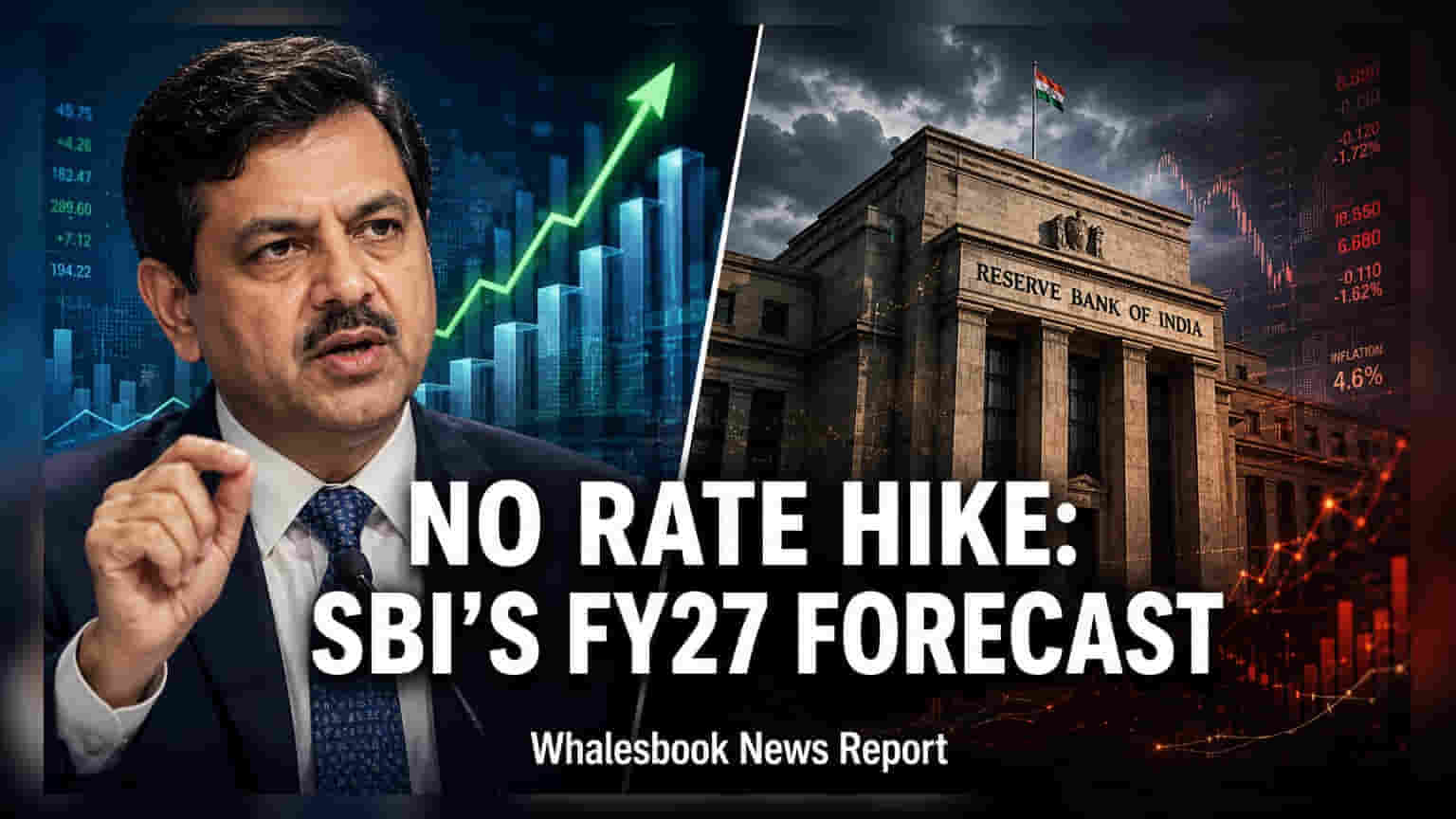
State Bank of India (SBI) does not expect interest rate hikes in FY27, following the Reserve Bank of India's decision to keep the repo rate steady at 5.25% on August 5, 2026. While the bank anticipates stronger liquidity and robust economic growth, investors are monitoring potential margin pressures from rising funding costs.
The Reserve Bank of India (RBI) kept the benchmark repo rate unchanged at 5.25% in its August 5, 2026, monetary policy meeting, maintaining a neutral stance. Following this announcement, State Bank of India (SBI) indicated that it does not foresee any interest rate hikes for the remainder of the 2026-27 fiscal year.
Economic Resilience and Growth Outlook
Ashwini Kumar Tewari, SBI's Managing Director for Corporate Banking & Subsidiaries, noted that the Indian economy continues to show significant resilience. This outlook is supported by the RBI’s recent policy update, which raised the real GDP growth projection for FY27 to 6.7% while simultaneously lowering the inflation forecast to 5.0%. The bank’s internal assessment suggests that credit demand remains healthy, with SBI projecting a credit growth guidance of 13-15% for the current fiscal year.
Liquidity and Margin Factors
SBI expects improved liquidity conditions in the coming quarters, driven by healthy Foreign Currency Non-Resident (FCNR(B)) inflows. This liquidity support is expected to help the bank manage its balance sheet more effectively. However, the banking sector continues to face challenges regarding profitability. While inflows are positive, bank margins are currently under pressure due to elevated funding costs and the competitive landscape for deposit mobilization. Investors are watching whether the bank can maintain its net interest margins (NIMs) while pursuing ambitious credit growth targets.
Regulatory and Lending Transparency
Regarding the RBI's focus on lending rate transparency, SBI indicated it is prepared to adapt to new regulatory instructions. The bank noted that it has historically maintained transparent practices, consistent with earlier frameworks such as the Marginal Cost of Funds based Lending Rate (MCLR). Management expressed confidence that upcoming standardization measures would not create significant implementation hurdles.
Risks for Investors
While the macro environment appears stable, the bank faces specific sector-related risks. Inflationary volatility, particularly from food and fuel prices, remains a constant monitorable for the MPC and could influence future policy decisions if supply-side shocks occur. Additionally, while overall asset quality remains stable, the banking sector continues to track stress in the MSME (Micro, Small, and Medium Enterprises) segment. Global geopolitical uncertainty, especially regarding energy prices, is another factor that could impact domestic economic momentum.
Moving forward, the primary items for investors to track include the bank’s quarterly credit growth, its ability to secure deposits without significantly increasing funding costs, and official inflation data updates. The final trajectory of interest rates will remain data-dependent, with the bank's management emphasizing that their current stance is based on existing trends.