

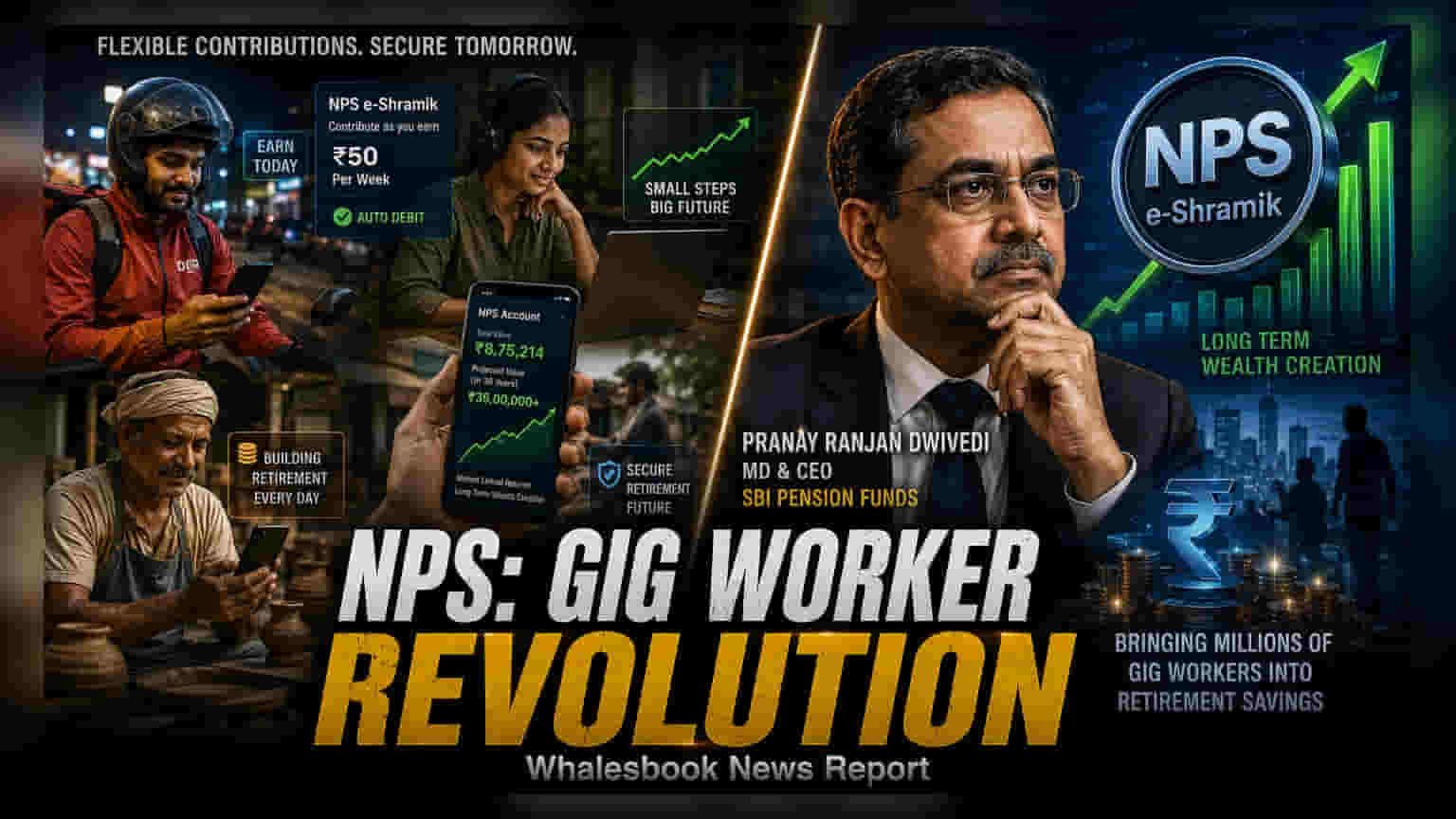
SBI Pension Funds is championing the NPS e-Shramik model to enable flexible retirement savings for gig and platform workers. By allowing small, irregular contributions that match fluctuating income streams, the initiative aims to capture a wider segment of India's informal workforce. While the company is an unlisted subsidiary of the State Bank of India, this shift highlights a broader industry trend toward expanding financial inclusion in the gig economy.
SBI Pension Funds, a subsidiary of the State Bank of India, is actively adjusting its strategy to bring India's growing gig and platform worker population into the retirement savings net. Pranay Ranjan Dwivedi, the company's Managing Director and CEO, has emphasized that the rigid, fixed-monthly contribution structure of traditional retirement plans is often incompatible with the irregular earning patterns of gig workers. To address this, the company is pushing for the wider adoption of the National Pension System (NPS) e-Shramik model.
The e-Shramik model is designed specifically to accommodate the financial reality of those who work on a task-based or project basis. Under this framework, there is no regulatory requirement for a fixed minimum monthly contribution. Instead, workers can contribute smaller, flexible amounts that align with their current income. For instance, a worker could potentially contribute Rs 50 on a weekly basis, or adjust payments according to their earnings in a particular month. The goal is to prioritize the consistency of saving habits over the uniformity of the contribution amount, allowing individuals to build a corpus over several decades even if their short-term income varies.
From a financial planning perspective, the long-term compounding effect is significant. Projections suggest that modest, consistent weekly contributions, when maintained over a 30-year horizon, can accumulate into a substantial retirement fund, depending on annual market returns. This approach aims to reduce the risk of gig workers postponing retirement planning due to income uncertainty, providing them with a structured financial safety net.
For investors monitoring the broader financial sector, it is important to note that SBI Pension Funds operates as a private, unlisted subsidiary of the State Bank of India. Consequently, there is no direct impact on stock market valuations for this specific entity. However, the move reflects a wider strategic focus among major Indian financial institutions to penetrate the unorganized and informal sectors. By leveraging the parent group's extensive network and partnering with digital platforms, the company aims to secure long-term assets under management (AUM) from a demographic that has historically been difficult to reach.
The success of this initiative will largely depend on the adoption rates of the NPS e-Shramik model among gig workers and the ability of platforms to facilitate these deductions seamlessly. One of the primary advantages being highlighted is the portability of the NPS account, which allows workers to maintain their retirement savings even as they switch between different employment platforms or transition into self-employment.
While this initiative supports financial inclusion, investors should remain aware of inherent risks. The retirement corpus for these individuals is subject to market risks, as returns depend on the performance of the underlying debt and equity market investments. Furthermore, the nature of gig work means that while flexible models solve the 'inconsistent income' problem, workers still face the risk of insufficient total savings if their overall contribution levels remain very low over a long period. The next important step to watch is how effectively the company can scale these partnerships with various platforms to drive sustainable, long-term participation.