

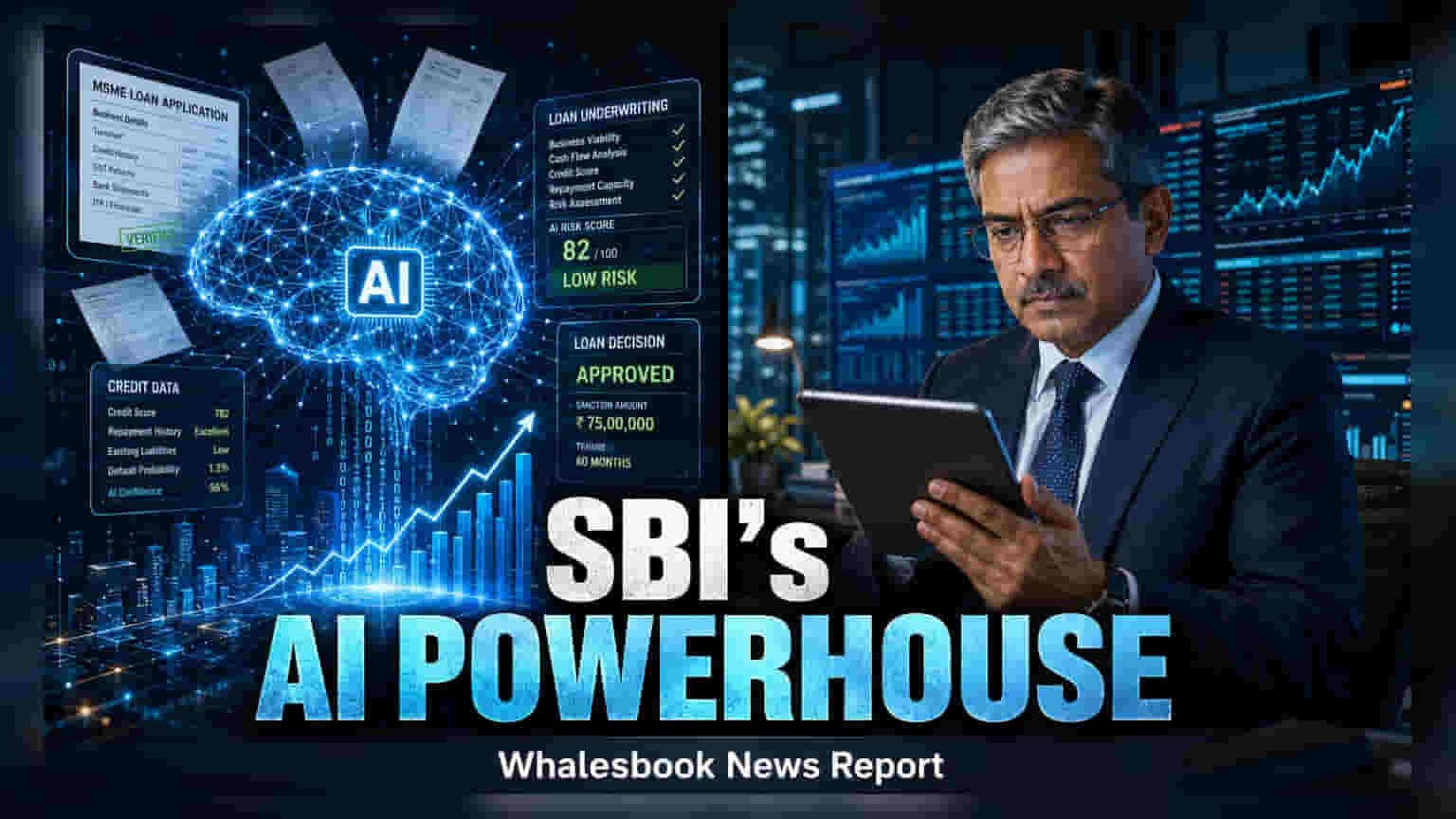
State Bank of India successfully used artificial intelligence to underwrite nearly ₹1 lakh crore in MSME loans during FY26. The bank is also adopting new technology to automate cheque processing and enhance risk management, aiming to improve overall operational efficiency.
State Bank of India (SBI) has successfully utilized artificial intelligence to process and underwrite approximately ₹1 lakh crore in loans for Micro, Small, and Medium Enterprises (MSME) during the 2025-26 fiscal year. These loans, each valued at up to ₹5 crore, were extended to both new and existing customers, marking a shift in how the bank evaluates credit risk.
AI-Driven Loan Processing
The bank’s AI-powered system relies on a Business Rule Engine that processes diverse data points to make lending decisions. This includes integrating information from GST filings, credit bureau reports, bank account data, and other unstructured inputs. By automating these assessments, SBI has managed to streamline its underwriting process. Managing Director Rama Mohan Rao Amara highlighted at the FIBAC 2026 event that this approach has not only handled large volumes of financing but also contributed to lower non-performing assets (NPAs) within the specific portfolio underwritten by these AI models.
Beyond loans, SBI is integrating Large Language Models (LLMs) to automate the processing of cheques valued at up to ₹10,000. These smaller-value transactions account for about 25% of the bank's total cheque volume. The system automatically verifies essential fields and compliance requirements, which allows for straight-through processing without needing human intervention for every transaction. This automation frees up time for employees, allowing relationship managers to focus on more strategic customer engagement tasks rather than manual data collection and analysis.
Risks and Future Outlook
While the adoption of AI is aimed at improving efficiency, it introduces new challenges. The increased reliance on digital finance and complex algorithms brings inherent risks regarding data security and cybersecurity. Additionally, the bank must manage the integration of these advanced technologies with its existing legacy infrastructure, which can involve technical complexities.
Investors and stakeholders may monitor how these technological changes impact the bank’s long-term operational costs. While the bank is observing early positive outcomes in employee resource allocation and customer satisfaction, the full impact on the overall cost-to-income ratio will likely become clearer over time as the systems scale. The bank maintains a control mechanism, including a dedicated risk unit, to audit a sample of AI-processed activities to ensure accuracy and refine the models as needed.