

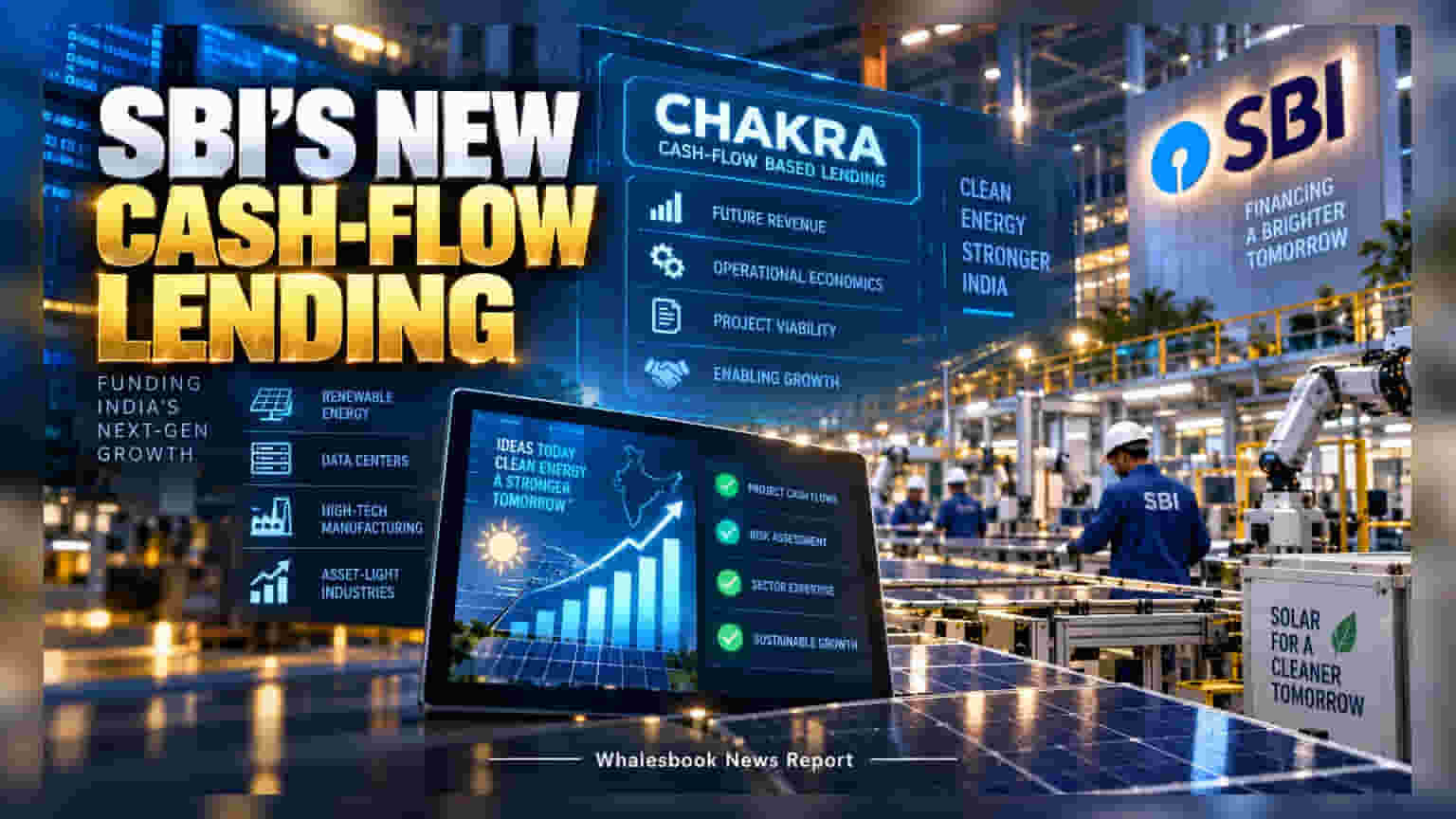
State Bank of India is shifting to a new lending model called 'CHAKRA' to finance capital-intensive sectors like data centers and solar manufacturing. By focusing on future cash flows instead of physical collateral, the bank aims to support modern, asset-light businesses while adapting its risk assessment tools.
State Bank of India is moving toward a new lending strategy that prioritizes future revenue over traditional physical collateral. The nation's largest lender has introduced an internal mechanism named 'CHAKRA' to evaluate loan applications from modern, asset-light industries. This change in approach is designed to help the bank finance sectors where traditional security, such as land or buildings, is often limited or hard to value.
The Shift to Cash-Flow Lending
For many years, banks have relied heavily on tangible assets as security for loans. However, the rise of technology-driven businesses, such as data centers and renewable energy infrastructure, has created a mismatch. These companies often require large capital investments but do not hold significant physical collateral to offer against their debt. Under the new CHAKRA framework, SBI will instead assess the operational economics and future cash flow potential of these projects. This allows the bank to determine repayment capacity based on how well the business is expected to perform rather than what it owns today.
Sector Focus and Risk Factors
The initiative is specifically targeting capital-intensive industries like solar energy and high-tech manufacturing. While these sectors are growing rapidly due to the digital and green energy expansion in India, they come with unique risks. For instance, the financial outcome of a solar project can vary greatly depending on hardware efficiency and energy output.
From an investor perspective, shifting to cash-flow-based lending carries higher risks than traditional secured lending. If a business fails to generate the expected cash, the lender may have fewer assets to recover its money. To manage this, SBI has emphasized the need for deep technical literacy, ensuring that its teams understand the underlying economics and technology lifecycles of these industries before sanctioning loans.
What Investors Should Monitor
This move marks a broader adjustment in the Indian banking system as lenders modernize to stay relevant in an evolving economy. Investors may track how this new approach impacts the bank's asset quality over time. Key monitorables for the coming quarters will include the bank's non-performing asset (NPA) levels in these specific sectors, the effectiveness of the CHAKRA framework in risk mitigation, and management commentary on the success of these new loan portfolios.