

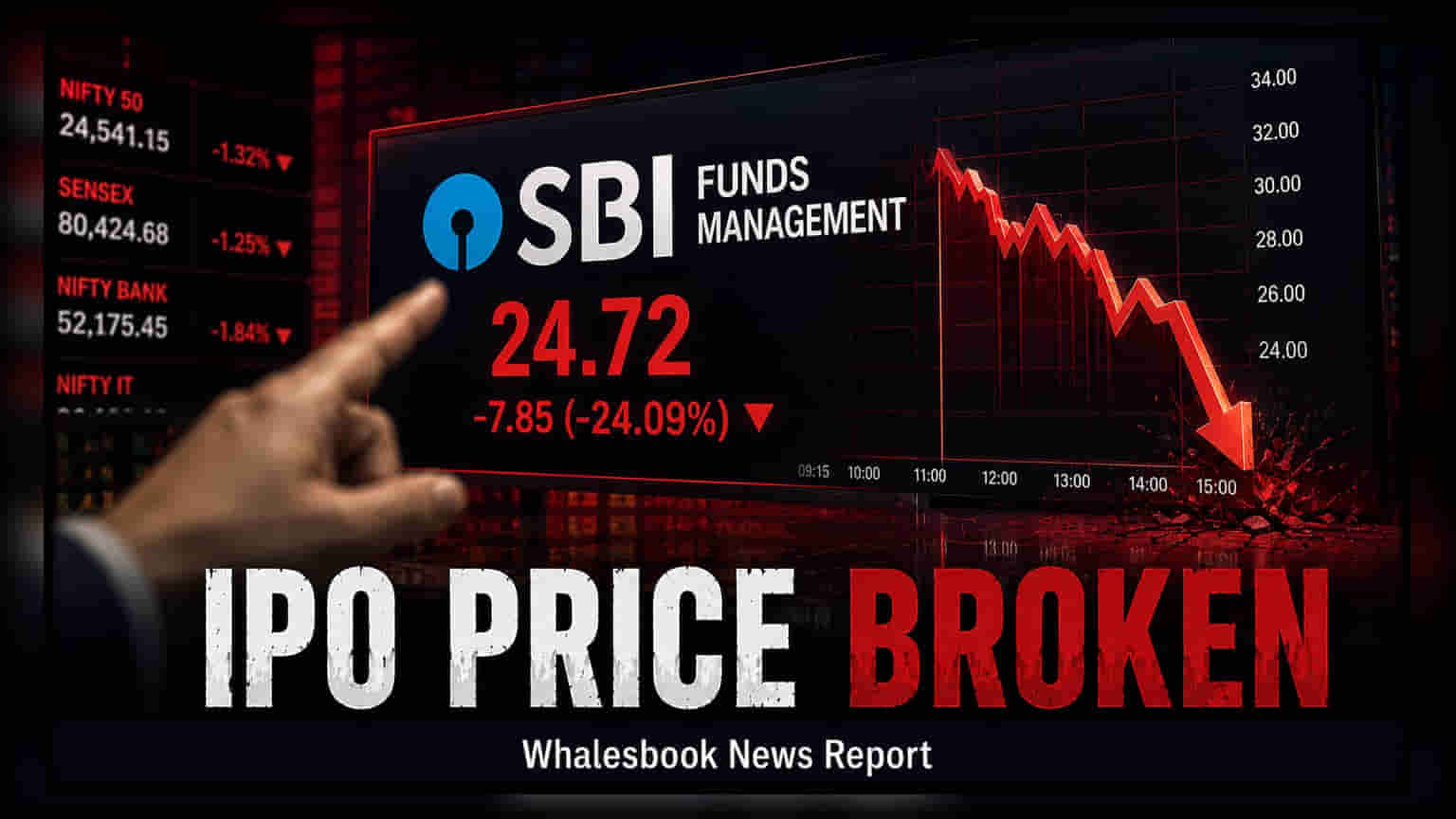
SBI Funds Management shares fell to ₹566.50 on the NSE, dipping below the IPO issue price of ₹574. This performance comes just one week after the asset manager's market debut, during which the stock has faced downward pressure in most trading sessions. The company is currently India's largest asset manager by assets under management.
SBI Funds Management shares have slipped below their initial public offering (IPO) price of ₹574, marking a difficult first week for shareholders since the company’s recent market entry. On Thursday, July 30, 2026, the stock was trading at ₹566.50 on the National Stock Exchange (NSE), reflecting a decline of 1.66 percent. This drop highlights a trend of volatility, with the stock closing lower in six of the last seven trading sessions.
Market Debut and IPO Context
The company’s market debut on July 21 was initially met with optimism, as shares opened at ₹613.30, a premium of approximately 6.85 percent over the IPO price. The public issue, which was priced in the range of ₹545 to ₹574, saw strong demand from investors and was subscribed 41.66 times. The total issue size stood at ₹9,812.91 crore. However, despite the positive start, the share price has struggled to maintain its listing gains, frequently trading near or below the offer price in subsequent sessions.
Business Scale and Industry Position
SBI Funds Management is a significant player in the Indian financial sector, holding the title of the country's largest asset management company (AMC) by quarterly average assets under management. As of March 31, 2026, the firm managed mutual fund assets totaling ₹12.51 lakh crore, giving it a 15.3 percent market share. This scale is supported by a long history, as the company was established in 1987.
For investors, the recent price movement reflects the challenges of navigating early post-listing sentiment. While the company holds a strong position in the mutual fund industry, AMCs are highly sensitive to market cycles. Factors such as overall equity market performance, net inflows into mutual fund schemes, and competition from other large institutional players often influence investor confidence.
The next steps for investors will be to monitor how the company performs in its upcoming quarterly results and whether it can maintain its market share against rivals in a highly competitive sector. Additionally, keeping an eye on broader market trends is important, as the performance of asset managers is often closely tied to the health of the overall stock market and investor appetite for mutual fund products.