

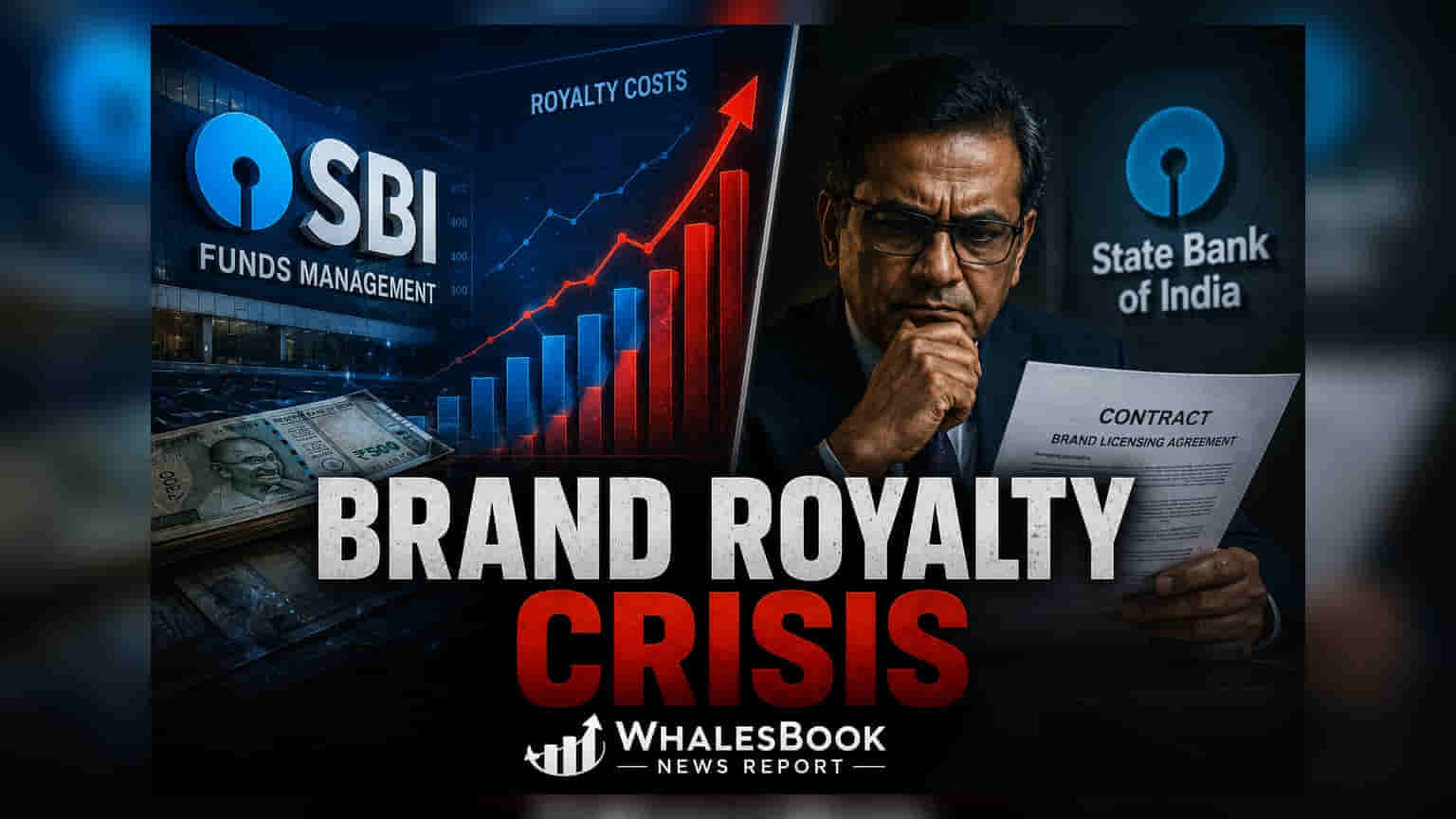
As India's largest asset manager prepares for a ₹13,000 crore IPO, filings reveal rising royalty payments to State Bank of India. Investors should consider how the company’s heavy dependence on the 'SBI' brand and the lack of trademark registration for its logo could impact long-term operations.
SBI Funds Management, India’s largest asset manager by assets under management, is moving ahead with its planned Initial Public Offering (IPO). The company, a joint venture between State Bank of India and French firm Amundi, aims to raise approximately ₹13,000 crore through an Offer for Sale, where existing shareholders will sell part of their stakes. While the scale of the company is significant, investors looking at the upcoming offering must evaluate the specific financial and operational structures disclosed in its regulatory filings.
Impact of Royalty Payments on Margins
A notable expense for the company is the royalty paid to the State Bank of India for using the 'SBI' brand name and logo. Under a licensing agreement established in 2012 and updated in 2024, the firm must pay a royalty equal to the higher of 0.20% of its total income or 2% of its net profit. These costs have consistently trended upward, putting pressure on overall margins. For the first nine months of the fiscal year 2026, these royalty payments reached ₹38.15 crore, accounting for 5.19% of the company's total expenses. This is an increase from 3.34% in the 2023 financial year and 4.73% in the 2025 financial year, highlighting a growing cost that directly impacts the bottom line.
Brand Dependence and Legal Risks
The business model is heavily tied to the brand equity of State Bank of India. According to the company's filings, this arrangement is protected only as long as certain conditions are met. If State Bank of India’s shareholding in the asset management firm drops below 26%, or if the bank decides to exercise its termination rights with notice, the company could lose the right to use the 'SBI' name. The loss of this brand identity would be a significant setback for the company’s market position and investor trust.
Furthermore, there is a specific legal risk concerning the company's visual identity. The current logo used by the company is not registered under the Trade Marks Act, 1999. This creates uncertainty regarding the firm's legal ability to protect its brand from unauthorized use or infringement by others. For potential investors, this highlights the importance of evaluating how much the company’s success relies on the strength of its parent bank versus its own independent operations.
As the IPO date approaches, market participants will likely look for clarity on how the management plans to manage these royalty costs and strengthen its own brand identity independent of the parent bank. The company's future performance will remain sensitive to its licensing relationship with State Bank of India, which currently holds a 61.98% stake, while Amundi India Holding holds 36.40%.