 Whalesbook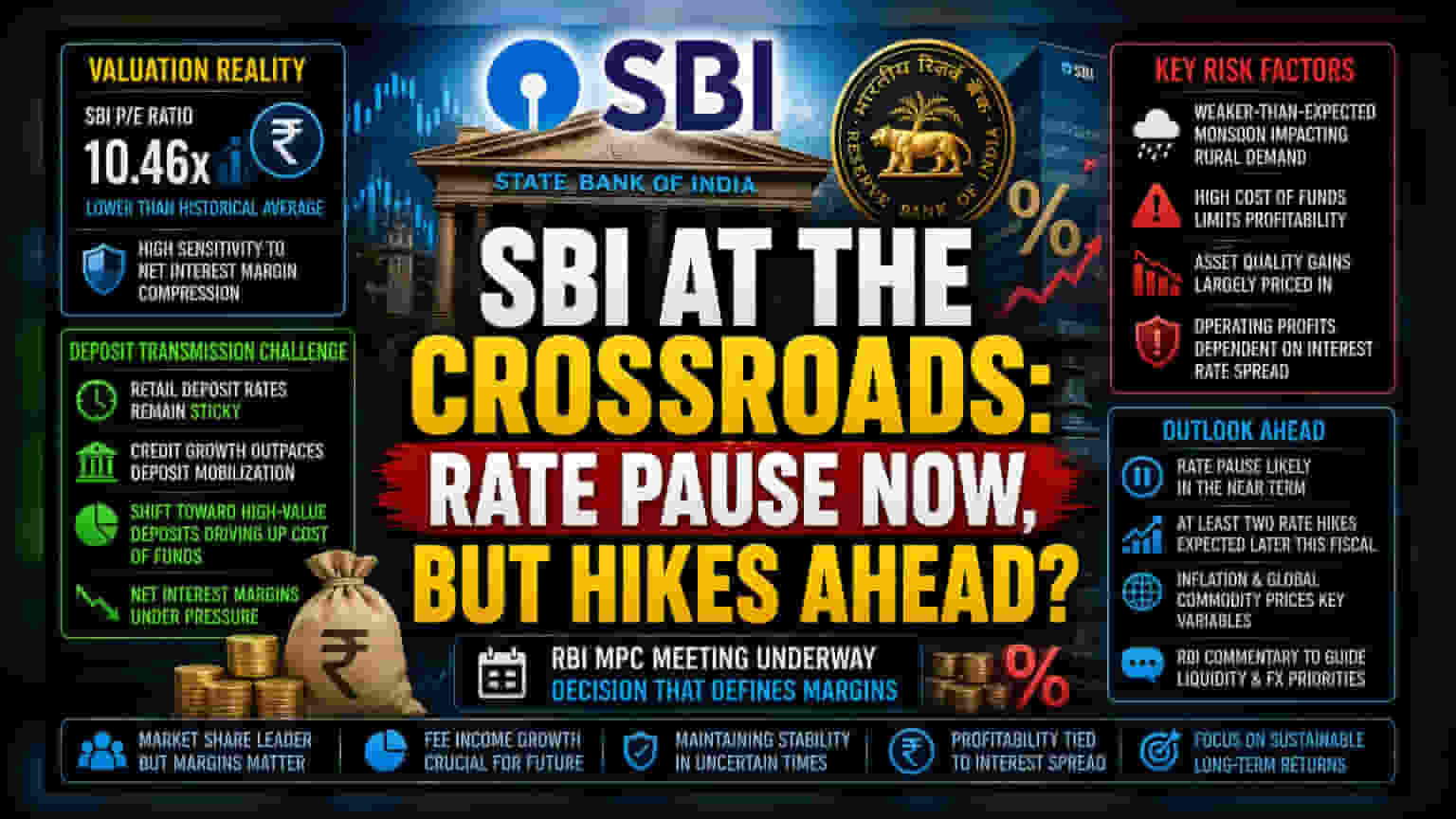


The Valuation Gap and Rate Policy
The push for a policy pause comes as the banking sector grapples with a structural profitability challenge. While the market initially anticipated a pivot in rate cycles to support growth, the current reality involves a persistent divergence between loan and deposit repricing. The State Bank of India, currently trading at a P/E ratio of approximately 10.46x, finds its valuation sensitivity heightened by this margin compression. With the RBI’s Monetary Policy Committee meeting underway, the focus has shifted from growth stimulation to maintaining systemic stability amidst rising funding costs.
The Deposit Transmission Dilemma
The core issue facing lenders is the lag in liability-side repricing. While asset yields were adjusted in response to previous cycles, retail deposit rates have proven sticky. Data indicates that credit growth has consistently outpaced deposit mobilization, forcing banks into a defensive posture. For an institution of SBI’s scale, balancing the need for competitive deposit rates against the preservation of net interest margins (NIMs) is becoming increasingly complex. Recent data shows a shift in deposit concentration, with high-value, large-ticket deposits becoming a larger share of the total mix, which further elevates the average cost of funds and squeezes traditional margins.
Risk Factors and Structural Weakness
Despite maintaining leadership in market share, SBI is not immune to the sector-wide pressures currently impacting its peers. The banking sector’s reliance on high-cost deposits creates a vulnerability to interest rate volatility. Unlike private sector peers that can lean more heavily into high-margin fee-based income, SBI’s profitability remains heavily tied to the interest rate spread. Furthermore, systemic risks—such as the potential for weaker-than-expected monsoon patterns impacting rural demand and credit quality—pose a tangible threat to the bank's long-term outlook. Management must now navigate a environment where asset quality gains are largely priced in, shifting investor focus toward the sustainability of operating profits in a high-cost environment.
The Future Outlook
Looking ahead, the consensus among economists suggests that while a pause is likely in the immediate term, the fiscal year may still see volatility. Expectations for at least two rate hikes later in the fiscal year remain, contingent upon inflationary pressures and global commodity price movements. For now, the focus remains on the RBI’s commentary, which is expected to provide clues on whether the central bank will prioritize liquidity management or exchange rate stability in the coming months.