

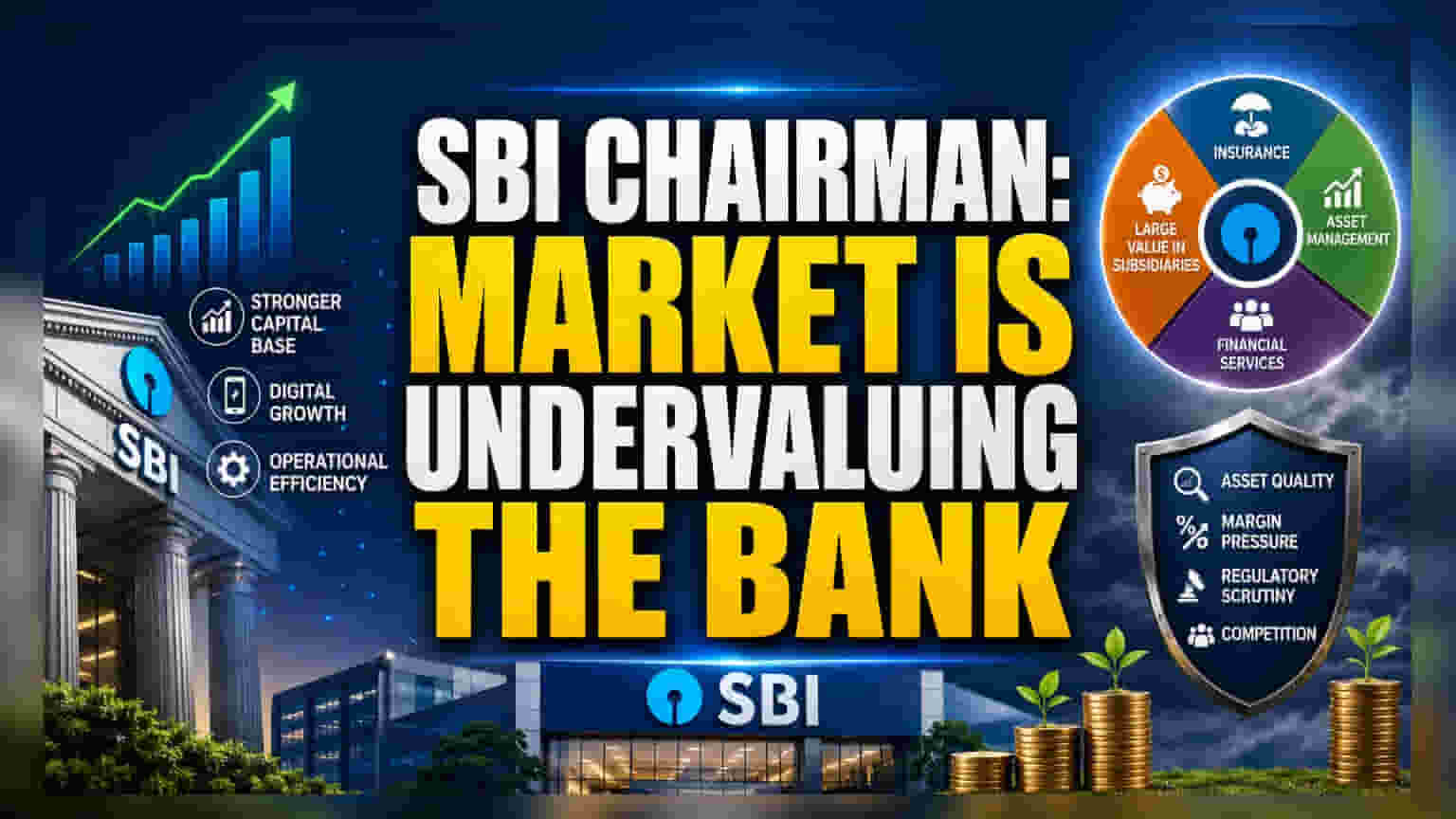
SBI Chairman Challa Sreenivasulu Setty stated the bank deserves a higher market valuation, citing improvements in financial strength, digital adoption via Yono, and earning potential. He highlighted that the bank is actively working to close the valuation gap with private sector peers like HDFC Bank and ICICI Bank.
What Happened
State Bank of India (SBI) Chairman Challa Sreenivasulu Setty recently expressed the view that the market is undervaluing the country's largest lender. He argued that the bank’s current market price does not fully reflect its improved financial robustness, expansive customer franchise, and recent earning performance. Setty emphasized that SBI is narrowing the gap with private sector competitors, supported by a strategy focused on digital innovation and operational efficiency.
The Valuation Debate
For years, public sector banks in India, including SBI, have often traded at lower valuation multiples—specifically the price-to-book (P/B) ratio—compared to their large private sector peers. While private banks have historically commanded a premium due to higher return ratios and perceived agility, the SBI Chairman points to structural changes as a reason for this to shift. These include a significantly strengthened capital base, following a Rs 25,000 crore qualified institutional placement (QIP) in 2025, and better risk-adjusted capital ratios, which S&P Global Ratings projected to improve to 7%-7.5% by mid-2027.
Digital Growth and Operational Efficiency
The bank’s strategy hinges on three main pillars: the Yono 2.0 digital platform, internal operational re-engineering via 'Project Saral,' and capital enhancement. The Yono platform is a critical focus for customer acquisition, particularly among the under-30 demographic. Simultaneously, 'Project Saral' is designed to streamline internal processes, aiming to reduce the time taken for credit approvals—particularly in the MSME segment, which now has an approval time of 15-20 minutes.
Hidden Value in Subsidiaries
Beyond core banking operations, the bank holds significant value in its subsidiaries spanning insurance, asset management, and other financial services. Management data indicates that investments amounting to roughly Rs 6,000 crore have grown to an estimated value of Rs 3 trillion. The potential listing of SBI Funds Management is another event investors often watch as a way to unlock this value, though the timing remains a strategic decision for the management.
Risks and Sector Pressure
While the outlook appears positive, investors should consider the broader risks inherent in the banking sector. Asset quality remains a key monitorable, particularly as the bank expands lending to the MSME, retail, and power sectors. Any economic slowdown can lead to higher credit costs or a rise in bad loans, which could pressure profit margins. Furthermore, the banking sector faces stiff competition for deposits, which may force banks to increase interest rates on savings, potentially impacting net interest margins (NIMs). Investors should also note that regulatory scrutiny on digital lending and retail credit practices can impact operational costs and growth speed.
What Investors Should Track
Moving forward, the primary monitorables for investors include the adoption rates of Yono 2.0, the actual progress of loan book growth in the retail and MSME segments, and the bank’s ability to maintain stable profit margins despite competitive deposit pricing. Additionally, any updates regarding the potential listing of subsidiaries or further capital allocation strategies will be key indicators of how the management intends to unlock shareholder value.