 Whalesbook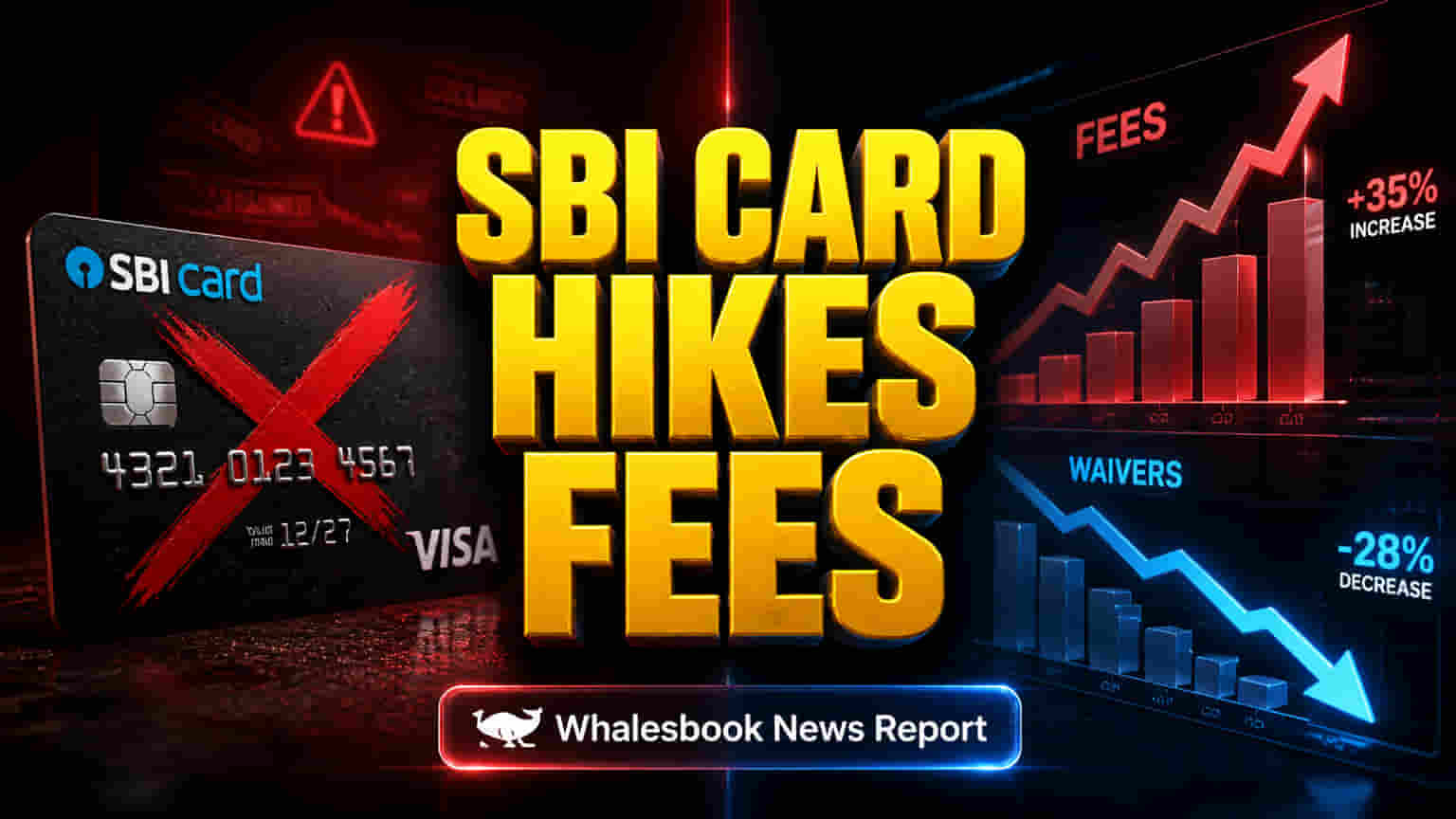


SBI Card is adjusting its credit card operations, starting May 2026, to improve financial performance through new fee structures and revised reward redemption policies. These moves are designed to strengthen revenue and manage costs in India's competitive credit card market.
Fee Hikes and Waiver Changes
SBI Card is increasing late payment charges and tightening annual fee waivers, aiming to boost revenue. Effective May 1, 2026, late payment fees will apply to outstanding balances over ₹100, with specific charges for balances between ₹100-₹500 and ₹500-₹1,000. The BPCL SBI Credit Card will see its annual fee waiver threshold doubled to ₹1 lakh in annual spends, up from ₹50,000. This aims to encourage higher customer spending or generate revenue from those who no longer meet the waiver. Similar strategies, like spend-based waivers, are used by competitors such as HDFC Bank and Axis Bank.
New Rules for Reward Points
Further changes affect SBI Card's reward points program. Starting April 1, 2026, there will be a monthly limit of 60,000 reward points for statement credits. Redemptions must be made in multiples of 4,000 points, with exceptions for premium cards like the Air India SBI Signature Card and PhonePe SBI Card variants. This update helps manage the company's reward liabilities, a common industry practice balancing customer loyalty with financial sustainability. For comparison, ICICI Bank also has specific rules and validity periods for its reward points, sometimes charging fees for redemptions.
Regulatory Compliance and Market Growth
SBI Card also confirmed its commitment to Reserve Bank of India (RBI) guidelines on credit reporting and recovery. The company will provide one month's notice before reporting defaults to Credit Information Companies (CICs). This aligns with RBI regulations, such as the Master Direction – Credit Information Reporting, 2025, aimed at improving data standards and consumer rights, though some norms are deferred until July 1, 2026. The Indian credit card market is expected to grow strongly, reaching USD 39.5 billion by 2034, driven by digital adoption and financial inclusion. Competition is intense among HDFC Bank, ICICI Bank, and Axis Bank, who also use tiered rewards and fees. SBI Card's P/E ratio is around 28-30, with a market cap near ₹61,000 crore. Despite a recent stock price dip to around ₹640, analysts mostly give 'Hold' or 'Sell' ratings, with a 12-month price target near ₹745. MarketsMojo rates SBI Card as 'Hold' due to fair valuation and bearish technicals.
Customer Reaction and Competition Risks
While these policy changes aim to increase revenue, higher fees and tighter waiver conditions could deter some price-sensitive customers, especially as rivals may offer softer terms. Doubling the BPCL SBI Credit Card waiver threshold, for example, significantly raises the spending bar. Restrictive reward point caps and redemption rules might also reduce the perceived value of loyalty programs for some users, encouraging them to seek other options. With competitors like HDFC Bank, ICICI Bank, and Axis Bank actively competing for market share, SBI Card must balance revenue goals with customer retention. Any perceived drop in value could lead customers to switch, particularly as rivals innovate with personalized rewards. The current analyst consensus for 'Hold' or 'Sell' signals caution about the stock's short-term potential, possibly due to these competitive pressures and how fee structures might affect customer behavior.
Analyst Outlook
Analysts project a mixed outlook for SBI Card, with the prevailing 'Hold' consensus indicating a neutral stance given its strategic moves and market competition. Average 12-month price targets hover around ₹745. The company's success in implementing these revenue-boosting changes while keeping customers loyal will be key to its future performance. The growth in India's credit card market through digitization and premiumization offers opportunities, but SBI Card needs to navigate these trends effectively to maintain its market position and meet investor expectations.