

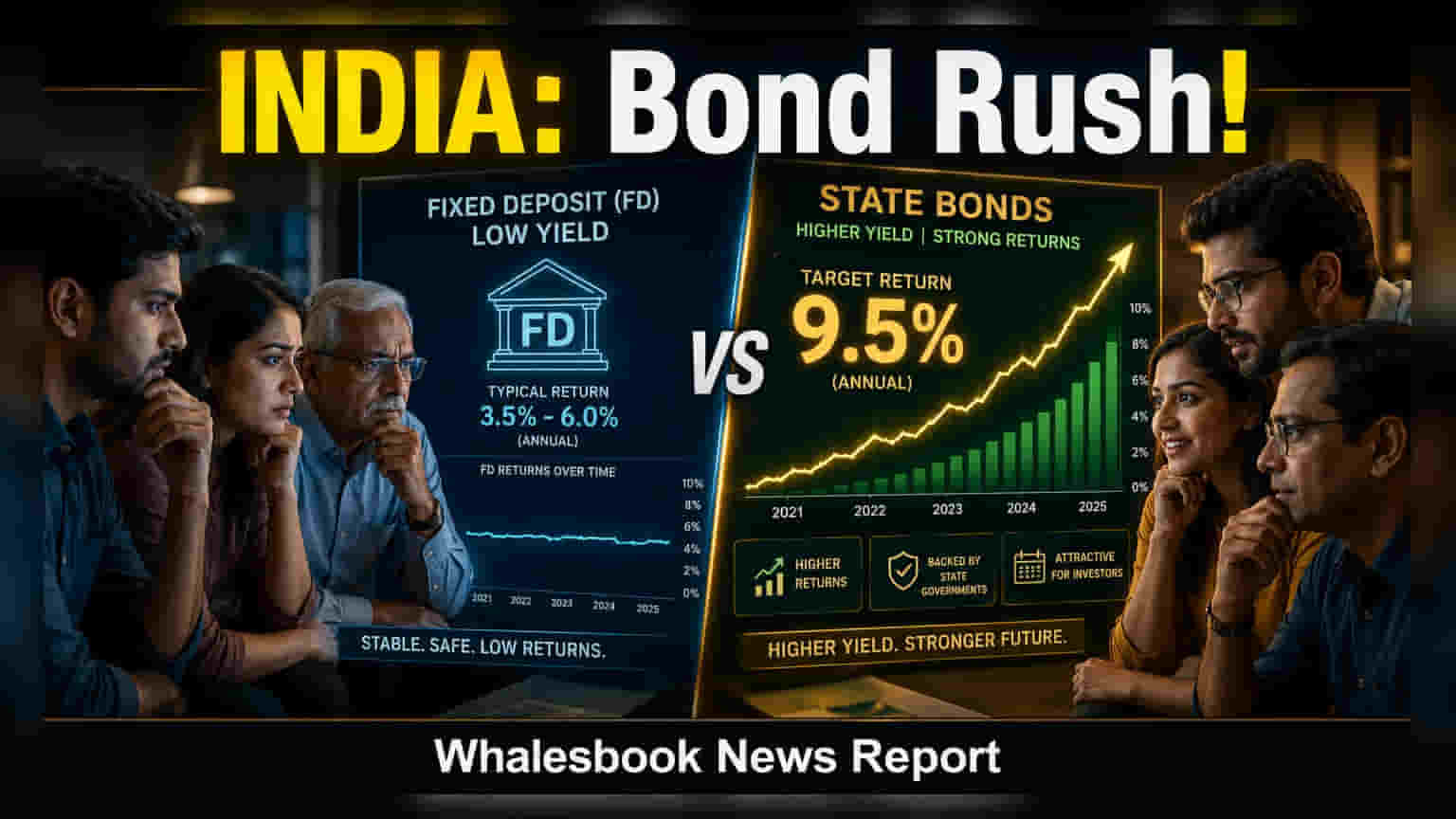
Retail interest in state-backed bonds is surging, with registrations on the RBI Retail Direct platform growing nearly nine-fold since late 2022. Investors are increasingly choosing State Development Loans and state-guaranteed bonds for yields that often outperform traditional fixed deposits.
Detailed Coverage
Indian retail investors are increasingly moving away from traditional fixed deposits and mutual funds, choosing instead to invest in state-backed debt instruments. Data indicates that registrations on the Reserve Bank of India’s Retail Direct platform have climbed from approximately 71,000 in October 2022 to over 6.43 lakh by June 2026. This shift is driven by a search for higher yields and improved digital access to government-backed securities.
Understanding State-Backed Debt Options
Investors currently have access to two primary categories of state-backed instruments: State Development Loans (SDLs) and state-guaranteed bonds. SDLs are direct borrowings by state governments that are managed through the RBI. These instruments are generally perceived to carry a high level of safety and currently offer yields between 7.40% and 7.52% for tenures extending up to 18 years. Because they are issued by state governments, they typically trade at a yield premium of 50 to 100 basis points compared to central government securities.
State-guaranteed bonds represent a different segment, issued by state-owned entities rather than the state government itself. These bonds come with an explicit repayment guarantee from the respective state government. Currently, these bonds are attracting significant attention as they offer yields in the range of 8.60% to 9.15%. This return profile positions them between high-grade corporate bonds and government securities, providing a balance for those seeking yields above standard bank deposits.
Evaluating Yields and Risks
When comparing these instruments to corporate bonds, investors often look at the credit quality of the issuer. While AAA-rated corporate bonds trade at a narrow premium to state securities, AA-rated corporate paper often provides yields between 8.5% and 10.5%. State-guaranteed bonds are being viewed by many as a middle ground, offering returns near AA-rated corporate levels but with the perceived backing of a state guarantee.
Despite the appeal of higher returns, these investments are not without risk. While credit risk—the possibility of an issuer failing to repay—is considered very low for these instruments, other factors remain. Market-linked risks include price changes driven by interest rate movements, which can impact the value of bonds, particularly those with longer maturities. Liquidity is another factor to track, as the secondary market for state-specific paper is generally less active than the market for central government securities, which could affect the ability to exit an investment at a desired price.
Finally, the fiscal health of the issuing state remains an important monitorable for investors. Analysts suggest that factors such as a state’s debt levels and revenue profile should be considered alongside the bond’s yield. Furthermore, investors should remain aware of reinvestment risk, where future coupon payments may need to be invested at new, potentially lower market rates, and the impact of inflation on the real value of fixed interest payments.