 Whalesbook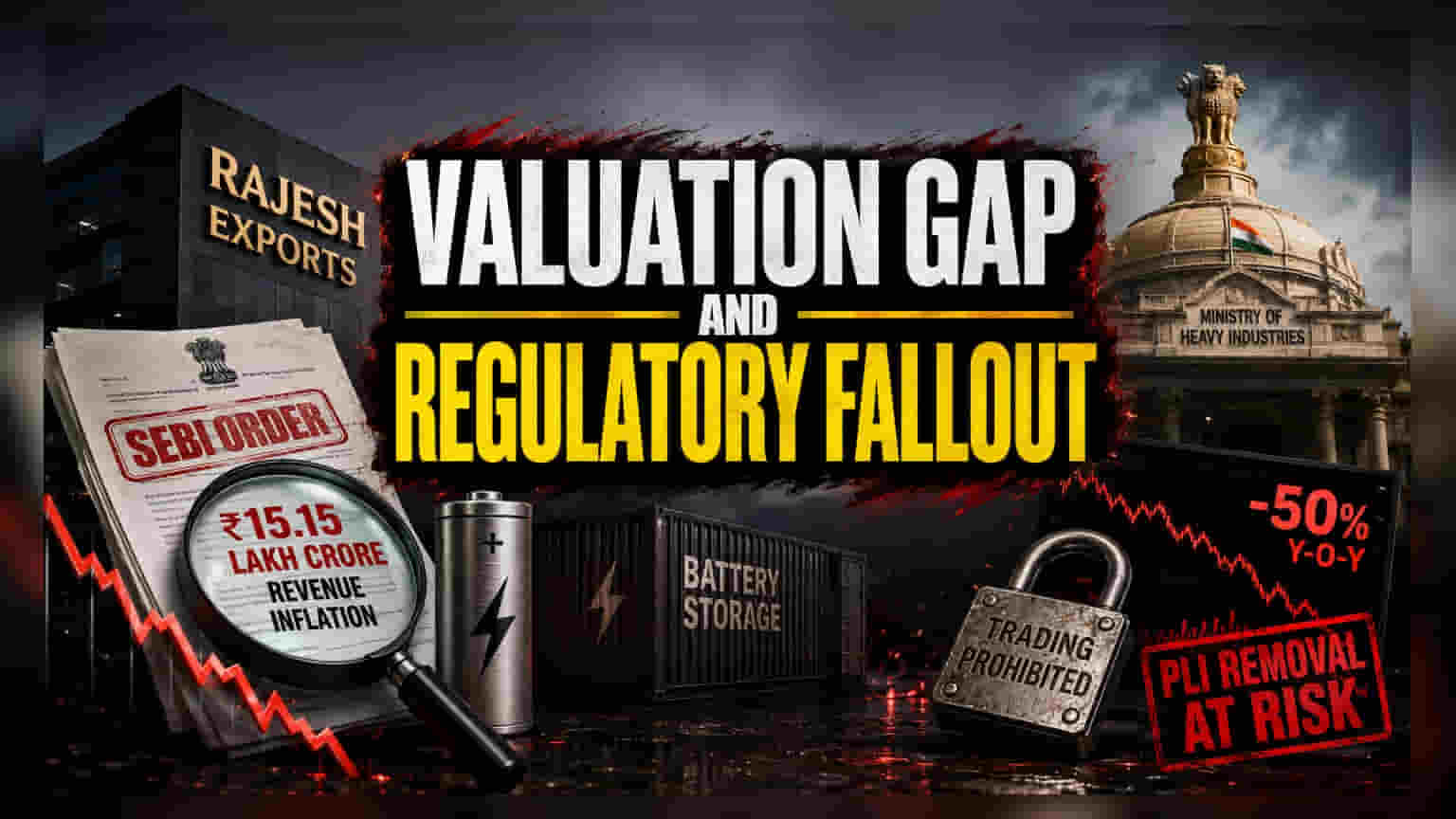


The Valuation Gap and Regulatory Fallout
The potential removal of Rajesh Exports from the Advanced Chemistry Cell (ACC) production-linked incentive (PLI) scheme marks a sharp reversal for a firm that once commanded a central role in India’s industrial diversification. While the company has long operated in the high-volume, low-margin domain of gold refining, its recent pivot into lithium-ion battery storage was touted as a strategic upgrade. Instead, that ambition is now mired in a 109-page ex parte interim order from the Securities and Exchange Board of India (SEBI), which accuses the firm of orchestrating one of the largest financial misrepresentations in recent history.
The Forensic Deep Dive
The allegations revolve around a claimed inflation of ₹15.15 lakh crore in revenues between fiscal years 2021 and 2025. SEBI’s investigation suggests that nearly all of this revenue was channeled through overseas subsidiaries, notably Valcambi SA, yet standalone records failed to substantiate these massive inflows. More concerning for shareholders, the regulator identified a pattern of opaque related-party transactions and the potential diversion of funds through personal accounts. These governance lapses have not only triggered a market sell-off—driving the stock down over 50% year-over-year—but have also led to an immediate prohibition on Chairman Rajesh Mehta from trading in the company's securities.
The Bear Case: Structural Weakness
Unlike industry peers such as Titan Company, which maintains a clear retail-led margin profile and consistent dividend history, Rajesh Exports is increasingly viewed as a high-risk entity with precarious financial transparency. The company’s reliance on extremely thin margins—often cited in the range of 0.3% to 0.5%—makes the alleged revenue inflation even more damaging to its long-term viability. The lack of dividend payouts despite reported profits has long served as a red flag for institutional investors. Furthermore, the potential loss of the PLI beneficiary tag could leave the company with stranded assets in its battery division, Elest Pvt Ltd and ACC Energy Storage Pvt Ltd, without the promised government subsidies to offset capital expenditure.
Future Outlook and Policy Hurdles
While management maintains that the entire affair is a ‘communication error’ stemming from the complexity of their global operations, the Ministry of Heavy Industries remains unimpressed. With Minister H D Kumaraswamy expected to make a final decision shortly, the firm faces a tightening window to justify its continued participation in the national battery strategy. Analysts remain wary, noting that even if the company survives the immediate regulatory storm, the erosion of market trust and the mandatory forensic audit will likely constrain its ability to access capital markets for the foreseeable future.