

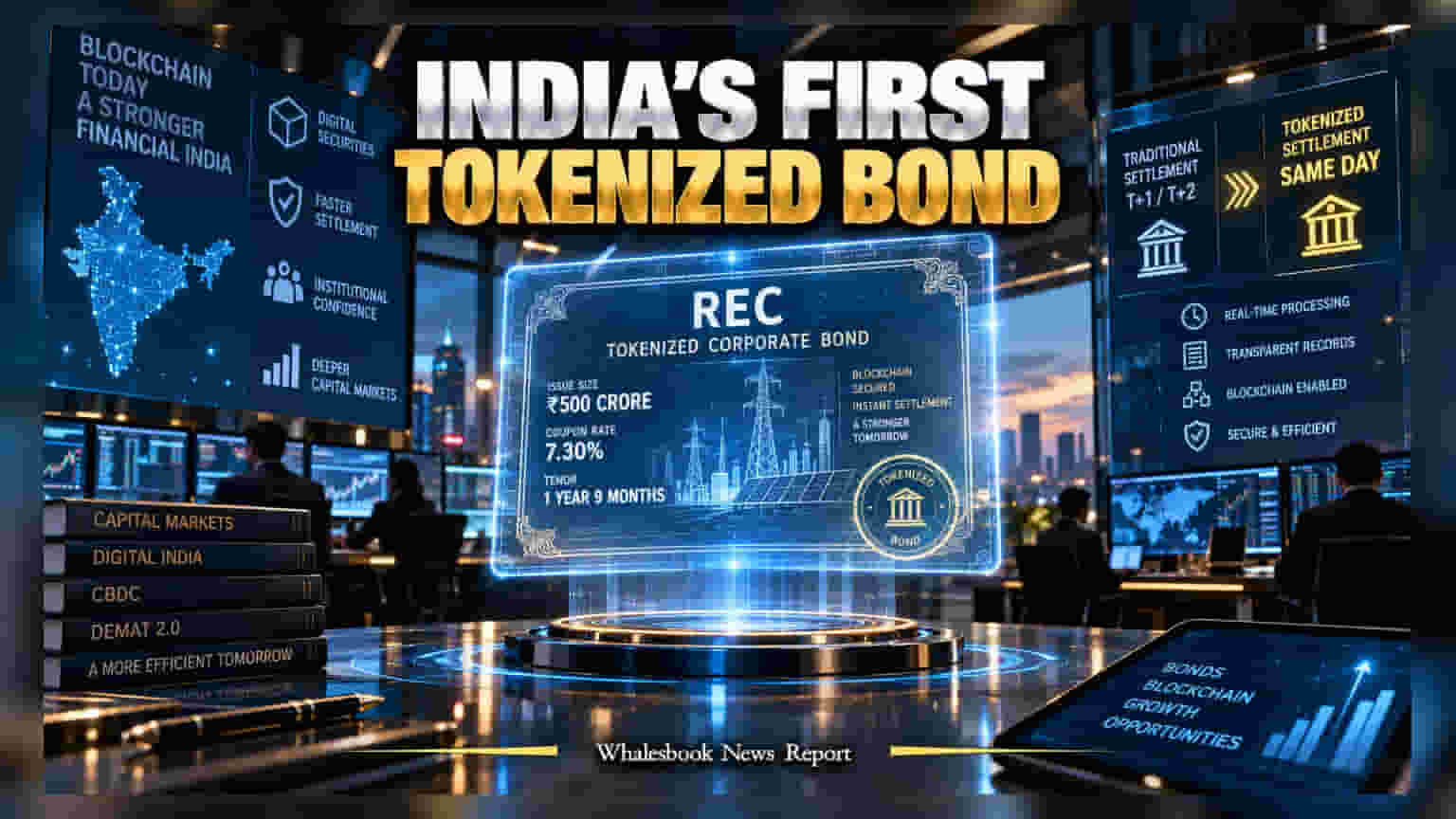
State-owned REC Ltd. has successfully completed India's first tokenized bond sale, raising ₹500 crore. The pilot used blockchain technology and the RBI’s digital currency to achieve same-day settlement, attracting strong demand from institutional investors like HDFC Bank and ICICI Bank.
State-owned lender REC Ltd. has executed India’s inaugural tokenized corporate bond issuance, a development that aims to modernize the settlement infrastructure of the domestic debt market. The company successfully raised ₹500 crore through this pilot project, which was oversubscribed nearly eight times, drawing total bids of ₹796 crore.
Technology and Settlement Efficiency
The transaction marked a shift from traditional manual settlement processes, which typically take one or two days, to a streamlined, same-day process. By leveraging blockchain technology and the Reserve Bank of India’s wholesale Central Bank Digital Currency (CBDC), REC enabled a seamless integration of pay-in, allotment, and listing. This approach, often referred to within the industry as Demat 2.0, is designed to reduce the time lag between purchasing a bond and having it settled in an investor's account, potentially lowering operational risks and increasing efficiency for institutional participants.
Institutional Participation
The demand for this inaugural offering was robust, attracting a syndicate of major institutional buyers. Financial institutions, including HDFC Bank and ICICI Bank, were among the key participants. The bonds carry a coupon rate of 7.30% with a tenor of one year and nine months. The participation of such large banks and mutual funds indicates a growing willingness among top-tier lenders to engage with blockchain-based financial infrastructure, provided it offers faster and more transparent settlement.
Market Context and Risks
While this issuance represents a technical milestone, it is currently operating within the SEBI regulatory sandbox framework. This implies that the instrument is in a testing phase rather than a fully mainstream, established product. Investors and market observers should note that the secondary market for these tokenized assets is in its nascent stage. This may initially limit liquidity, meaning it could be more difficult for holders to exit their positions compared to traditional, non-tokenized corporate bonds.
Additionally, access is currently restricted to institutional investors who possess the specific CBDC wallets and digital infrastructure required to handle these assets. This creates an entry barrier for retail investors and smaller entities. As the sector explores this technology, future developments may depend on whether regulators expand the scope of these instruments to a broader market.
What Investors Should Monitor
For the debt market, this pilot serves as a reference point. Other companies, such as Larsen & Toubro, are reportedly exploring similar tokenized issuances. The key monitorable for market participants will be the secondary market activity for these specific bonds, the stability of the blockchain platform during high-volume trading, and any subsequent regulatory updates that might determine how quickly this technology becomes standard practice for corporate debt.