

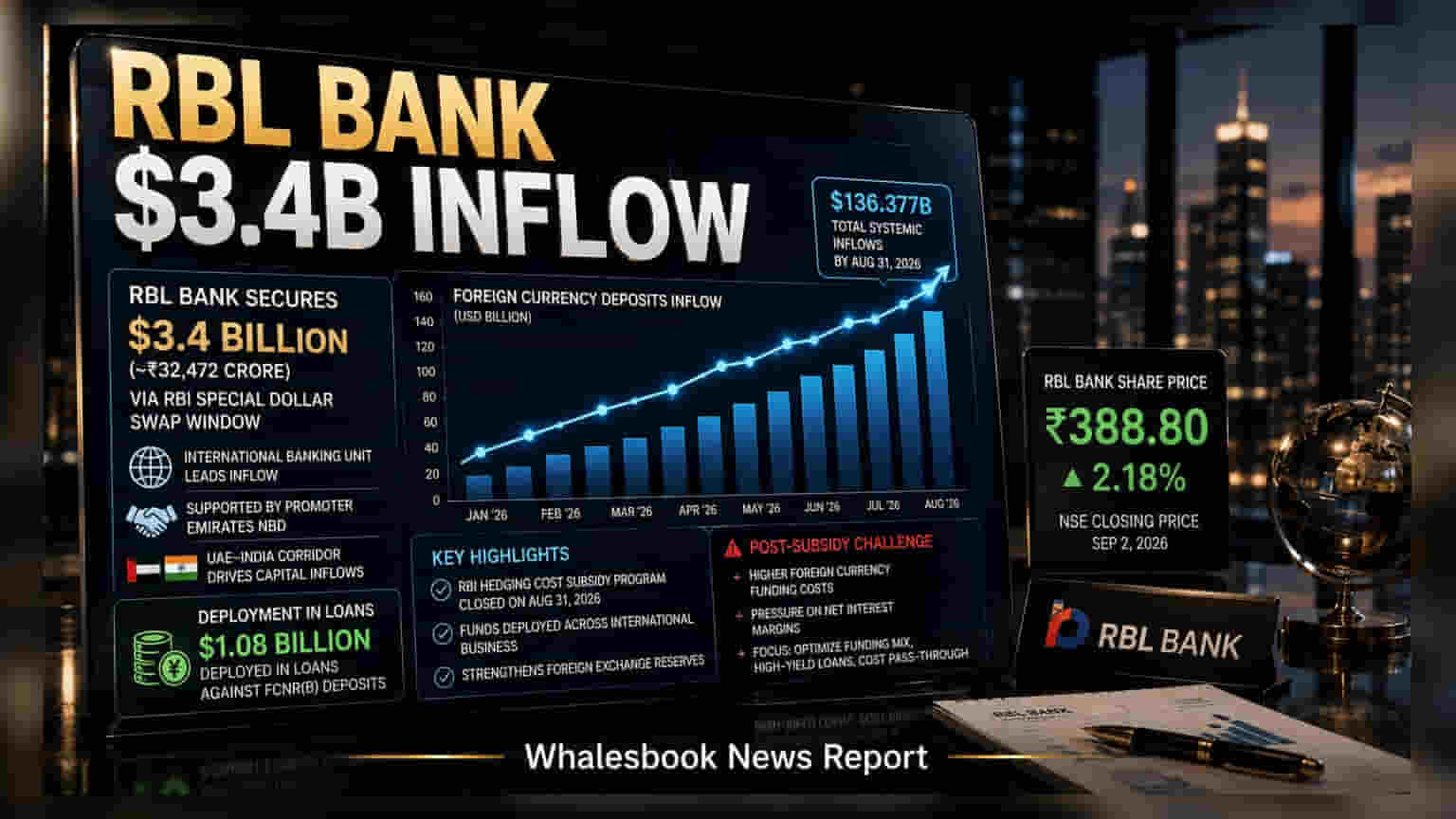
RBL Bank raised $3.4 billion in foreign currency deposits through the RBI's special swap facility before it ended on August 31, 2026. The bank used these funds to deploy $1.08 billion in loans. With the government’s hedging subsidy program now closed, the primary investor focus shifts to how the bank manages funding costs and protects profit margins without this support.
RBL Bank successfully utilized the Reserve Bank of India’s (RBI) special dollar swap window, securing $3.4 billion (approximately Rs 32,472 crore) in foreign currency deposits. This effort was finalized before the program’s closure on August 31, 2026. The bank's international banking unit was central to this activity, with support from its promoter, Emirates NBD, which helped the lender utilize the UAE-India financial corridor to attract these inflows.
Beyond simply acquiring these deposits, the bank deployed $1.08 billion in loans against the newly available foreign currency. This allowed the bank to put the capital to work in its international business rather than keeping it idle. This strategy was part of a larger trend this summer, as several private Indian banks moved quickly to capture dollar deposits while the RBI’s hedging cost subsidy was still active.
The industry-wide participation in this RBI facility was extensive. By the August 31 deadline, systemic inflows reached $136.377 billion. The program was designed to bring in foreign capital and help support the country's foreign exchange reserves, with the government covering part of the hedging costs for banks.
With the subsidy program now concluded, the financial environment for banks has shifted. The key challenge for RBL Bank and its peers is to manage foreign currency funding costs without government assistance. Investors will likely monitor the bank’s net interest margins in upcoming quarters. If the cost of maintaining these deposits rises, it could create pressure on profitability. The bank will need to show that it can either pass on these costs, optimize its funding mix, or continue to generate high-yield loans from these funds to keep margins stable.
Shares of RBL Bank responded to the news with a 2.18% gain, closing at Rs 388.80 on the National Stock Exchange. While the market has reacted positively to the successful capital mobilization, the long-term impact on the bank's bottom line remains a key monitorable. Shareholders will be looking for management commentary in future earnings calls regarding how the bank plans to navigate the post-subsidy landscape.