 Whalesbook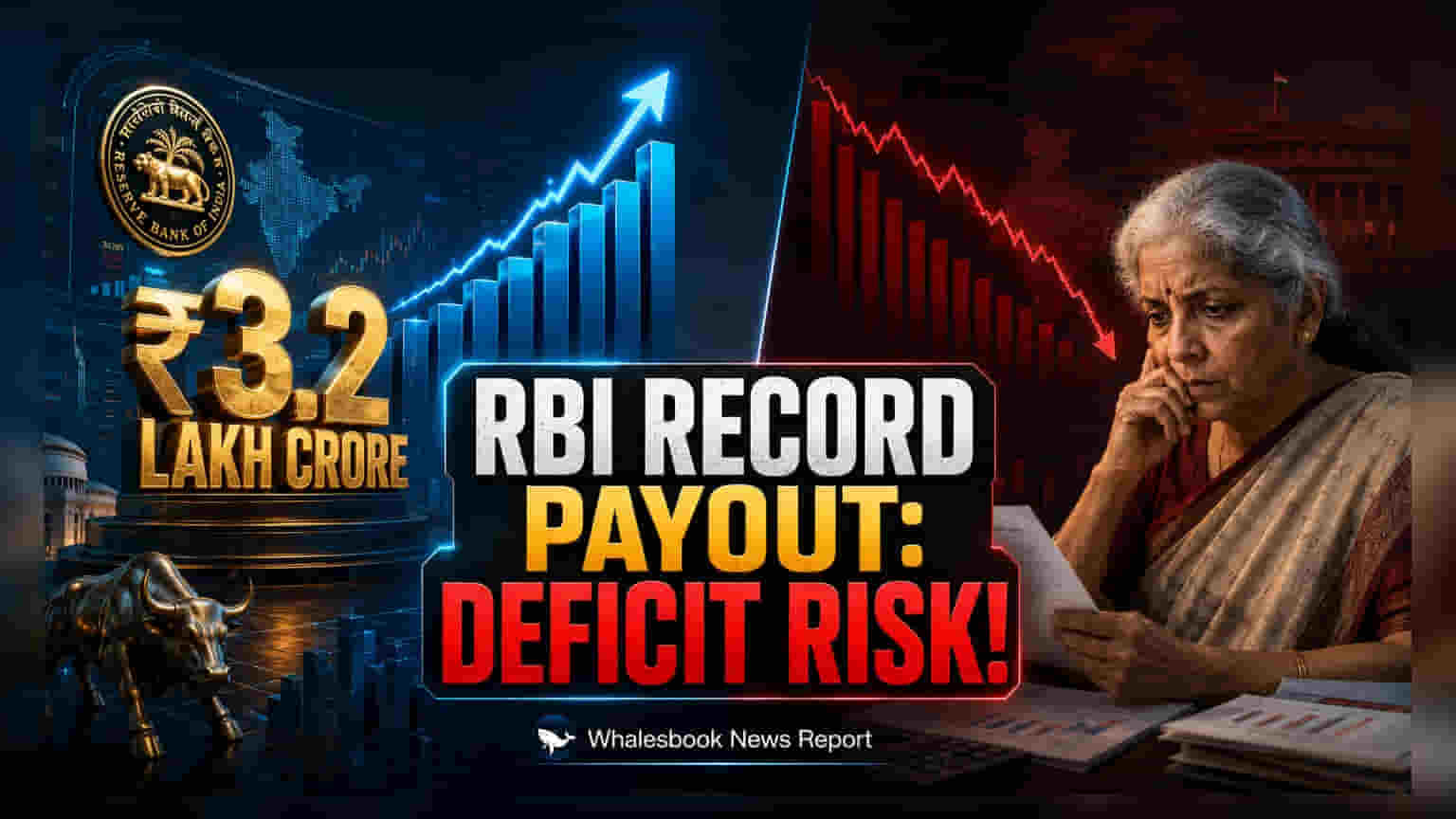


Strategic Windfall Masks Fiscal Headwinds
The Reserve Bank of India's (RBI) forthcoming record dividend transfer, estimated between ₹2.9 lakh crore and ₹3.2 lakh crore, provides a substantial, albeit temporary, fiscal lifeline. This surplus, generated primarily through advantageous foreign exchange operations, is set to bolster government coffers. However, the underlying fiscal pressures remain significant, casting doubt on the government's ability to adhere to its deficit reduction goals.
Deepening Reliance on Central Bank Surpluses
The government's increasing dependence on RBI dividends is a growing concern among financial observers. Over the last two decades, these transfers have escalated dramatically, indicating a potential shift away from sustainable revenue generation. This trend raises questions about the long-term fiscal health and the government's capacity to manage its finances without recurrent extraordinary income from the central bank.
Deficit Projections Signal Slippage
Despite the anticipated dividend, a majority of economists forecast India's fiscal deficit to exceed the government's target. Persistent elevated crude oil prices, a weakening rupee, and potential increases in expenditure are cited as key factors. Projections suggest the deficit could reach 4.7% of GDP, potentially surpassing previous years' figures and the stated 4.3% objective. Some analysts foresee a deficit as high as 5% of GDP, highlighting the persistent fiscal challenges.
The Mechanics of RBI's Profitability
The RBI's enhanced profitability stems from its strategic approach to U.S. dollar sales. By aligning these sales with lower historical purchase prices, the central bank has realized substantial gains in the current high-exchange-rate environment. This financial maneuver, while boosting immediate government revenue, could obscure the actual state of public finances and is viewed by some as a short-term fix rather than a sustainable fiscal strategy.
Taxation: The True Foundation of Fiscal Stability
Experts emphasize that robust tax collection remains the cornerstone of sound fiscal management, rather than relying on central bank profits. While the RBI dividend offers essential support, sustainable fiscal discipline necessitates strengthening tax revenues and optimizing public spending. The current reliance on central bank windfalls underscores the need for structural reforms in revenue generation and expenditure control to ensure long-term economic stability.