

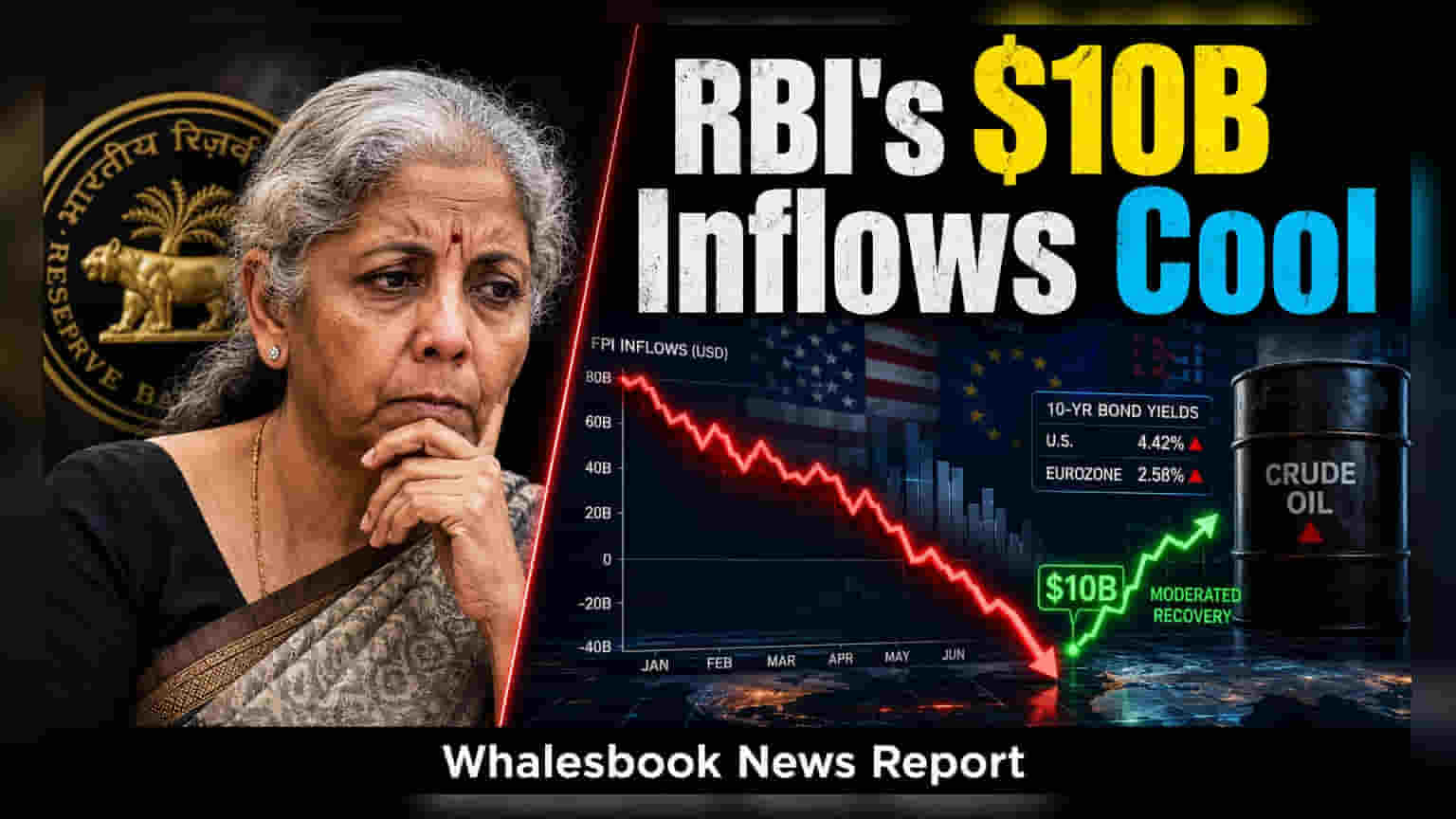
The RBI's special FCNR(B) deposit scheme has successfully brought in nearly $10 billion to Indian banks. However, rising global bond yields and higher dollar funding costs are now slowing down new inflows. This trend highlights the impact of external market conditions on the cost of raising foreign currency for Indian lenders.
Indian banks have collected nearly $10 billion through the Reserve Bank of India’s (RBI) special Foreign Currency Non-Resident (Bank) or FCNR(B) deposit scheme. This program was introduced to help stabilize the Indian rupee and increase foreign capital reserves by encouraging Non-Resident Indians (NRIs) to keep their foreign currency deposits with Indian lenders.
While the scheme saw an initial positive response, the momentum has moderated in recent weeks. A major reason for this slowdown is the rising cost of dollar funding. Banks are currently facing challenges as global bond yields, particularly in the United States and Europe, have moved higher. When these yields rise, the cost for Indian banks to hedge and manage these foreign currency deposits also increases, making it more difficult to offer competitive rates that attract new inflows.
Impact of Global Factors on Banking
External pressures, including geopolitical tensions in West Asia, have kept crude oil prices elevated. This has created downward pressure on the Indian rupee, which recently saw a decline against the dollar. The increase in the cost of raising dollar funds—estimated by market observers at 25 to 40 basis points—has made the environment less favorable for large-scale mobilization. Originally, some estimates suggested the scheme could attract $50 billion to $70 billion, but analysts now suggest that achieving this volume depends heavily on a decline in global bond yields and lower funding costs.
Government and Regulator Focus
To address these hurdles, Finance Minister Nirmala Sitharaman recently held discussions with the leadership of major Indian banks, emphasizing the need for better outreach to NRI customers. The focus is to maintain interest in these deposit products despite the challenging global economic environment.
In June 2026, the RBI introduced a special provision allowing banks to mobilize fresh FCNR(B) deposits for terms between three and five years. To support banks, the regulator offered a concessional swap facility. Under this arrangement, the RBI effectively covers the hedging costs for these deposits. By absorbing this burden, the central bank aimed to make foreign capital mobilization more viable for banks that might otherwise find the cost of hedging prohibitive in the current market.
For investors, the key monitorable will be the future trend in these inflows as banks report their quarterly progress. Investors may track whether the RBI’s swap facility remains sufficient to offset rising funding costs or if further measures are required to sustain the inflow of foreign currency. The overall health of this mobilization effort will continue to depend on the stability of global bond markets and the trend in crude oil prices, which directly influence both the rupee and the broader cost of capital for Indian banks.