

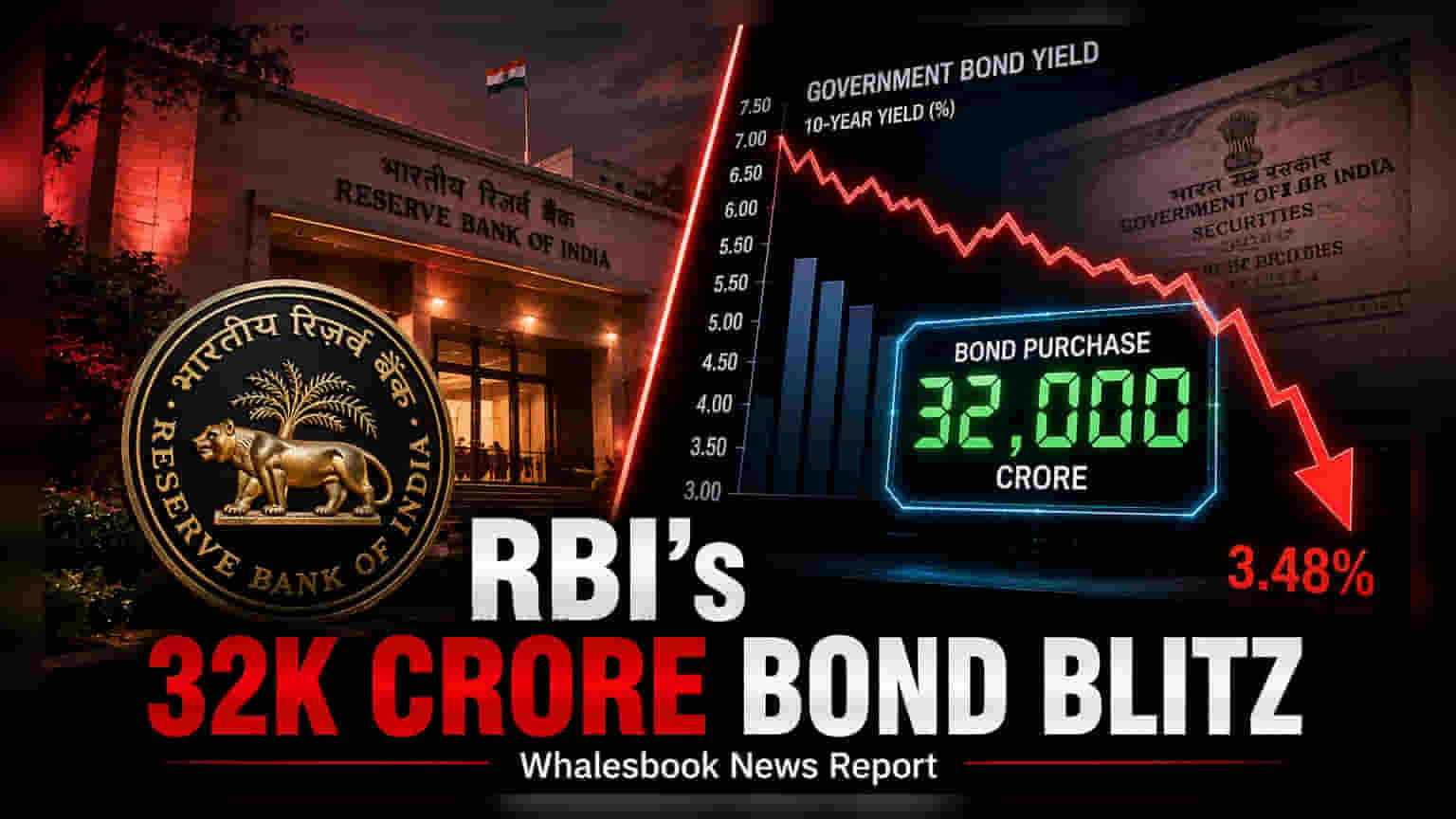
The Reserve Bank of India (RBI) will hold an underwriting auction for ₹32,000 crore in government bonds on August 7, 2026. This auction includes two sets of securities maturing in 2031 and 2066, aimed at ensuring the government’s borrowing program proceeds smoothly. Investors and analysts monitor these sales as they serve as a benchmark for market liquidity and interest rate trends.
The Reserve Bank of India (RBI) is set to conduct an underwriting auction on August 7, 2026, to ensure the successful sale of ₹32,000 crore in government securities. This exercise is part of the government's standard borrowing program, which funds essential public spending and infrastructure projects. To guarantee that the full amount is raised, the RBI uses an underwriting process where designated financial institutions, known as Primary Dealers, agree to purchase any portion of the bonds that remains unsold by other market participants.
The auction will cover two specific types of government securities. The first is a ₹21,000 crore tranche of the 6.36% Government Security maturing in 2031. The second is an ₹11,000 crore tranche of the 7.71% Government Security maturing in 2066. Additionally, the government has kept an option to retain extra subscriptions of up to ₹2,000 crore for each security, allowing for flexibility based on market demand.
Primary Dealers play a vital role in this process. By acting as underwriters, they provide a safety net for the government’s fundraising efforts. They are committed to a Minimum Underwriting Commitment, which requires them to place bids for a set portion of the bonds, ensuring that the government does not face a shortfall during the auction. The entire process will be conducted electronically through the RBI's e-Kuber system using a multiple price-based method, which is the standard mechanism for such government debt sales.
For investors and market observers, these auctions are significant because they provide insight into the current cost of borrowing for the government. When the government issues debt, the resulting bond yields often influence the interest rate environment for the broader economy. Bond yields are sensitive to several factors, including the RBI’s monetary policy stance, domestic inflation data, and global fluctuations in crude oil prices. Higher volatility in these areas can sometimes lead to swings in bond prices, which is a risk factor investors consider when looking at the debt market.
The next important update for the market will be the results of the auction, which will clarify the final demand for these securities and the prevailing yield at which the bonds are issued. This data helps analysts gauge market sentiment regarding long-term interest rates and the government's fiscal health.