

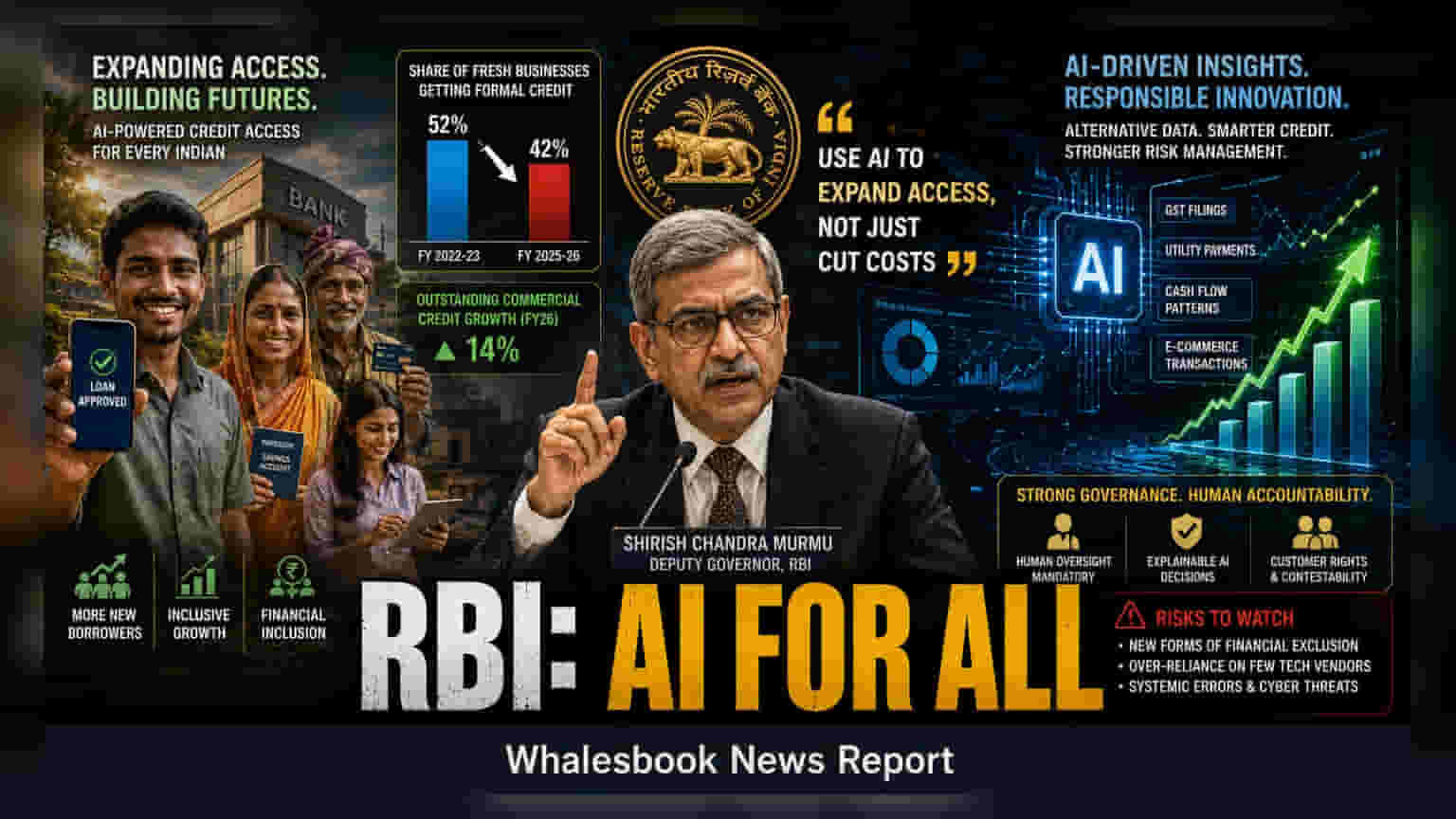
The Reserve Bank of India has signaled that banks must shift their AI strategy from simple cost-cutting to expanding the banking system. Deputy Governor Shirish Chandra Murmu pointed to a concerning decline in new businesses entering the formal credit network, urging banks to use technology to reach underserved customers rather than just automating existing tasks.
The Reserve Bank of India (RBI) has issued a clear directive to banks regarding their artificial intelligence strategy. During the CNBC-TV18 Banking Transformation Summit on August 19, 2026, Deputy Governor Shirish Chandra Murmu emphasized that banks should use AI to expand financial services to new customers rather than focusing primarily on reducing operational costs.
The Growth Gap in Formal Credit
Banks are currently facing a challenge in bringing new borrowers into the formal banking system. According to data shared by the Deputy Governor, the share of fresh businesses entering the formal credit system fell to 42% in the 2025-26 fiscal year, down from 52% in 2022-23. This data indicates that while banks have managed to grow their overall loan books—outstanding commercial credit grew by 14%—the technology currently in place is proving better at serving existing borrowers than finding new ones.
The RBI suggests that if AI is used solely for cutting costs, it effectively automates the status quo rather than helping banks grow. For investors, this is a signal to watch how banks allocate their technology budgets. Banks that can successfully use AI to analyze alternative data—such as GST filings, utility payments, and cash flows—to identify creditworthy borrowers who currently lack traditional credit histories may be better positioned for long-term growth.
Accountability and Human Oversight
Beyond growth, the central bank has set strict expectations for the governance of these new systems. The RBI has made it clear that 'the model decided' is not an acceptable excuse when AI systems fail or cause harm. Banks must maintain clear human accountability, ensuring that any AI-driven lending or fraud detection decision is explainable and can be contested by the customer.
This push for 'responsible innovation' comes with operational warnings. The RBI has previously highlighted risks, including the potential for new forms of financial exclusion, where automated systems might inadvertently filter out specific segments of the population. There is also the systemic risk of over-reliance on a few technology vendors, which could leave the banking sector vulnerable to widespread errors or cyber threats if those specific systems falter.
What Investors Should Monitor
Going forward, the key monitorable for the banking sector is how institutions integrate AI into their business strategy. The focus is shifting from simple digital transformation to proving that these tools can actually increase the number of active users and manage risk more accurately. Investors may want to track management commentary in upcoming quarterly results regarding the impact of AI on customer acquisition costs and their ability to reach 'credit-invisible' segments, as the regulator expects this to be the true measure of productivity in the years ahead.