

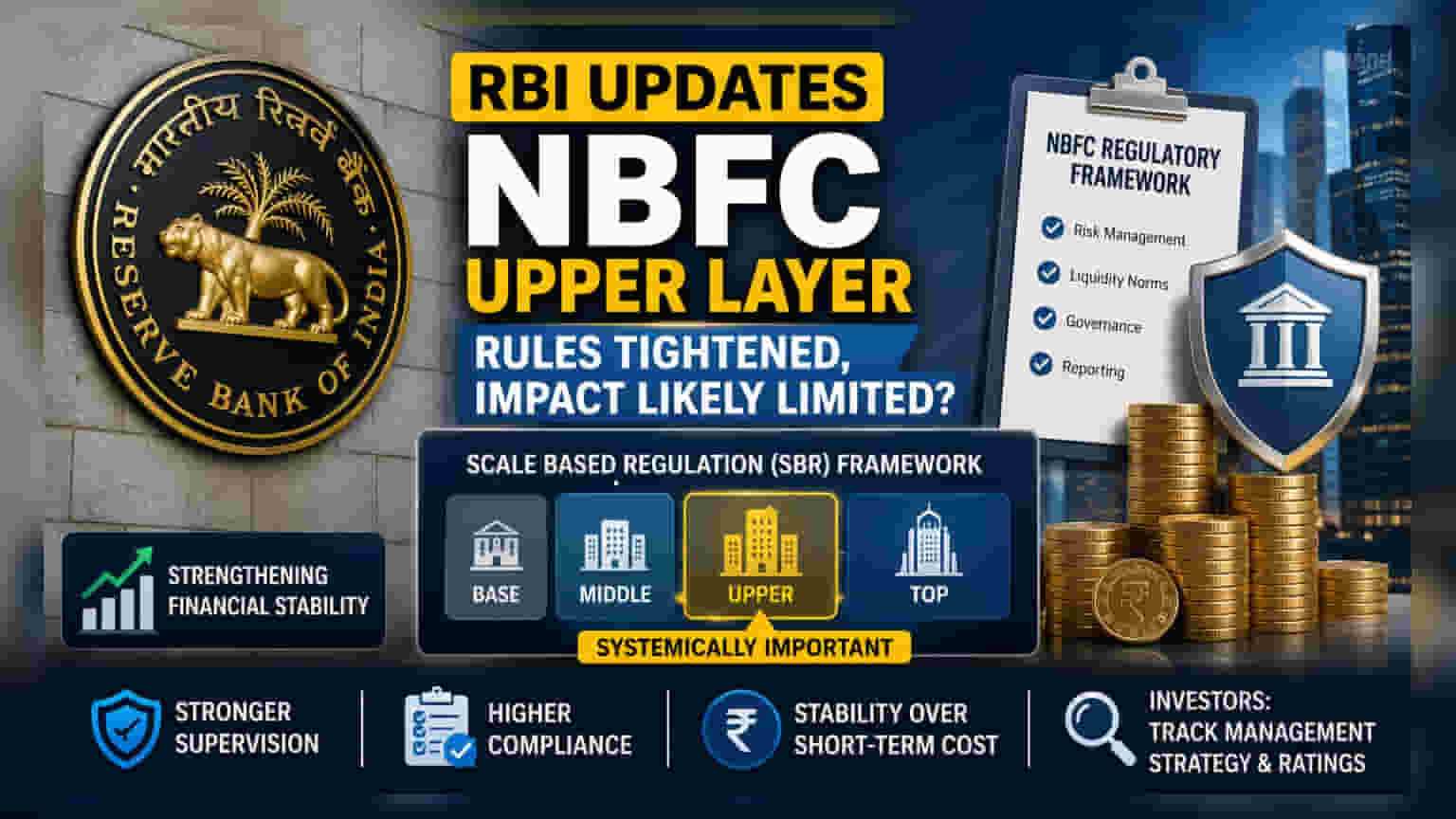
The Reserve Bank of India has introduced regulatory adjustments for 'Upper Layer' NBFCs, focusing on systemically important financial institutions. Market analysts expect minimal operational disruption, viewing the updates as routine supervisory measures. Investors may watch how these companies manage compliance costs and capital buffers in the coming quarters.
What Happened
The Reserve Bank of India (RBI) has issued fresh updates to its regulatory framework for the 'Upper Layer' of Non-Banking Financial Companies (NBFCs). These entities are classified as systemically important, meaning their scale and operations are significant enough that a potential failure could impact the broader financial system. While the specific details of the adjustments are currently being analyzed by the market, early feedback from financial analysts suggests that these changes are unlikely to cause major disruptions to the business models or financial health of the affected companies.
Understanding the Upper Layer
To understand why this news matters, it helps to look at the RBI's Scale-Based Regulation (SBR) framework. Under this system, NBFCs are categorized into four layers based on their size, activity, and risk profile: Base, Middle, Upper, and Top.
The 'Upper Layer' typically includes the largest and most influential NBFCs in India. Because they are considered 'systemically significant,' the RBI subjects them to stricter supervision compared to smaller lenders. This layer often includes entities like large housing finance companies, diversified lending firms, and infrastructure finance companies. Any regulation directed here is aimed at strengthening the stability of the entire shadow banking sector.
Why Investors May Remain Calm
The market’s initial reaction has been muted, with analysts suggesting that these changes are part of the regulator's ongoing process to align NBFC guidelines with changing economic conditions. In the past, similar regulatory adjustments—such as tightening of liquidity coverage ratios or exposure norms—have often been absorbed by the sector without significant profit erosion. Investors generally interpret these moves as efforts to prevent risk buildup rather than as punitive measures against the sector.
The Compliance Angle
While the market impact may be contained, the actual business impact lies in compliance. New or updated regulations often require NBFCs to invest more in internal systems, risk management, and reporting.
For investors, the key area of concern is whether these changes increase the cost of doing business. If an NBFC has to increase its capital buffers or change how it manages liquidity to meet new guidelines, it could put minor pressure on profitability in the short term. However, the trade-off is often higher long-term stability and a stronger balance sheet, which protects shareholders against systemic shocks.
What Investors Should Track
The most important monitorable for investors now is the management commentary in upcoming quarterly results. Companies will likely provide clarity on how these specific RBI changes affect their operations, capital adequacy ratios, and cost structures. Investors may track whether the company needs to raise additional capital or slow down loan book growth to meet any new stricter norms. Watching the credit rating agency updates for these specific entities will also offer insight into whether the regulatory change impacts their solvency or risk profile.