 Whalesbook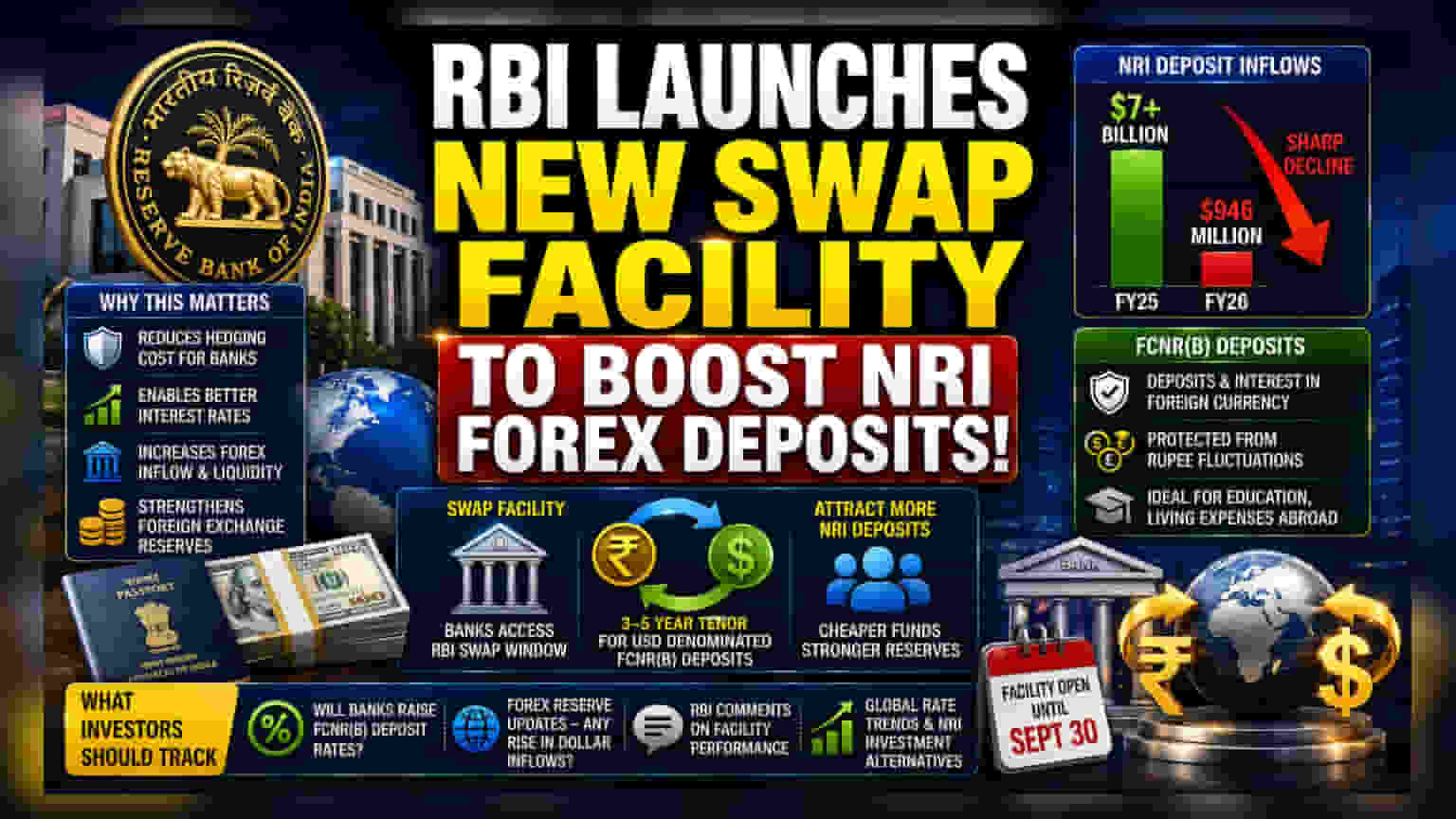


What Happened
The Reserve Bank of India (RBI) has introduced a new swap facility to encourage banks to mobilize foreign currency deposits from Non-Resident Indians (NRIs). Under this scheme, authorized dealer banks can access an RBI swap window for US dollar-denominated Foreign Currency Non-Resident (Bank) or FCNR(B) deposits with tenors ranging from three to five years. This facility will remain open until September 30.
Why This Matters for the Banking System
This move is designed to make it cheaper for banks to offer foreign currency deposits. When banks accept these deposits, they often have to pay for protection against the risk of the rupee changing in value compared to the US dollar. This cost, known as a hedging cost, usually eats into the interest banks can offer depositors. By providing a swap facility, the RBI is essentially taking on part of this risk management responsibility. This allows banks to potentially offer more competitive interest rates to attract NRI funds, thereby increasing the flow of foreign currency into the country.
Historical and Financial Context
The initiative is a direct response to a significant cooling in NRI deposit inflows. Recent data showed that FCNR(B) inflows dropped sharply to $946 million in FY26, down from over $7 billion in FY25. This decline highlighted a need for intervention to shore up foreign exchange reserves.
The strategy echoes a measure taken during the 2013 balance-of-payments crisis, when the economy faced similar pressure on currency and reserves. By reintroducing this tool, the regulator is looking to stabilize the foreign exchange environment and ensure that banks have adequate access to foreign currency liquidity.
Understanding FCNR(B) Deposits
For Non-Resident Indians and Overseas Citizens of India, these deposits act as a safe way to keep money in foreign currencies like the US dollar, euro, or British pound. The primary advantage is that the deposited money and the interest earned are protected from changes in the rupee's exchange rate, as the repayment happens in the original foreign currency. These accounts are often used by those who have future financial commitments, such as education or living expenses, in countries outside of India.
How Investors May Read This
Investors often view such moves as a tactical effort by the central bank to manage macroeconomic stability rather than a signal of corporate health for specific banks. However, the success of this scheme may influence the deposit growth and liquidity levels for large banks that are major players in the NRI banking space.
What Investors Should Track Next
The effectiveness of this facility will depend on whether it actually leads to higher inflows from NRIs. Investors may track the following monitorables:
First, whether banks decide to raise interest rates on FCNR(B) deposits in response to the reduced hedging costs. Second, the monthly or quarterly updates on forex reserve levels to see if the initiative successfully boosts dollar inflows. Third, any further commentary from the central bank regarding the performance of this swap facility. Finally, how the global interest rate environment impacts the attractiveness of these deposits compared to other investment options available to NRIs in their countries of residence.