 Whalesbook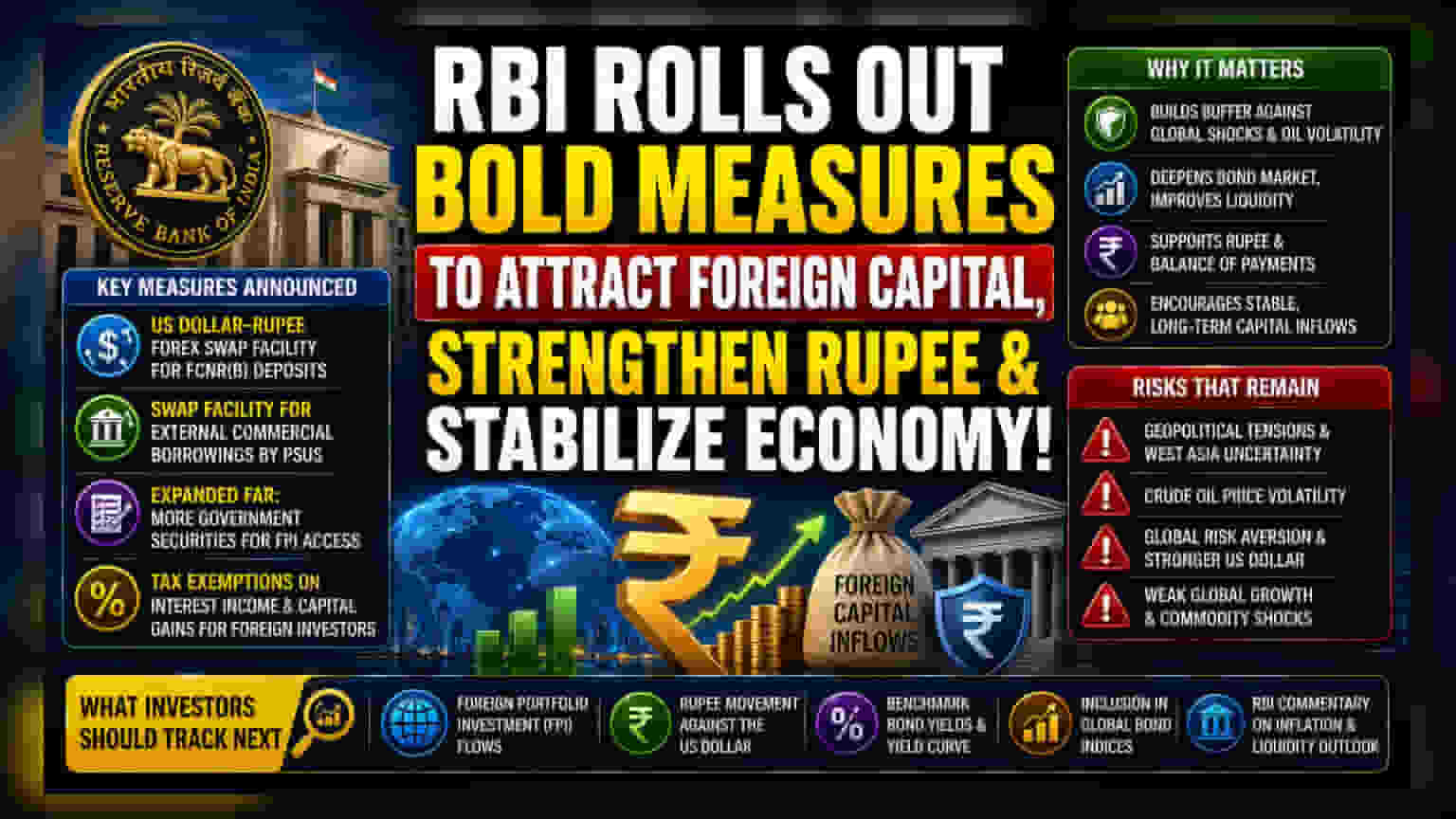


What Happened
In a strategic move to bolster the Indian economy, the Reserve Bank of India (RBI) announced a series of policy measures during its June 2026 Monetary Policy Committee meeting. The central bank maintained the repo rate at 5.25% but launched significant initiatives to encourage foreign capital inflows. Key measures include the introduction of special US dollar-rupee forex swap facilities for fresh Foreign Currency Non-Resident (FCNR(B)) deposits and external commercial borrowings by public sector undertakings. Additionally, the government has expanded the list of government securities available under the Fully Accessible Route (FAR) for foreign investors and introduced tax exemptions on interest income and capital gains for these investments.
Why This Matters For Investors
These measures are designed to act as a buffer against external economic pressures, particularly the impact of geopolitical tensions and volatility in crude oil prices. By making Indian debt instruments more attractive and providing hedging cost relief for banks, the RBI aims to improve the country’s balance of payments. For investors, these reforms are expected to deepen the government bond market, improve liquidity, and provide a more stable environment for foreign portfolio investment. The goal is to strengthen the rupee and reduce reliance on expensive short-term financing, which could lead to more stable long-term conditions in the financial markets.
The Balancing Act
The RBI faces the challenge of managing external stability while supporting domestic growth. While retail inflation remains a concern and forecasts for FY27 have been revised to 5.1%, the central bank is carefully avoiding overly restrictive measures that could hurt economic activity. By focusing on attracting stable, long-term capital through these new swap windows and tax reforms, the RBI is attempting to cushion the rupee without resorting to aggressive interest rate hikes that could increase borrowing costs for domestic businesses.
How Investors May Read This
Market participants typically view such moves as a signal of the central bank's proactive stance in managing liquidity and exchange rate stability. Easing investment norms for Non-Resident Indians (NRIs) and foreign institutional investors often encourages greater participation in Indian markets. However, the success of these measures depends on global macroeconomic factors. If these policies effectively attract the targeted inflows, it may provide much-needed support to the currency and reduce the risk premium currently embedded in domestic interest rate structures.
What Could Go Wrong
Despite these efforts, external risks persist. Global financial conditions, continued geopolitical uncertainty in West Asia, and potential shifts in global commodity prices remain significant variables. If global risk aversion increases or the US dollar strengthens significantly, the attractiveness of emerging market assets could diminish, regardless of domestic policy efforts. Investors should also be aware that while these measures offer relief, they do not completely eliminate the vulnerability of the domestic economy to global shocks.
What Investors Should Track Next
Investors should closely monitor data on foreign portfolio investment (FPI) flows, as these will serve as the primary indicator of the effectiveness of the new measures. Additionally, tracking the movement of the Indian rupee against the US dollar, changes in benchmark bond yields, and any updates on inclusion in global bond indices will be crucial. Future commentary from the RBI regarding its assessment of inflation and liquidity will also provide clues on the potential direction of monetary policy in the coming quarters.