

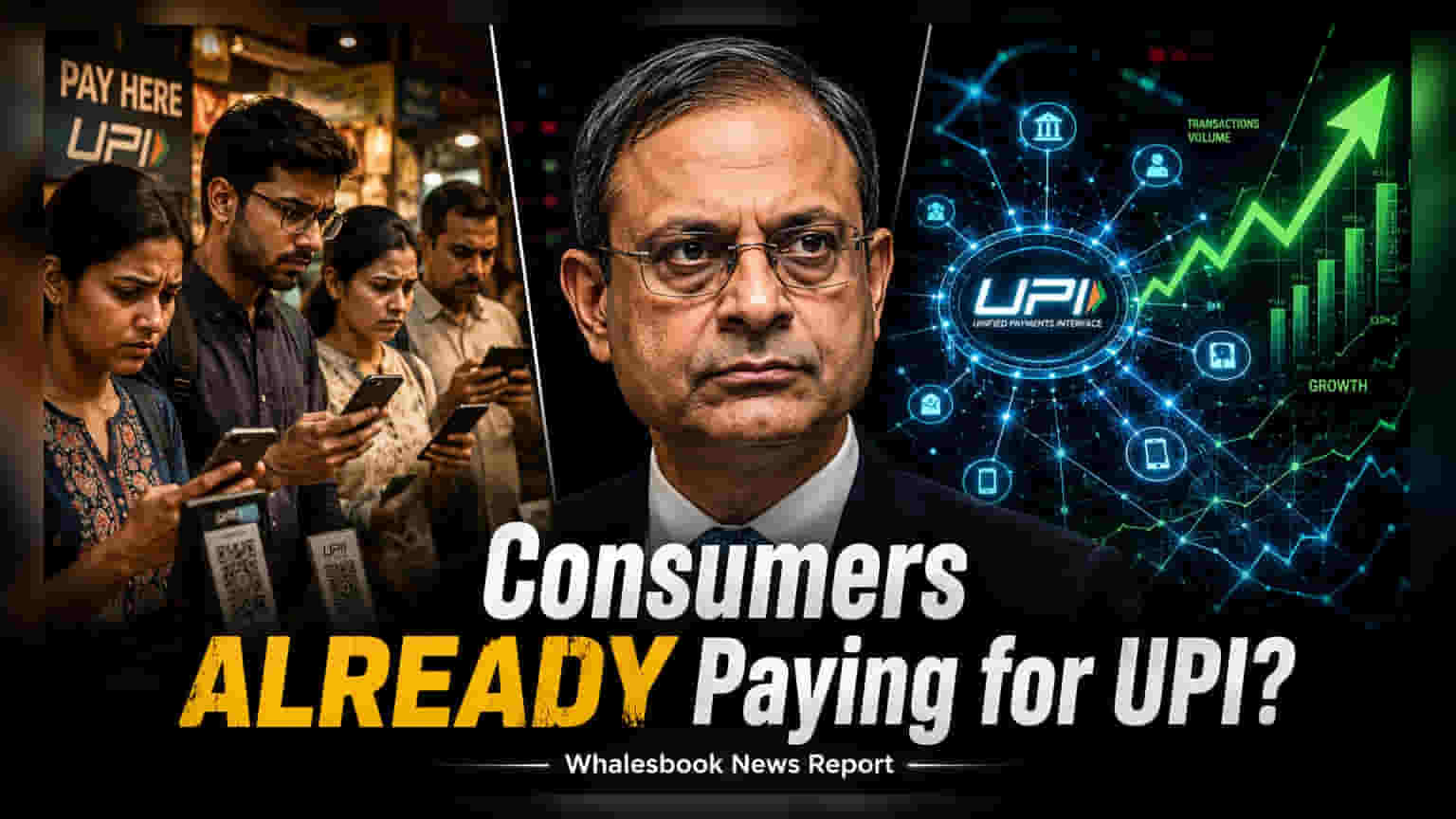
RBI Governor Sanjay Malhotra has clarified that it is too early to discuss merchant fees for UPI transactions. He noted that while the digital infrastructure requires funding, the current priority is growing transaction volumes toward 800 million daily. The central bank emphasizes that digital payments are a public good, and any policy shift would carefully consider the impact on mass adoption.
Reserve Bank of India Governor Sanjay Malhotra has addressed concerns regarding potential merchant fees on Unified Payments Interface (UPI) transactions, stating that any such discussion is currently premature. The central bank's primary objective remains the rapid expansion of India’s digital payment infrastructure, with a specific target to reach 800 million transactions daily.
During a recent interaction, the Governor emphasized that UPI functions as a vital public good. While maintaining and upgrading digital infrastructure entails operational costs, the RBI is prioritizing efficiency and user growth over immediate revenue generation through direct transaction charges. He acknowledged the economic reality that costs are inevitably borne by someone within the broader economy, even if users do not pay direct fees at the point of sale. Currently, the ecosystem of banks and payment service providers absorbs these infrastructure costs, often by leveraging high user traffic to offer other financial services like loans and insurance.
Legislative Context And Future Outlook
The uncertainty regarding potential UPI fees stems from legislative discussions, specifically the Taxation and Other Laws (Amendment) Bill, 2026. This proposed legislation aims to provide the government with greater flexibility to determine which electronic payment modes, including UPI, might be subject to merchant charges in the future. However, as of early August 2026, there is no final framework or decision in place to impose such fees on everyday consumers or small merchants.
For investors tracking the financial services and fintech sector, this development is significant. The current fee-free model has been a primary driver for the massive adoption of digital payments in India. Platforms have historically utilized UPI as a key tool for customer acquisition, attracting millions of users to their ecosystems to cross-sell financial products.
The key monitorable for the industry will be the government's approach to the 2026 Amendment Bill. Any future move to introduce merchant fees will require a delicate balance to ensure that adoption rates remain high, especially among small merchants who are highly sensitive to even minor transaction costs. Investors may also want to continue monitoring the profitability models of digital payment firms, as their reliance on UPI as an entry point remains a critical business dependency.