 Whalesbook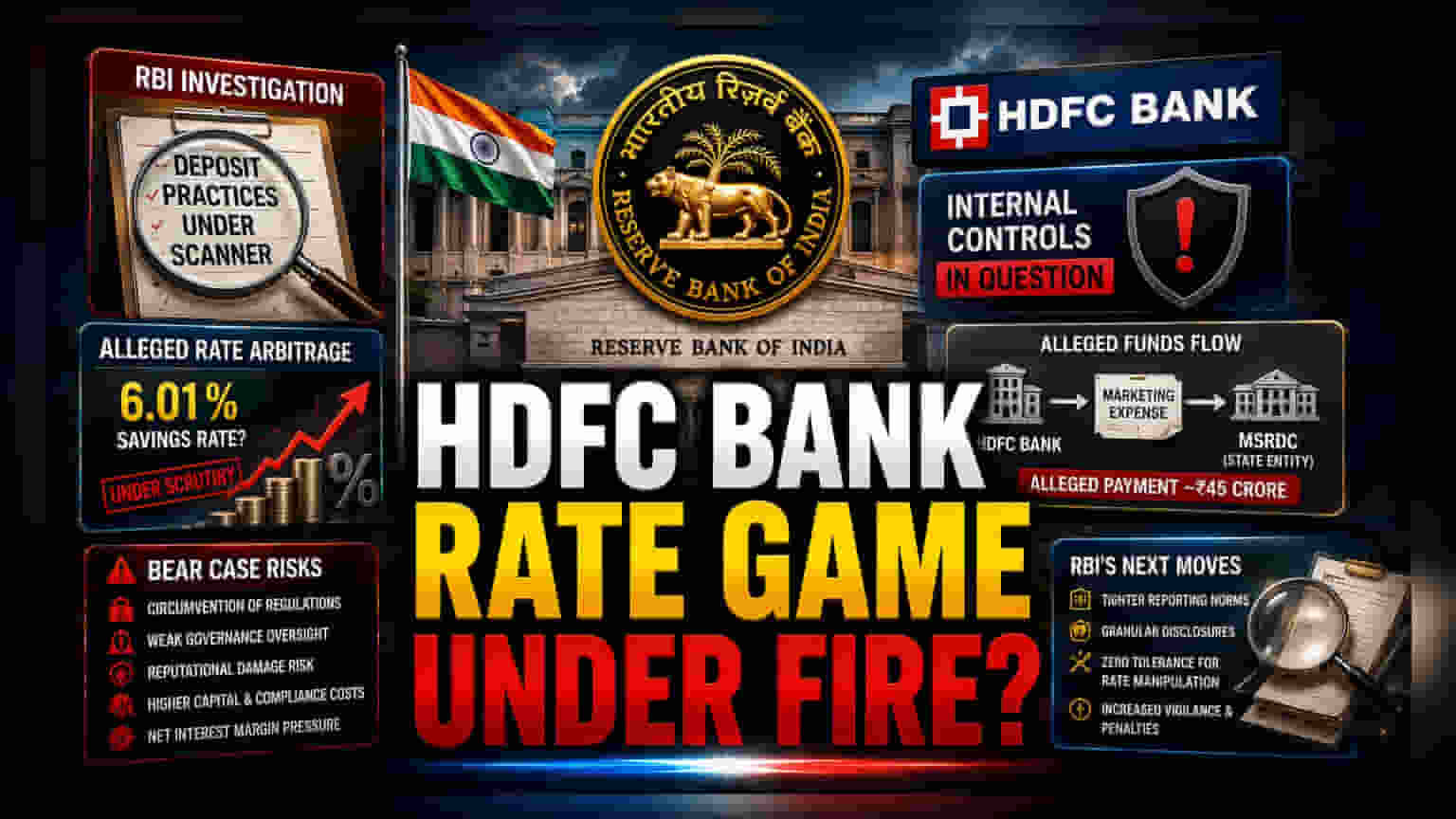


The Regulatory Response to Deposit Practices
The Reserve Bank of India has signaled a pivot toward stricter oversight regarding how financial institutions structure interest offerings. While the regulatory framework permits tiered interest rates based on depositor categories and tenure, such as specific incentives for senior citizens, the central bank maintains that these structures must be publicly accessible and uniformly applied. Recent official commentary confirms that any deviation from established interest corridors, particularly those that sidestep standard regulatory reporting, faces immediate scrutiny.
Investigating the Alleged Rate Arbitrage
Market participants are focused on claims that HDFC Bank funneled payments to the Maharashtra State Road Development Corporation by masking them as marketing expenses. The core of the matter involves an alleged attempt to provide a 6.01% yield on savings deposits during a period where standard channels were restricted. If substantiated, the categorization of interest payments as advertising outlays suggests a circumvention of both internal audit protocols and external regulatory compliance standards. HDFC Bank maintains its position that its internal controls remain robust and denies any wrongdoing, emphasizing that its financial disclosures align with standard accounting principles.
The Bear Case and Governance Risks
For institutional investors, the primary concern lies not in the immediate financial impact of the alleged ₹45 crore payment, but in the implications for corporate governance. Financial institutions operating under high-growth mandates often face pressure to secure large institutional deposits. When market-standard rates become unattractive to state-run entities, the temptation for non-standard incentive structures creates material risks. The involvement of external vendors in the alleged payment flow raises red flags regarding procurement oversight and potential conflicts of interest. Should the ongoing vigilance investigation uncover systemic failures in the bank's internal approval process, the institution could face severe reputational damage and increased capital requirements for operational risk.
Future Market Implications
Looking ahead, the sector expects the RBI to demand increased granular reporting on marketing and promotional expenditures, particularly for large corporate and government accounts. This heightened vigilance is likely to impact how banks compete for institutional liquidity. Banks with weaker internal controls or those prone to aggressive deposit-gathering tactics may see a compression in net interest margins as they are forced to adhere more strictly to transparent, rate-card-compliant deposit structures. Analysts continue to monitor the bank's communication with regulators for signs of potential settlement or further administrative action.