

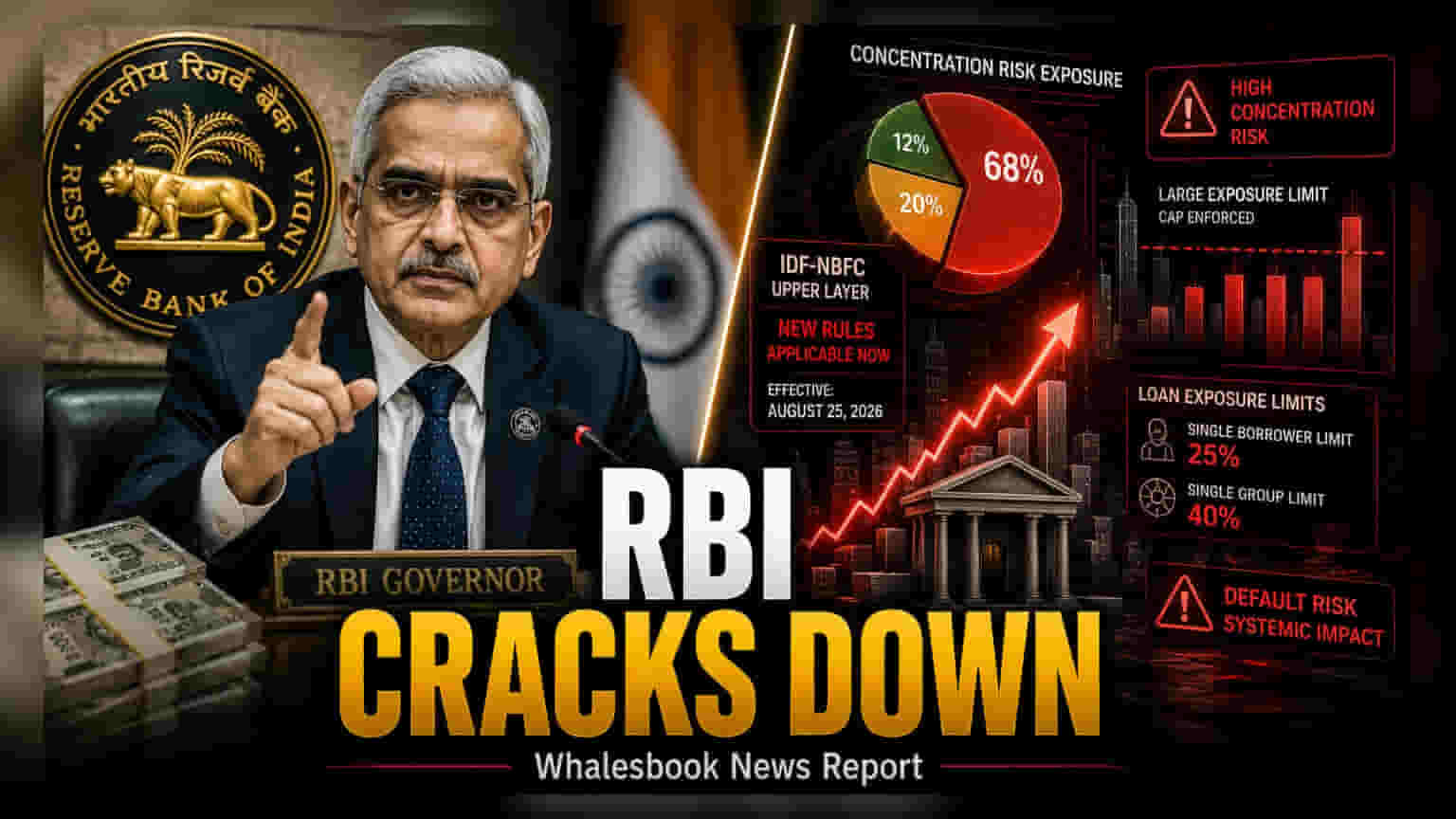
The Reserve Bank of India has updated large exposure limits for Infrastructure Debt Fund-NBFCs (IDF-NBFCs) in the 'Upper Layer,' aligning them with those of Infrastructure Finance Companies. Effective August 25, 2026, the move aims to reduce concentration risk by capping lending to single large borrowers or connected groups.
The Reserve Bank of India (RBI) has introduced stricter regulations for certain infrastructure-focused lenders to enhance financial stability. Under the new directive, known as the 'Non-Banking Financial Companies – Concentration Risk Management' Fourth Amendment Directions, 2026, IDF-NBFCs classified in the 'Upper Layer' must now follow the same large exposure limits as Infrastructure Finance Companies (NBFC-IFCs).
The term 'Upper Layer' refers to a group of non-banking financial companies (NBFCs) that are deemed systemically significant, meaning they are large enough that their financial health could impact the broader economy. By applying the same rules to these IDF-NBFCs as those applied to Infrastructure Finance Companies, the central bank is ensuring that regulatory standards are consistent across similar types of financial institutions.
At the core of this policy change is the management of concentration risk. This risk arises when a financial institution lends too much money to a single borrower or a single business group. If that borrower struggles to repay, the lender’s balance sheet can be hit significantly. By capping how much an IDF-NBFC can lend to one entity, the RBI aims to prevent such situations, ensuring that the lender’s portfolio remains diversified and resilient against the default of any single project or company.
These changes are effective immediately as of August 25, 2026. For investors and market observers, the primary area to watch will be how these lenders adjust their loan books to comply with the new caps. If an IDF-NBFC currently has loans that exceed these new limits, it may need to gradually reduce its exposure to those specific borrowers, which could impact the company's lending strategy and revenue growth in the short term.
The RBI’s move is part of its ongoing effort to tighten oversight across the NBFC sector. Investors may want to monitor company filings and management commentary in upcoming quarterly updates to understand if these regulatory changes will require any significant restructuring of their credit portfolios or capital allocation plans.