

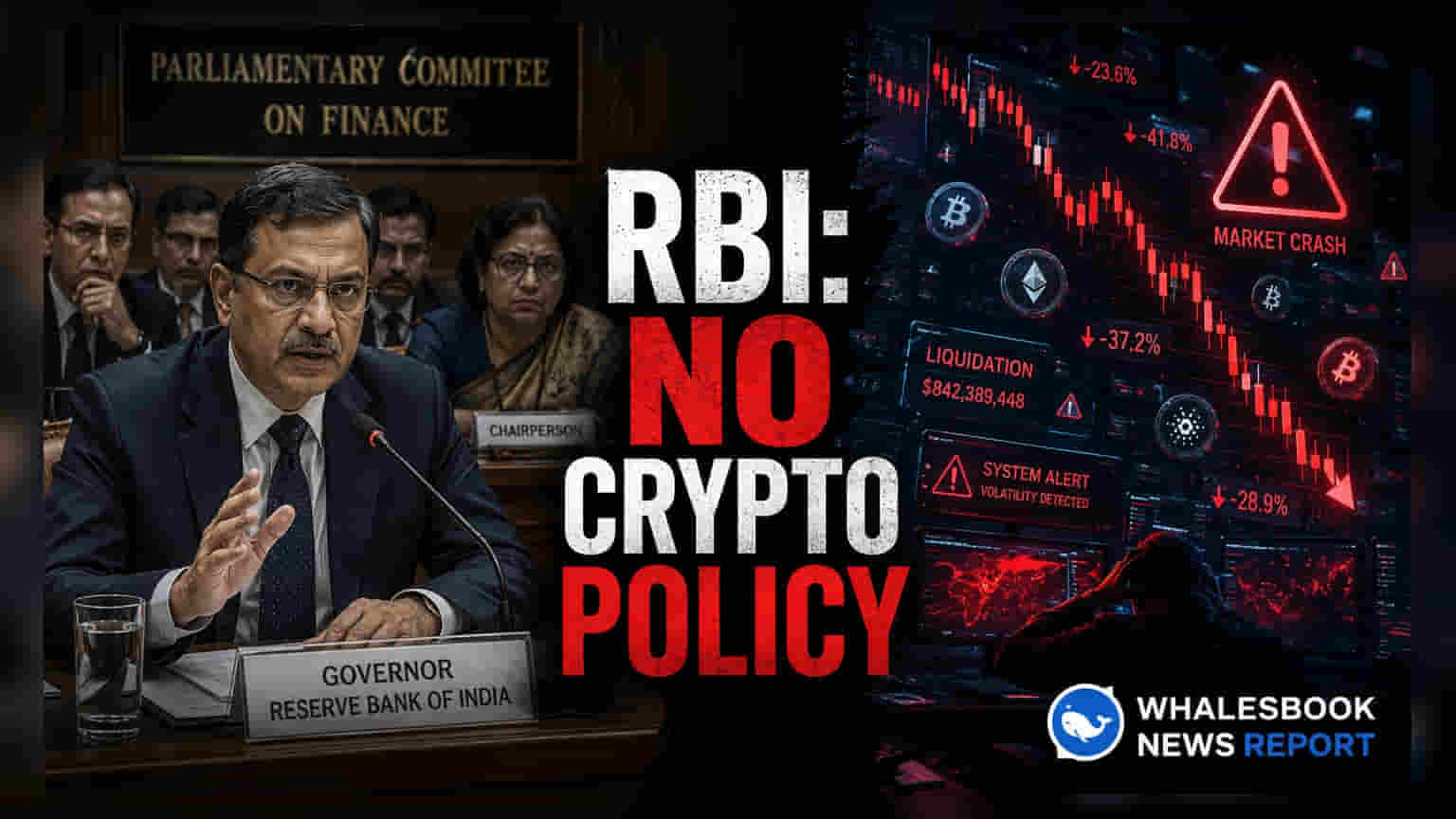
The Reserve Bank of India has informed a parliamentary committee that it opposes recognizing virtual digital assets as legal currency. The central bank continues to highlight risks related to money laundering and terrorism financing, keeping the regulatory path for digital assets uncertain in India.
What Happened
The Reserve Bank of India (RBI) has formally shared its cautious perspective on virtual digital assets (VDAs) with the Parliamentary Standing Committee on Finance. During recent deliberations, central bank officials argued against recognizing these assets as a form of currency. The RBI representative suggested that maintaining a position of no formal policy can serve as a deliberate strategy for now. This comes as the parliamentary panel prepares a formal study titled "A Study on Virtual Digital Assets (VDAs) and Way Forward," which is expected to be submitted to Parliament during the upcoming monsoon session.
Concerns Over Illicit Financing
Central bank officials emphasized that their primary hesitation stems from the potential for VDAs to be used in illicit activities. The RBI has long expressed concerns regarding the lack of traceability in these assets, which could facilitate drug trafficking, money laundering, and terrorist financing. This cautious stance reflects the regulator's broader effort to protect the integrity of the Indian financial system and maintain sovereign control over monetary policy, which remains a key pillar of its mandate.
The Question Of Securities Classification
During the committee session, members specifically asked whether VDAs should be classified as securities under existing law. The RBI officials did not provide a definitive answer, instead opting to defer the matter and promising to share a detailed written clarification at a later date. This lack of immediate clarity leaves a significant gap in the regulatory framework, as the classification of these assets determines which government body would oversee them and how they would be taxed or traded by retail investors.
Regulatory Divergence And Global Context
While India continues to weigh its options, other jurisdictions have already begun implementing frameworks. The panel has been comparing different international models, such as the comprehensive Markets in Crypto-Assets (MiCA) regulation in the European Union versus the more fragmented approach seen in the United States. Representatives from the Institute of Chartered Accountants of India (ICAI) have noted that conducting forensic audits on these digital assets is technically feasible, a point that may influence the panel's final recommendations.
What To Watch Next
The most important monitorable is the final report to be submitted to Parliament. The committee has scheduled further discussions with the Department of Economic Affairs for July 15 to finalize its recommendations. Investors and stakeholders should look for clarity on whether the government will propose a new legislative framework, how it might define these assets, and what level of oversight will be placed on exchanges and service providers.