 Whalesbook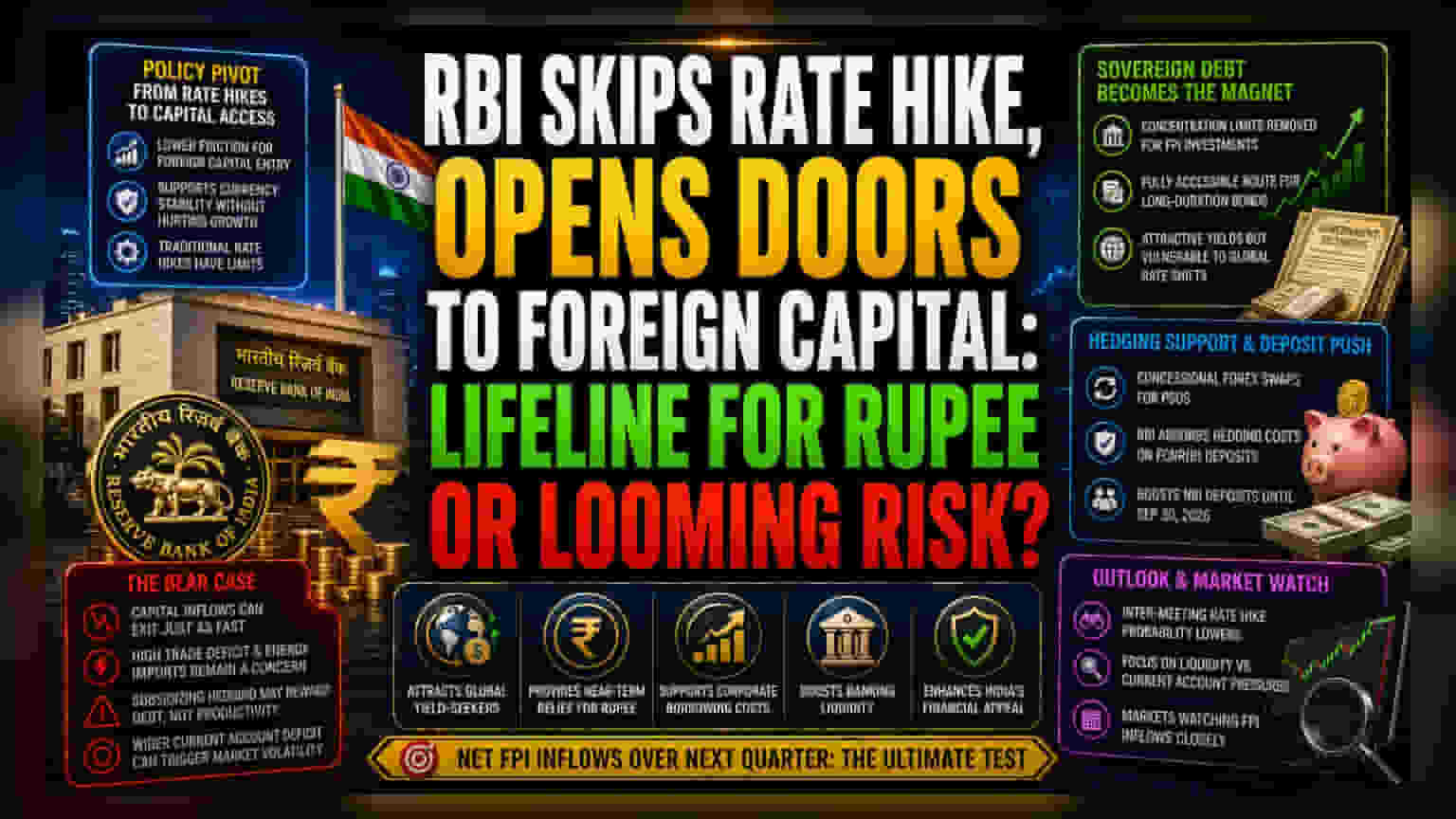


The Shift from Monetary to Structural Policy
The decision to bypass interest rate hikes in favor of capital account liberalization marks a clear pivot in the Reserve Bank of India’s defensive strategy. By lowering the friction for foreign capital entry, the central bank is effectively outsourcing currency stabilization to global bond markets. This move acknowledges that the traditional lever of raising domestic rates has reached a point of diminishing returns, where further hikes would risk stifling the nascent recovery in domestic private capital expenditure.
Sovereign Debt as the Primary Magnet
Removing concentration limits and security-specific restrictions for Foreign Portfolio Investors represents the most aggressive component of this policy. By opening the Fully Accessible Route to long-duration bonds, the RBI is betting that global yield-seekers will find Indian sovereign paper attractive relative to other emerging market peers. However, this strategy is inherently vulnerable to shifts in U.S. Treasury yields. If global risk appetite cools, the newfound liquidity could just as quickly exit, creating a pro-cyclical effect on currency volatility rather than the stabilizing influence intended.
The Hedging Subsidy and Banking Exposure
The introduction of concessional forex swap facilities for Public Sector Undertakings and the absorption of hedging costs for FCNR(B) deposits act as a direct subsidy to the banking sector's balance sheet. While this lowers the cost of borrowing for companies and encourages dollar repatriation, it concentrates significant currency risk within the central bank's own ledger. The effectiveness of this measure hinges on the willingness of banks to aggressively market these deposit products to the non-resident Indian community before the September 30, 2026, expiration window.
The Forensic Bear Case: Structural Risks
The central bank's reliance on capital inflows to defend the currency exposes an underlying fragility in India’s trade deficit. While attracting dollar inflows provides temporary relief, it does not resolve the structural imbalance caused by high energy import costs. Critics argue that by subsidizing hedging costs, the RBI is essentially rewarding debt-heavy entities instead of focusing on productivity-linked growth. Furthermore, should the global economic environment turn hostile, the reliance on volatile foreign inflows could exacerbate market disorderly movements. Governor Sanjay Malhotra’s reaffirmation of a market-driven framework provides flexibility, but history suggests that when the current account deficit widens significantly, capital account measures provide only a fleeting buffer against broader macroeconomic headwinds.
Outlook and Market Implications
Market participants are now recalibrating expectations for the next monetary policy committee meeting. With the central bank opting to utilize the capital account as a pressure valve, the probability of an inter-meeting rate hike has diminished. The focus remains on whether these liquidity measures are sufficient to offset the current account pressures. Institutional desks are closely watching the net FPI inflow numbers over the next quarter as the ultimate litmus test for this policy maneuver.