

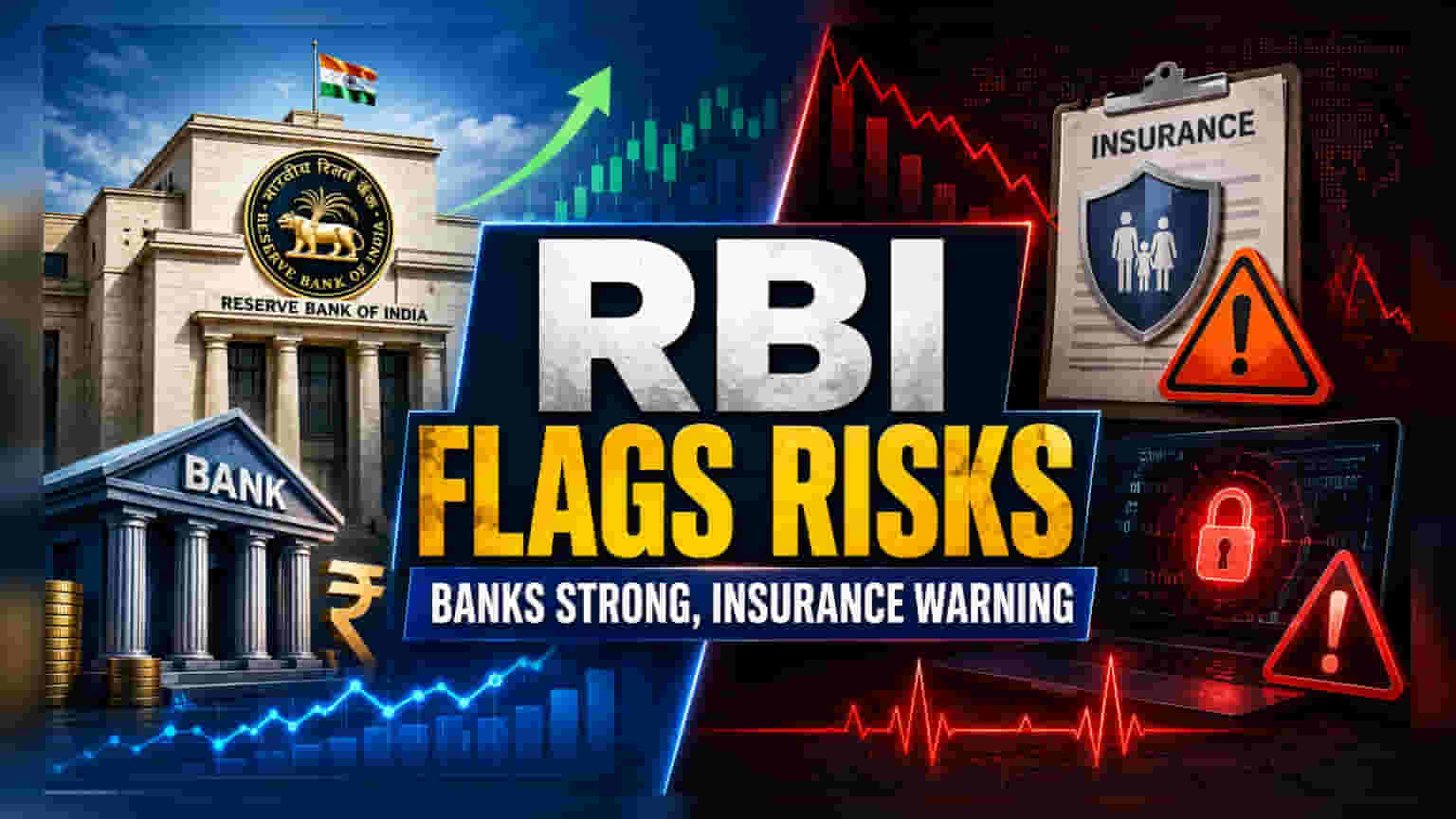
The Reserve Bank of India’s latest Financial Stability Report confirms that Indian banks have sufficient capital to handle geopolitical shocks. However, the report highlights rising risks, including cybersecurity threats and global market volatility. Most notably, the insurance sector is facing a rise in policyholder dissatisfaction, with surrender rates overtaking maturity payouts, which investors should track closely.
What Happened
The Reserve Bank of India (RBI) has released its latest Financial Stability Report, which assesses the health of the nation's financial system. The central bank found that Indian banks remain well-positioned to withstand global pressures, such as geopolitical conflicts. While the banking sector shows strong capital and liquidity levels, the regulator has raised caution regarding specific risks, including cybersecurity threats and increasing service issues within the insurance industry.
The Bank Stress Test Picture
The report suggests that the banking system is robust. Under normal conditions, banks have maintained healthy credit growth and low levels of bad loans, known as non-performing assets (NPAs). To test their strength, the RBI conducted "stress tests," which simulate worst-case scenarios. In a hypothetical adverse economic scenario, the report estimated that the gross NPA ratio could rise to 4.1%. It is important for investors to understand that this 4.1% figure is a projection for a stressed environment, not the current reality of the banking sector.
Warning Signs in the Insurance Sector
One of the most significant takeaways from this report for investors is the data regarding the insurance sector. The RBI highlighted a rise in policyholder grievances, specifically in the general insurance segment. A concerning trend was observed in the 2025-26 period: policyholders are exiting their plans at a high rate. Surrenders and withdrawals accounted for 38.3% of total payouts, which is higher than the 36.9% paid out as maturity benefits.
For investors, this suggests potential headwinds for life insurance companies. High surrender rates can indicate customer dissatisfaction, mis-selling, or increased competition from other financial products. This trend could impact the long-term asset base and profitability of insurers. The report also flagged a divergence in cost structures between public and private players, along with rising expenses related to product distribution.
Key Risks and Market Factors
The RBI also outlined several broader risks that could impact financial stability. The report mentioned that the increasing interconnectedness between financial entities could cause problems to spread faster if one part of the system struggles.
Cybersecurity has been identified as a major, escalating threat. Additionally, the RBI pointed to two external factors: exchange rate volatility, which could worsen if oil prices spike due to global supply issues, and a potential downturn in global equity markets. The regulator specifically noted that a sharp drop in technology and AI-focused stocks abroad could create spillover effects on the Indian markets.
What Investors Should Track
Investors looking at the banking and insurance sectors should watch for a few specific updates in the coming quarters. In the banking sector, the key will be to monitor credit growth and any changes to current NPA levels. For the insurance sector, investors should look for management commentary in future earnings reports regarding surrender trends and distribution costs. The ability of insurance companies to improve customer service and retain policyholders will likely be a primary monitorable for long-term profitability.