

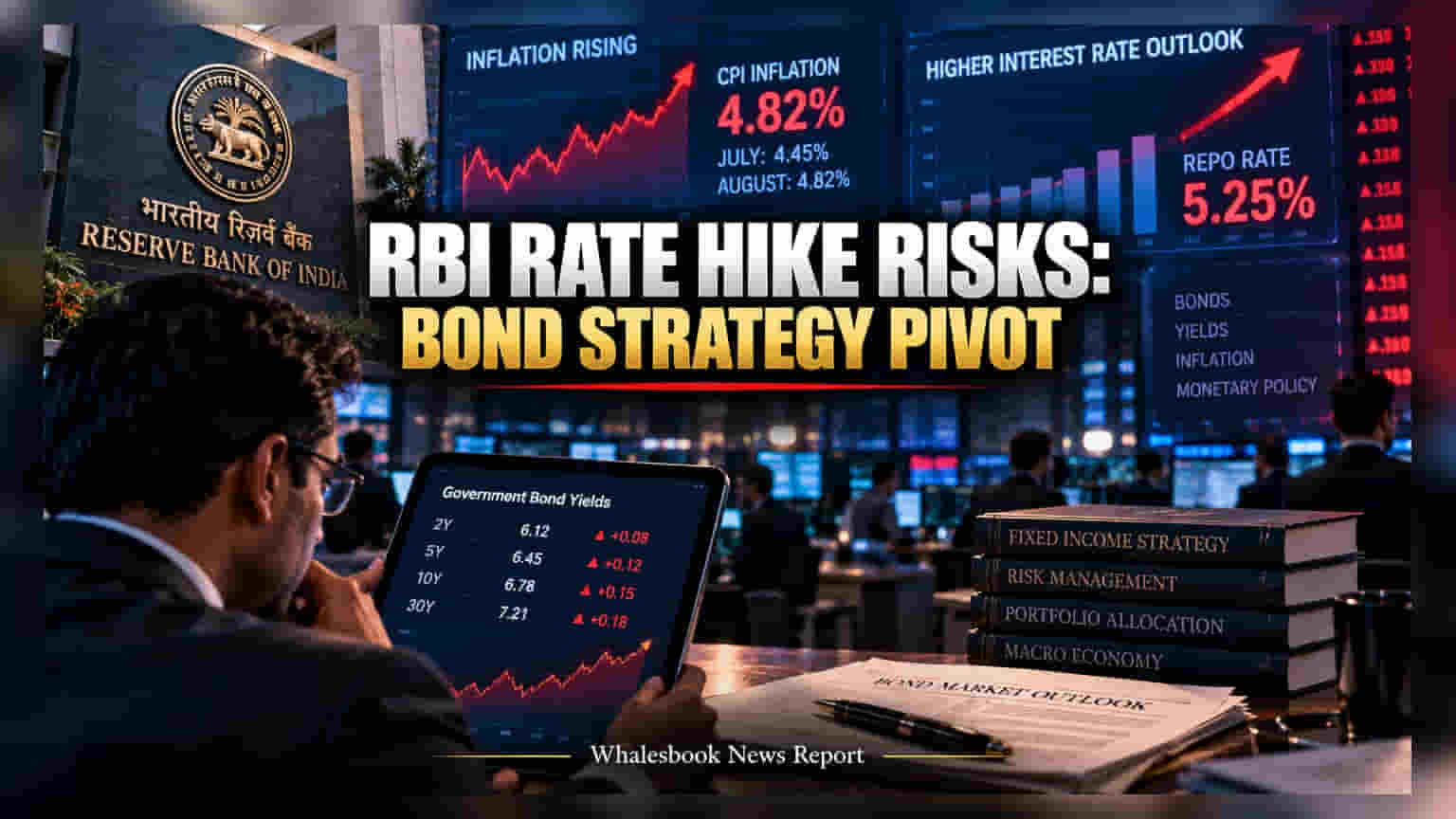
The Reserve Bank of India is signaling a shift toward policy tightening as August inflation climbed to 4.82%. For fixed-income investors, this means managing the risk of falling bond prices, as interest rates and bond values move in opposite directions. Investors are looking at shorter-term debt instruments and dynamic funds to protect portfolios against this potential rate hike cycle.
The Reserve Bank of India (RBI) has hinted at a potential shift in its monetary policy stance, moving away from a period of easing toward a more cautious or tightening cycle. This change in tone comes as recent data shows headline inflation in India has started to rise. According to official data, the Consumer Price Index (CPI) inflation reached 4.82% in August, up from 4.45% in July. Some projections suggest that inflation could climb toward 5.9% by the third quarter of fiscal year 2027, forcing the central bank to reconsider its current repo rate of 5.25%.
Why Rising Rates Affect Bond Prices
For investors holding fixed-income securities like government bonds or corporate debt, a rising interest rate environment presents a specific financial risk. There is an inverse relationship between interest rates and bond prices. When the central bank increases the repo rate to control inflation, the yields on new bonds rise to reflect the new market environment. Consequently, the market price of existing bonds—which pay lower, older interest rates—tends to fall. This price erosion is often sharper for bonds with longer maturities, as their value is locked in for a longer period at potentially lower rates.
Strategic Portfolio Shifts
To navigate this environment, investors often adjust their portfolios to reduce interest rate risk. A common strategy is to shorten the maturity profile of debt holdings. By moving capital into shorter-term instruments, such as liquid funds or money market funds, investors reduce the exposure to price drops caused by rate hikes. These instruments are generally less sensitive to interest rate changes, providing more stability compared to long-term bonds, even if they offer different yield profiles.
The Role of Dynamic Bond Funds
Another approach gaining attention is the use of dynamic bond funds. Unlike funds with a rigid mandate to hold bonds of a specific maturity, dynamic funds allow fund managers to actively shift the portfolio’s composition. Managers can change the duration—or the average maturity—of the bonds held in the fund based on their view of where interest rates are headed. In a volatile environment where policy decisions are difficult to predict, this flexibility can be a tool for managing risk, as the fund can shorten its maturity when it expects rates to rise and extend it when it sees an opportunity for capital gains from falling rates.
Key Monitorables for Investors
The impact of this potential policy shift will depend largely on how sustained the inflation trend becomes. Investors should track upcoming Monetary Policy Committee (MPC) meeting minutes, as these documents provide detailed insight into the central bank’s concerns regarding growth and inflation. Furthermore, monthly CPI data releases will be crucial in confirming whether the current inflation uptick is a temporary spike or a sustained trend that necessitates aggressive action from the RBI.