

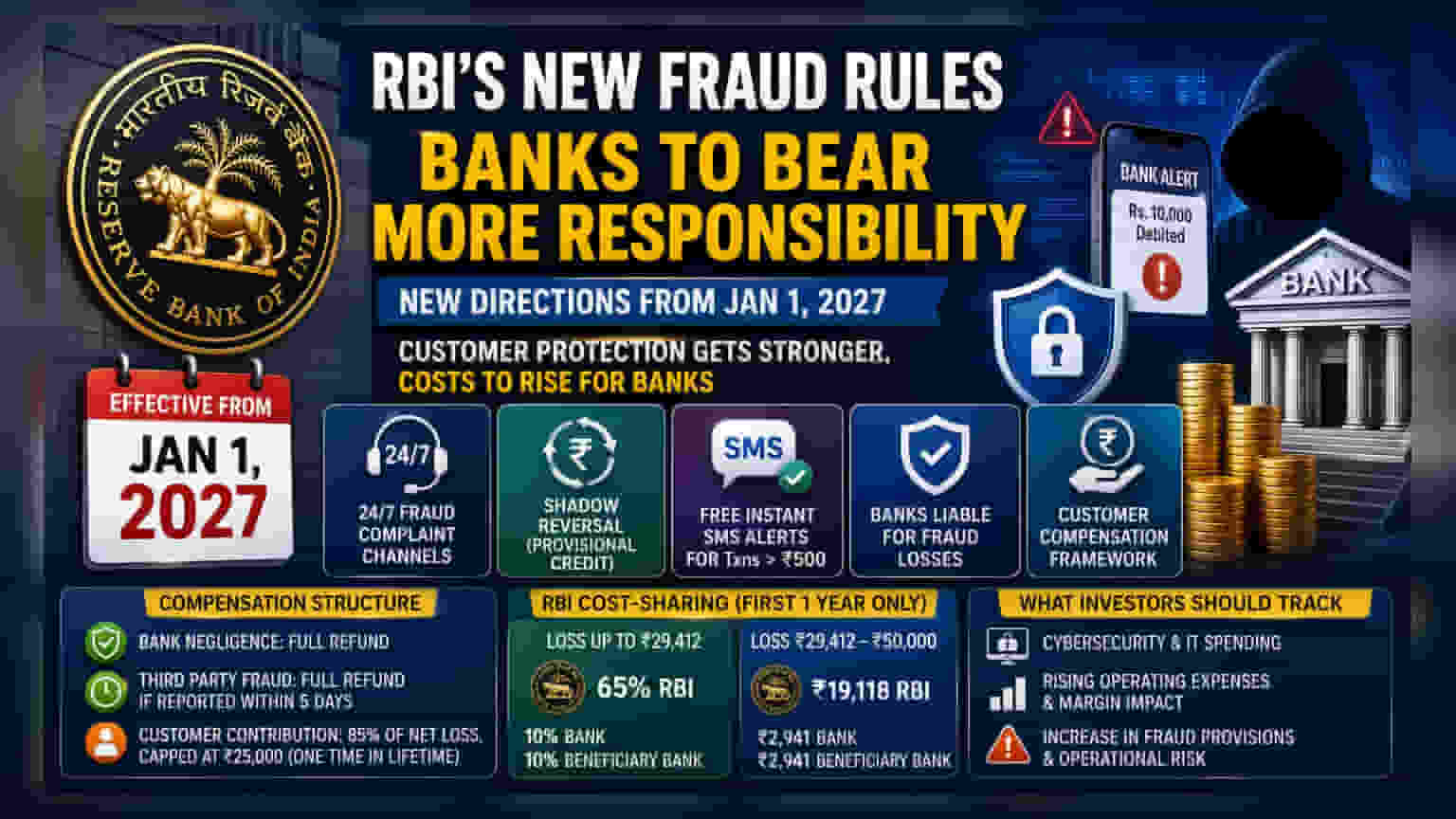
The Reserve Bank of India has introduced new rules making banks primarily responsible for electronic fraud losses, effective January 1, 2027. While customers receive stronger protections, banks face increased operational and compliance costs. Investors should track how this impacts banking margins, cybersecurity spending, and operational risk management.
What Happened
The Reserve Bank of India (RBI) has released the 'Reserve Bank of India (Commercial Banks - Responsible Business Conduct) Third Amendment Directions, 2026,' marking a significant shift in how electronic banking fraud is handled. Starting January 1, 2027, the responsibility for managing fraud losses will shift primarily to banks. The new framework introduces specific rules for customer reimbursement, mandatory reporting structures, and a temporary cost-sharing model between the regulator and the lenders.
Impact on Bank Operations and Costs
For investors, the most immediate impact is the potential for higher operating expenses. Banks are now required to provide 24/7 complaint channels and implement a 'shadow reversal' system, which provides provisional credit to customers while a fraud case is under investigation. This requires robust back-end systems and increased staffing for fraud monitoring.
Additionally, banks must now provide free instant SMS alerts for all electronic transactions over Rs 500. While these individual costs may seem small, they represent a recurring expense for the entire banking sector. As banks upgrade their IT and cybersecurity infrastructure to minimize these fraud events, non-interest expenses may rise in the coming quarters.
The Compensation Structure
Under the new guidelines, the level of compensation depends on the nature of the fraud. If the incident is due to bank negligence, such as system glitches or security lapses, the customer is entitled to a full reversal of the transaction. For instances where a third party is at fault, customers are eligible for a full refund if they report the fraud within five calendar days.
For customers who may have inadvertently contributed to the fraud—such as clicking on a phishing link or sharing an OTP—the RBI has introduced a partial relief scheme. These individuals can receive 85% of their net loss, capped at Rs 25,000, for losses up to Rs 50,000. Crucially, this benefit is limited to one incident per customer lifetime, which helps control the total payout burden on the banking system.
Temporary Support From The RBI
To help banks transition to this new system, the RBI will share the costs of compensation for smaller frauds, but only during the first year of implementation. For losses under Rs 29,412, the RBI will bear 65% of the compensation, with the customer's bank and the beneficiary bank covering 10% each. For losses between Rs 29,412 and Rs 50,000, the RBI contributes Rs 19,118, with both banks contributing Rs 2,941 each. Investors should note that this support is temporary, meaning banks will likely have to absorb the full cost of such compensation programs once this one-year period expires.
What Investors Should Track
As these rules approach their January 2027 implementation date, the key monitorable for the banking sector is the rise in operating costs. Investors should watch for:
- Cybersecurity and IT spending: Banks that already have strong fraud-detection systems may face less pressure than those that need to upgrade their infrastructure.
- Operating expenses: Management commentary regarding the impact of these compliance costs on profit margins.
- Operational Risk: Any increase in provisions or contingent liabilities related to electronic fraud as banks adjust to the new liability framework.