 Whalesbook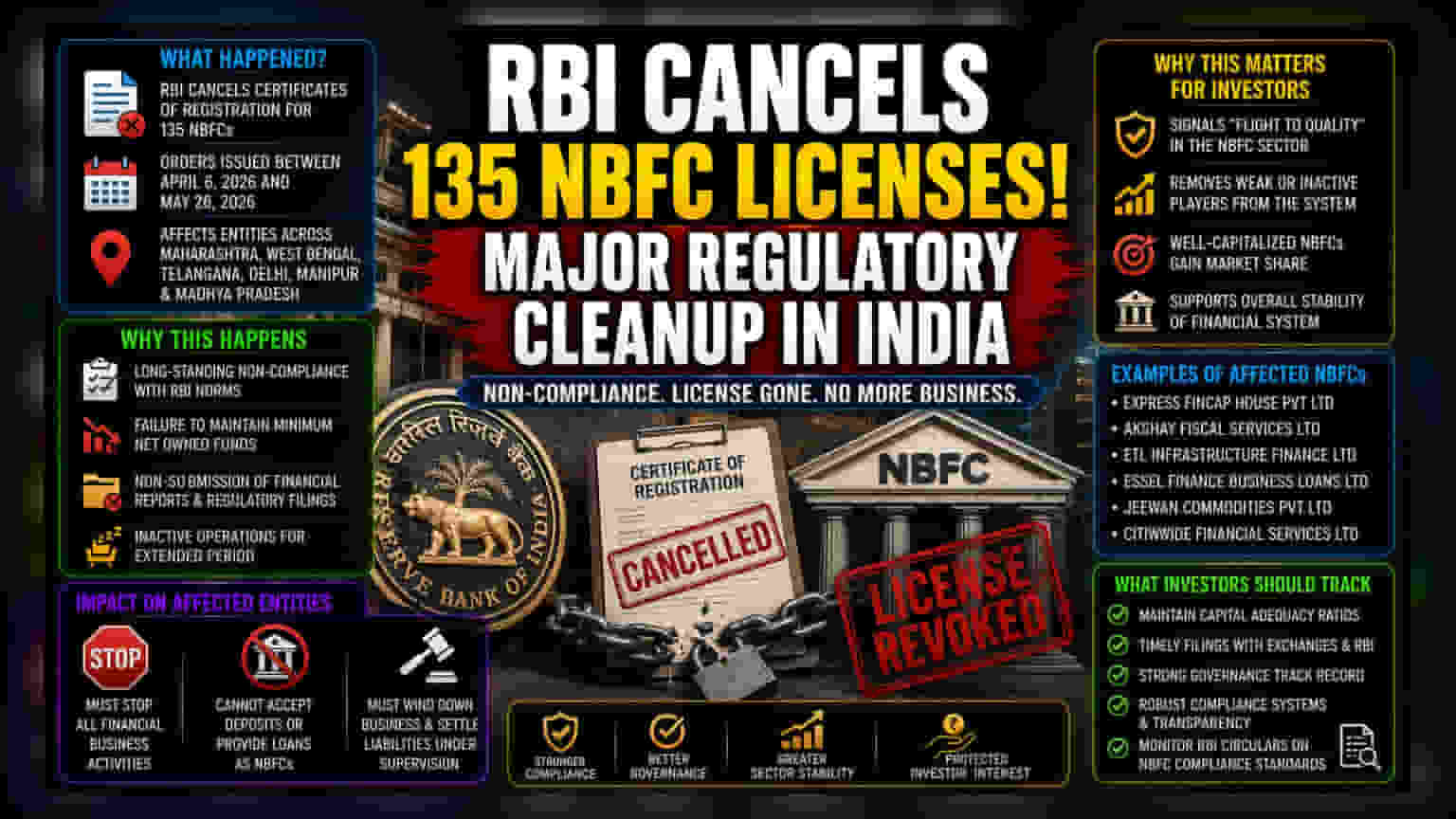


The Reserve Bank of India has cancelled the operating licenses of 135 Non-Banking Financial Companies between April and May 2026. This move is part of an ongoing effort to ensure better regulatory compliance and financial stability across the sector. Investors should view this as a tightening of the regulatory environment, where only compliant and financially sound players are permitted to operate.
What Happened
The Reserve Bank of India (RBI) has cancelled the Certificates of Registration for 135 Non-Banking Financial Companies (NBFCs). These regulatory actions were taken through a series of orders issued between April 6, 2026, and May 26, 2026. Following these cancellations, these entities are no longer authorized to operate as financial institutions under the RBI Act, 1934. The impact is widespread, affecting companies across several states including Maharashtra, West Bengal, Telangana, Delhi, Manipur, and Madhya Pradesh.
The Regulatory Context
When the RBI cancels a license, it is rarely a sudden or arbitrary decision. These actions are usually the result of long-standing non-compliance with the regulator's norms. NBFCs are required to meet specific conditions to keep their license active, such as maintaining a minimum amount of capital, known as Net Owned Funds, and submitting regular financial reports. When companies fail to meet these requirements, remain inactive, or fail to submit necessary filings over a period of time, the central bank initiates the process to cancel their registration. This is a part of the RBI’s broader effort to improve the quality and governance of the financial system.
Why This Matters For Investors
For investors in the financial sector, this move signals a "flight to quality." The Indian financial sector has been moving toward stricter regulation, often referred to as Scale-Based Regulation. This framework imposes higher compliance standards on NBFCs. Smaller or poorly managed entities that cannot bear the rising cost of compliance or meet higher capital requirements are naturally being phased out. This cleanup is generally considered positive for the overall stability of the sector, as it removes weak or inactive players, allowing well-capitalized and compliant NBFCs to gain market share.
The Impact on Affected Entities
Companies like Express Fincap House Private Limited, Akshay Fiscal Services Ltd, ETL Infrastructure Finance Limited, Essel Finance Business Loans Limited, Jeewan Commodities Private Limited, and Citiwide Financial Services Limited are among those that have lost their licenses. Once a license is revoked, the entity must stop all financial business activities immediately. They can no longer accept public deposits or provide loans as a licensed financial institution. These companies are typically required to wind down their existing business and settle their liabilities under the supervision of the authorities.
What Investors Should Track
Investors should not necessarily view this as a systemic risk, as these cancellations often target smaller entities that are not significant contributors to the overall credit growth in the economy. However, it is a reminder to pay close attention to the regulatory health of any NBFCs in a portfolio. Key monitorables include the company's ability to maintain capital adequacy ratios, the timeliness of its filings with the exchange and the regulator, and its overall governance track record. The market generally favors NBFCs that have robust compliance systems and transparent financial disclosures, as they are less likely to face such regulatory interventions. Monitoring RBI circulars regarding NBFC compliance standards remains an important part of understanding sector risk.