 Whalesbook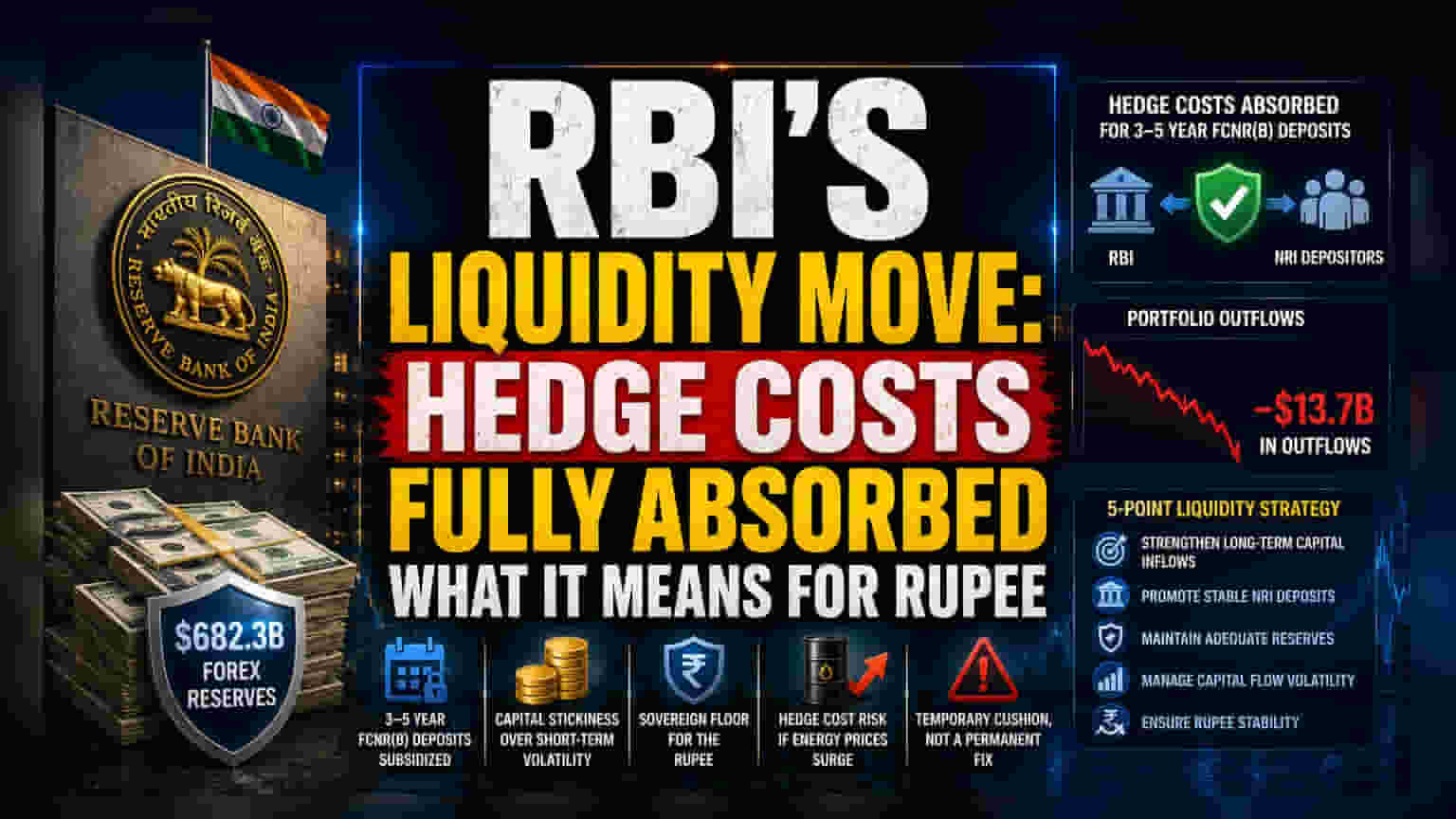


The Shift Toward Structural Stability
The decision to absorb total hedging costs for three-to-five-year Foreign Currency Non-Resident (B) deposits marks a departure from passive currency management. By essentially subsidizing the carry trade for non-resident depositors, the central bank is prioritizing long-term capital stickiness over short-term market volatility. This policy, which mirrors the defensive posturing seen during the 2013 Taper Tantrum, reveals an institutional preference for predictable liquidity as global interest rates remain higher for longer than anticipated.
Analyzing the Liquidity Trap
While the current foreign exchange reserve pile of $682.3 billion provides a comfortable buffer against external shocks, the composition of these reserves has become a point of contention among monetary policymakers. The ongoing exodus of $13.7 billion in portfolio capital suggests that the rupee is increasingly susceptible to shifts in US Treasury yields and dollar index strength. Unlike in 2013, when the primary objective was halting a free-falling currency, the current strategy focuses on replacing volatile equity-linked inflows with institutionalized, time-bound debt obligations. This move effectively creates a sovereign floor for the rupee without needing to directly intervene in the spot market, which would otherwise burn through liquid reserves.
The Forensic Bear Case
Critics of this policy intervention argue that the central bank is creating a synthetic demand for dollars that may distort domestic interest rate parity. By providing a full hedge, the regulator is essentially assuming the tail risk of currency depreciation over the next three years. If global energy prices escalate due to the ongoing West Asian tensions, the cost of this hedge could balloon, placing an unexpected strain on the balance sheet of the central bank. Furthermore, relying on NRI deposits historically provides a temporary cushion, not a permanent solution to structural current account deficits. There is also the risk that this incentivizes carry-trade arbitrage, where banks prioritize these subsidized deposits over mobilizing domestic savings, potentially leading to credit allocation inefficiencies within the broader banking sector.
Forward Guidance and Market Impact
The integration of this scheme into a broader, five-pronged liquidity strategy indicates that the regulator expects prolonged pressure on the balance of payments. Market participants should monitor the uptake of these deposits closely; if demand fails to materialize, the central bank may be forced to utilize more aggressive, potentially inflationary, monetary instruments. The success of this policy hinges on the interest rate spread between the rupee and the dollar remaining attractive enough for NRIs to commit to the three-to-five-year lock-in period.