

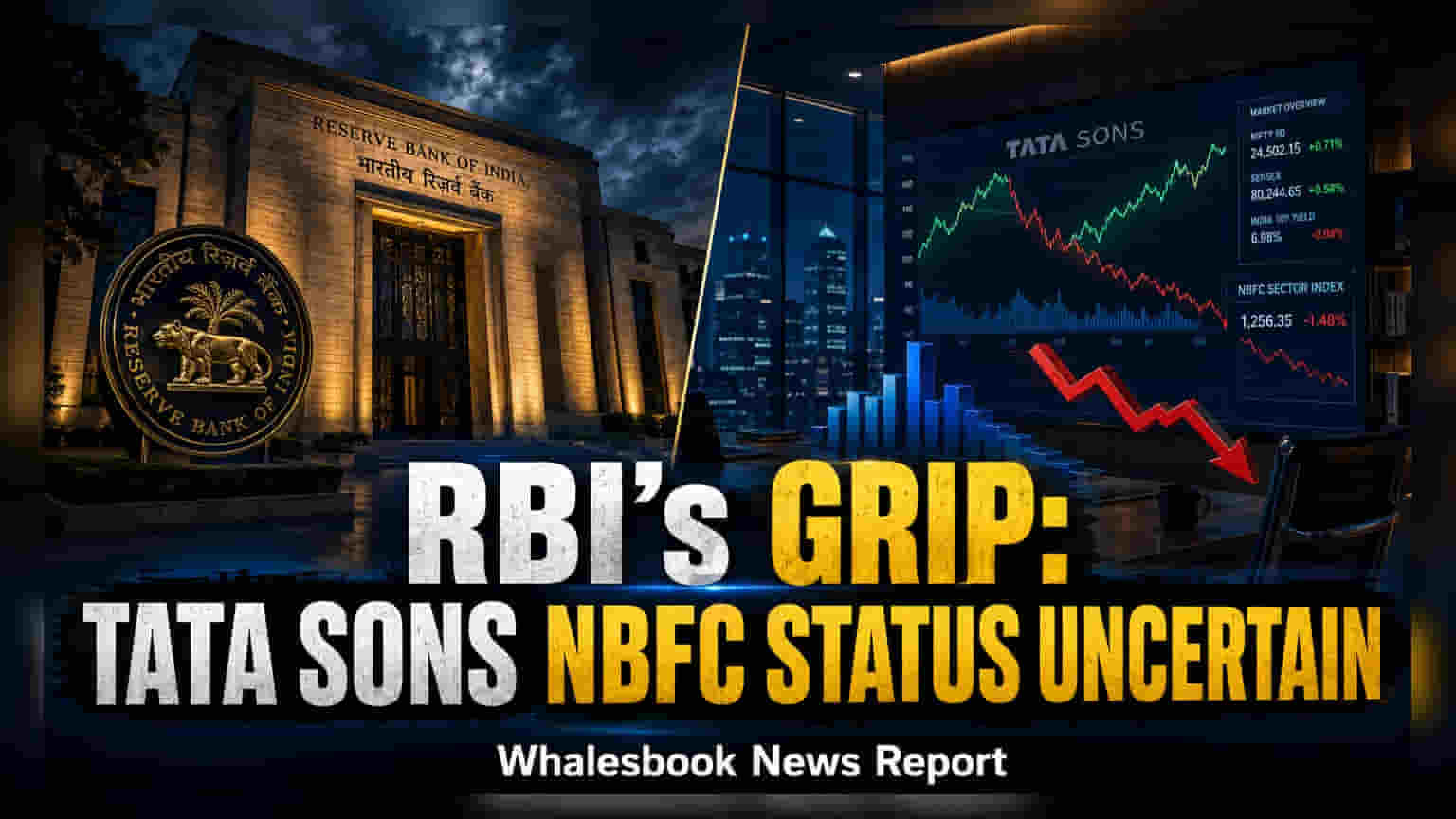
The Reserve Bank of India has classified Tata Sons Private Limited as an Upper Layer Non-Banking Financial Company for the 2026-27 period [1]. This decision keeps the company under strict regulatory oversight, which includes a mandatory public listing requirement [4]. Investors are now watching for the outcome of Tata Sons' pending application to deregister as a Core Investment Company, which is the key factor determining its future listing status [4].
The Reserve Bank of India (RBI) has confirmed that Tata Sons Private Limited will continue to be classified as an Upper Layer Non-Banking Financial Company (NBFC-UL) for the 2026-27 fiscal year [1]. This decision is part of the central bank's updated, principle-based regulatory framework, which was officially implemented in June 2026 to ensure consistent oversight of systemic financial entities [1].
Under the new guidelines, the criteria for the Upper Layer classification are objective, focusing on a standalone asset size of ₹1 lakh crore or more [2]. Tata Sons currently operates with a standalone asset base estimated at approximately ₹1.75 lakh crore, which places it firmly above the regulatory threshold for this designation [3].
For investors, the primary implication of the NBFC-UL status is the regulatory requirement to list on public stock exchanges within three years of being designated [4]. This mandate has been the subject of significant market interest, as a public listing of the Tata Group's holding company would be a major event. However, Tata Sons has been working to deregister as a Core Investment Company (CIC), which would potentially allow it to avoid this mandatory IPO process [4].
The RBI’s confirmation of the NBFC-UL status comes with a significant "without prejudice" caveat, meaning that while the company is currently categorized as an NBFC-UL, this does not affect the ongoing review of its deregistration application [1]. The central bank is still evaluating whether the company meets the conditions to exit the NBFC framework. Consequently, the company's regulatory path—and whether it will eventually be required to list—remains unresolved [4].
RBI Governor Sanjay Malhotra has emphasized that the new classification rules are being applied systematically to all entities that meet the asset criteria, with no specific exemptions currently being provided for individual firms [5]. Tata Sons remains part of the upper-layer group, which also includes other large-scale financial entities like REC Ltd, Power Finance Corporation, and Bajaj Finance, all of which are subject to higher regulatory standards due to their importance to the financial system [1].
For shareholders and the broader market, this creates a period of regulatory uncertainty. The internal governance discussions, including different perspectives among trustees regarding the necessity of a public listing, add another layer of complexity to the situation [4]. Investors should track the next official update from the RBI regarding the deregistration plea, as this will provide the definitive answer on whether the company will remain bound by the mandatory listing requirement or if it will successfully transition to a different regulatory structure [4].