

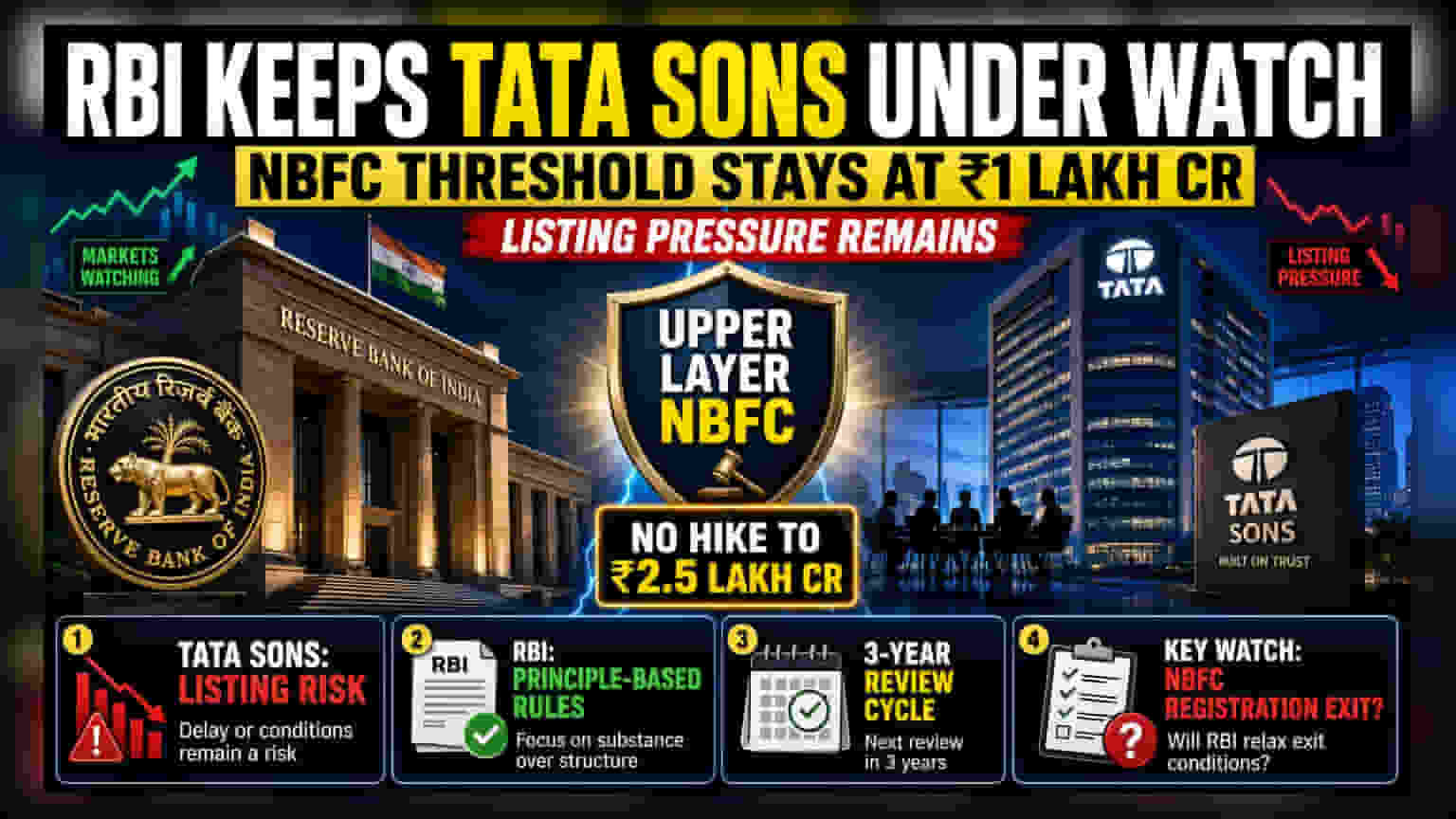
The Reserve Bank of India has refused to increase the asset threshold for upper-layer NBFCs to Rs 2.5 lakh crore, maintaining the limit at Rs 1 lakh crore. This decision keeps Tata Sons, which has assets of Rs 1.75 lakh crore, under the central bank's stricter regulatory framework and mandatory listing requirements. The move complicates Tata Sons' efforts to surrender its registration to avoid an IPO.
What Happened
The Reserve Bank of India (RBI) has decided to keep the asset threshold for upper-layer Non-Banking Financial Companies (NBFCs) at Rs 1 lakh crore. The central bank rejected industry suggestions to raise this limit to Rs 2.5 lakh crore. This decision is significant because it keeps Tata Sons, the holding company of the Tata Group, within the RBI’s "upper-layer" supervisory category. Companies in this category are subject to tighter regulations, including a mandatory requirement to list their shares on stock exchanges.
Why This Matters For Tata Sons
Tata Sons was classified as an upper-layer NBFC by the RBI in September 2022. According to regulatory rules, such companies must list on the stock exchange within a specified timeframe. Since then, the conglomerate has been working to avoid this requirement. Tata Sons has already repaid significant debt and applied to the RBI to surrender its NBFC registration. The regulator’s refusal to raise the threshold, combined with its strict stance on principle-based regulation, suggests that the company’s path to avoiding a listing remains difficult.
The RBI's Rationale
The RBI maintains that its current asset-size threshold is a reliable way to identify companies that are important for financial stability. It believes that if an NBFC with over Rs 1 lakh crore in assets faces financial trouble, it could impact the wider financial system. By sticking to this limit, the RBI ensures that it keeps a close watch on large holding companies that could pose a systemic risk. The central bank also indicated it will move to a three-year review cycle for this threshold, down from five years, to ensure regulations keep pace with the growing financial sector.
Internal Board Dynamics
The question of whether to list Tata Sons has reportedly created debate within its board. Reports indicate that director Noel Tata, who represents Tata Trusts, has expressed opposition to a public listing. Conversely, Venu Srinivasan, another director nominated by the trusts, has reportedly been in favor of the move. Because Tata Trusts is the primary shareholder of Tata Sons, any decision regarding a public listing or change in regulatory status is heavily influenced by their consensus.
How The RBI Views Regulatory Exceptions
The RBI has emphasized that it prefers a clear, principle-based regulatory approach. It stated that it is wary of giving "case-specific exemptions," suggesting that it is unlikely to change its rules just to accommodate individual companies. This stance is a major factor in the uncertainty surrounding Tata Sons' application to surrender its NBFC license.
What Investors Should Track
The most important monitorable for investors is the final decision from the RBI regarding Tata Sons' application to surrender its NBFC registration. If the regulator rejects this request, the pressure to comply with listing norms will likely continue. Investors should also watch for any official communication from Tata Sons regarding its capital structure, board decisions on the listing, and any further steps taken to meet regulatory requirements.