

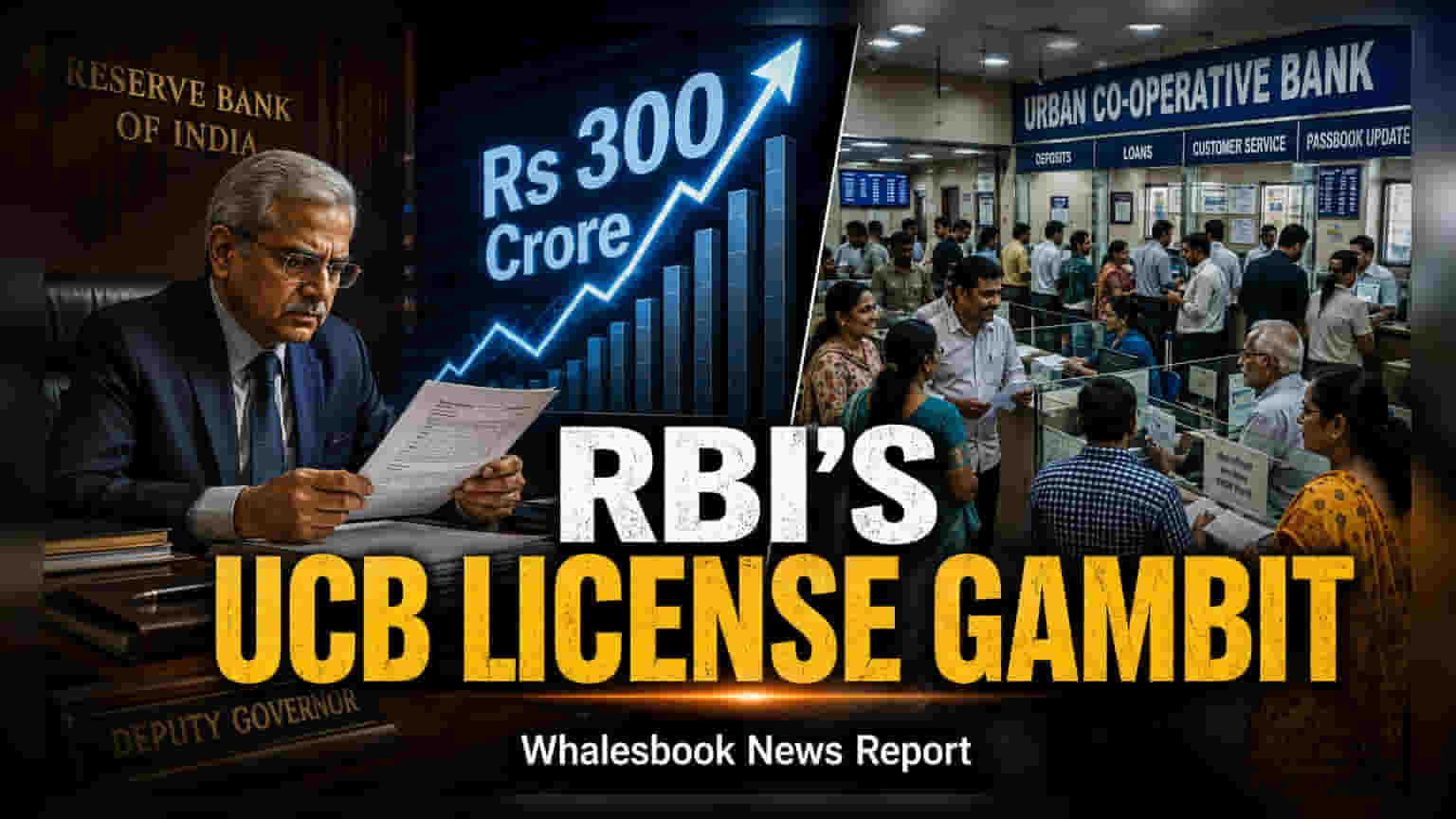
The Reserve Bank of India has restarted 'on-tap' licensing for Urban Cooperative Banks after a 22-year gap. Applicants now face strict hurdles, including a ₹300 crore capital minimum and stringent asset quality checks, to ensure only stable entities enter the market. This shift aims to professionalize the cooperative sector, which currently faces intense competition from small finance and commercial banks.
The Reserve Bank of India (RBI) is officially allowing new Urban Cooperative Banks (UCBs) to apply for licenses, breaking a 22-year pause that began in 2004. This policy shift is designed to strengthen the cooperative banking sector, which serves a specific niche of customers often missed by larger commercial banks. By moving to an 'on-tap' licensing process, the regulator is signaling a preference for larger, more professionalized cooperative credit societies over smaller, localized ones.
The RBI is not looking for small or inexperienced players in this new phase. To qualify, applicants must demonstrate a significant financial foundation, requiring a minimum capital of ₹300 crore. Additionally, they must prove their quality by maintaining a Net Non-Performing Asset (NPA) ratio—the percentage of bad loans relative to total loans—below 3%. These high entry barriers are explicitly designed to prevent the financial instability that plagued many UCBs in previous decades. Only societies with at least 10 years of operations and a consistent track record of profitability over the last five years will be considered.
Focus on Governance and Stability
Beyond capital requirements, the RBI is placing a massive emphasis on governance. The regulator plans to conduct a thorough 'fit and proper' assessment of the proposed board of directors for every applicant. This is a critical move to ensure that these banks are managed by experienced financial professionals rather than individuals who may lack banking expertise. The RBI is also requiring that no single member holds more than 5% of the shares, aiming to prevent the concentration of power that has historically led to governance failures in the cooperative sector.
Investors should note that the banking landscape in India has changed significantly since the last licensing round in 2004. Today, new UCBs will have to compete directly with Small Finance Banks (SFBs), digital-first fintech platforms, and aggressive private sector banks. While the sector currently manages aggregate assets of approximately ₹7.38 lakh crore, it must prove it can remain profitable and resilient in a high-tech, competitive market. The success of this policy will depend on whether these new licenses help consolidate the sector or if they simply add to the existing regulatory burden.
The primary risk for the sector remains its historical volatility. The 2004 licensing freeze was originally triggered because many newly licensed banks from that era turned out to be financially weak and eventually required intervention. The RBI’s current cautious approach is a direct attempt to avoid repeating these mistakes. The market's next key monitorable will be the quality of applications received and the actual number of licenses approved, as the regulator has indicated it will be highly selective throughout the vetting process.