 Whalesbook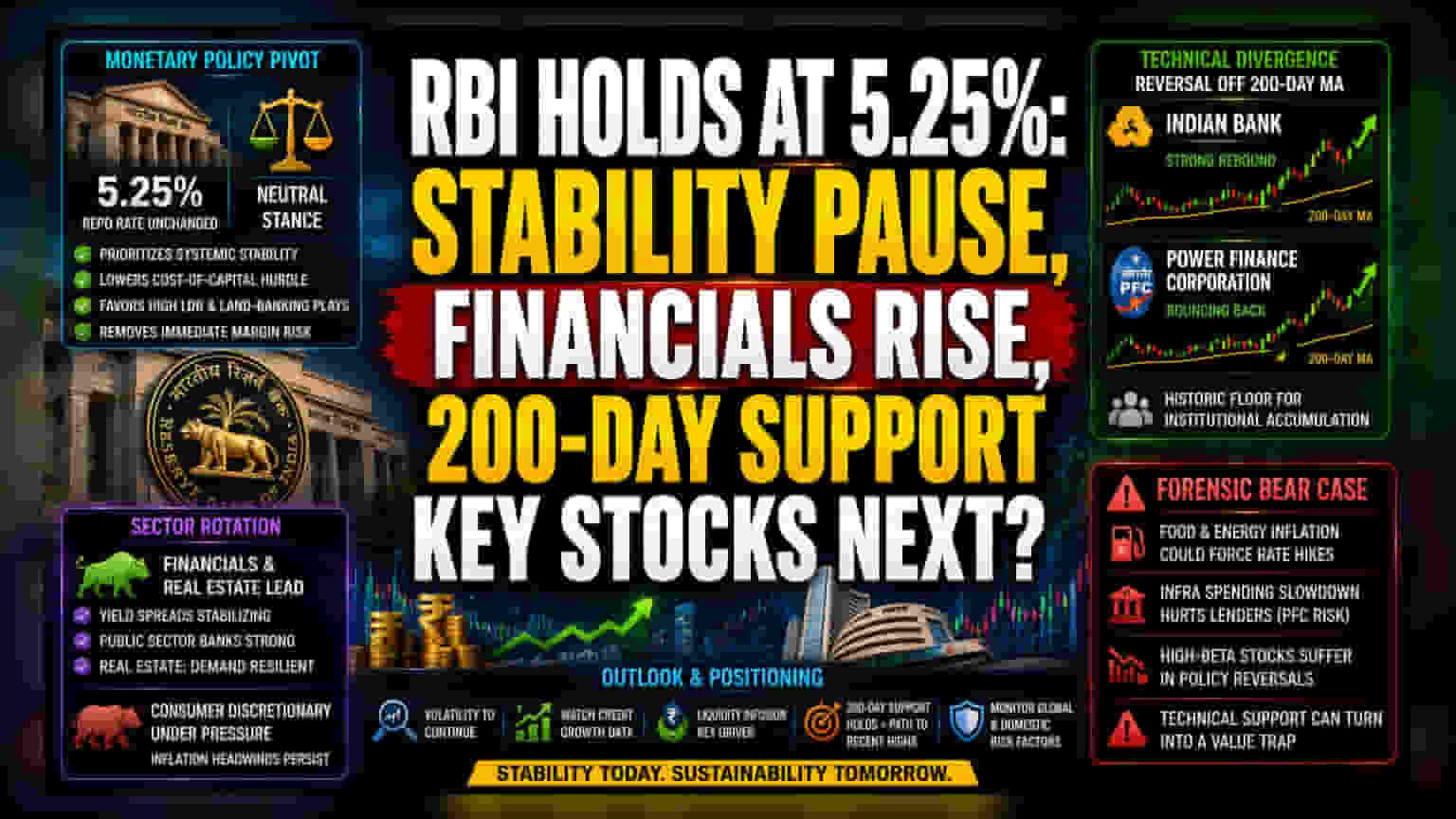


The Monetary Policy Pivot
The central bank’s decision to hold steady at 5.25% marks a strategic pause that prioritizes systemic stability over aggressive inflation containment. By opting for a neutral stance rather than a hawkish tightening, the regulator has effectively lowered the cost-of-capital hurdle for the upcoming fiscal quarter. This environment favors institutions with high loan-to-deposit ratios and companies with significant land-banking exposure, as the absence of a rate hike removes the immediate threat of margin compression in credit-sensitive verticals.
Technical Divergence and Sector Rotation
While the broader indices reacted with relief, the underlying move is less about a market-wide rally and more about technical positioning at key moving averages. Financial stocks, particularly those in the public sector, have begun to decouple from the broader market volatility. Indian Bank and Power Finance Corporation are currently exhibiting price action consistent with a reversal, specifically rebounding off their 200-day moving averages—a level that historically serves as a floor for institutional accumulation. Unlike consumer discretionary stocks, which remain pressured by inflationary headwinds, these financial entities appear to be benefiting from a stabilization in yield spreads.
The Forensic Bear Case: Structural Risks
Investors should exercise caution, as the current technical support levels are vulnerable to macro-driven liquidity shocks. While technical setups for Phoenix Mills and other real estate proxies appear favorable, they remain heavily reliant on sustained consumer demand for high-end retail and residential units. Any unexpected uptick in food or energy inflation could force the central bank to abandon its neutral stance, turning today’s 'buy' signals into a value trap. Furthermore, lenders like Power Finance Corporation carry inherent exposure to the long-gestation power infrastructure cycle; a slowdown in government infrastructure spending would disproportionately impact their book quality. Market history shows that when central banks are forced into sudden policy reversals, these high-beta financial and property stocks suffer the most aggressive drawdowns.
Outlook and Positioning
Expect continued volatility as the market tests whether this pause is sustainable or merely a precursor to higher-for-longer rates. Analysts remain focused on upcoming credit growth data and liquidity infusion metrics as the primary drivers for the next leg of this trend. If the 200-day support levels hold, the path toward recent highs appears statistically probable, provided no further exogenous shocks derail the broader credit expansion cycle.