

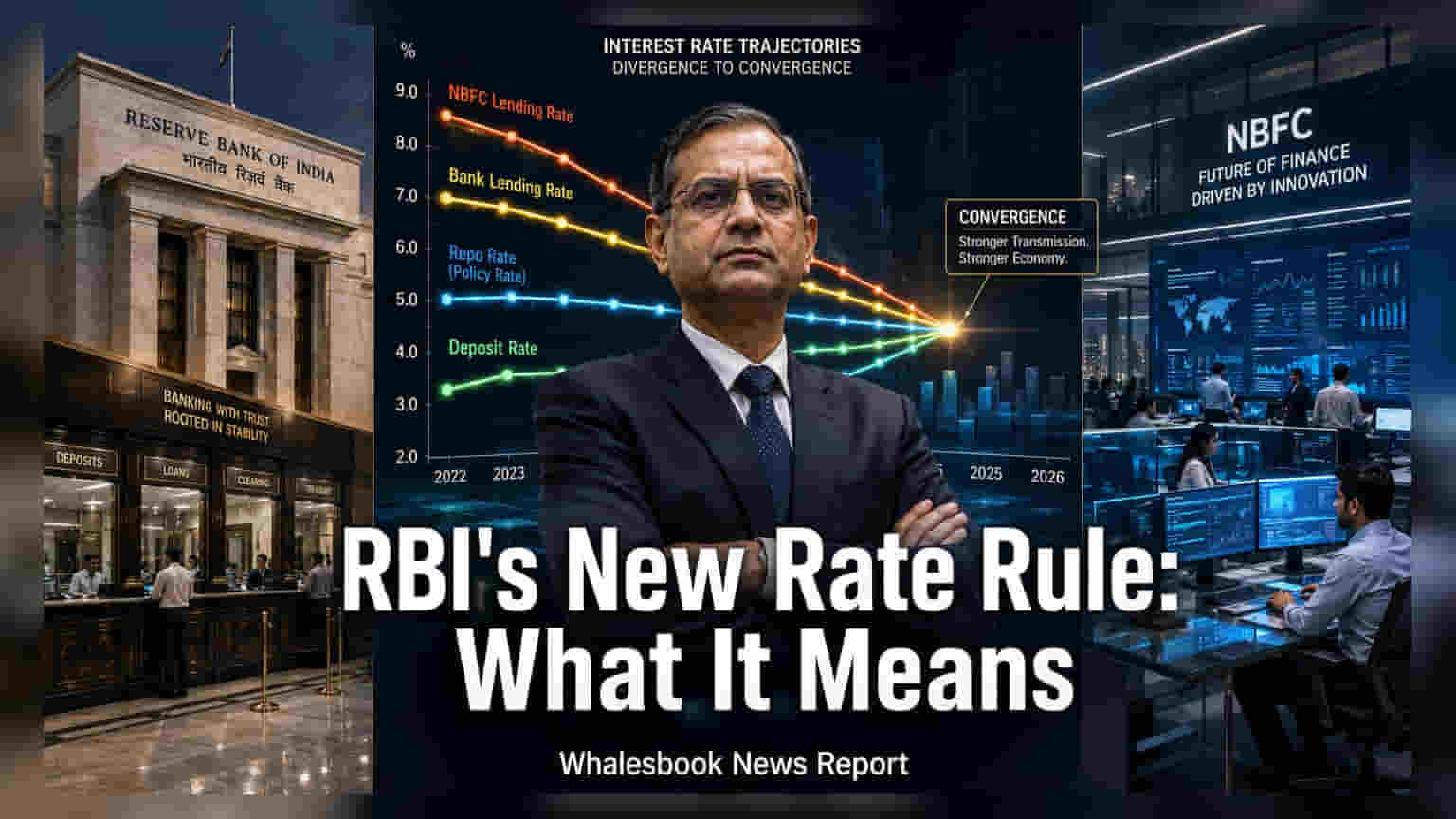
The Reserve Bank of India has announced plans to create a unified interest rate framework for banks and NBFCs. This move aims to standardize loan pricing methods, improve transparency, and help monetary policy reach the economy faster. Investors should track how this impacts the profit margins of NBFCs, which may face stricter operational guidelines than before.
On August 5, 2026, the Reserve Bank of India (RBI) announced a major proposal to overhaul the interest rate framework for all regulated lenders, including banks and Non-Banking Financial Companies (NBFCs). Following the latest Monetary Policy Committee meeting, where the repo rate was held steady at 5.25% with a neutral stance, Governor Sanjay Malhotra outlined plans for a principle-based approach to harmonize how interest rates on loans are calculated and managed.
The central bank’s initiative seeks to standardize operational practices that currently vary significantly across the financial sector. This includes harmonizing day-count conventions, which determine how interest is calculated on a daily basis, and benchmark reset dates for floating-rate loans. The framework aims to ensure that customers face consistent practices whether they borrow from a traditional bank or a shadow lender. By bringing existing systems like the Marginal Cost of Funds-based Lending Rate (MCLR) and External Benchmark Lending Rate (EBLR) under a more uniform structure, the RBI hopes to make monetary policy transmission more effective. This essentially means that when the central bank changes the repo rate, the impact on customer loan rates should be more predictable and faster.
For investors, this shift carries important implications, particularly for NBFCs. Banks have long operated under strict regulatory guidelines regarding loan pricing, whereas NBFCs have historically enjoyed more flexibility. If the new framework forces NBFCs to align their lending practices closely with bank-like benchmarks, it could impact their net interest margins. Lenders may also face higher compliance and operational costs as they update their internal systems to match the upcoming standardized guidelines. The transition will require significant administrative effort, and the market is currently waiting for the draft directions to understand the specific timelines and implementation rules.
The RBI’s proposal is part of a broader effort to strengthen consumer protection and regulatory oversight. This move follows a recent update regarding the standardization of deposit interest rate norms, which becomes effective on October 1, 2026. By tackling both deposit and lending rate practices, the central bank is aiming for a more orderly financial ecosystem. The next key monitorable for the market will be the release of the draft directions, which will be open for public consultation. Investors may track the management commentary from leading NBFCs and banks in the coming weeks to understand how they assess the potential impact of these rules on their bottom lines and loan book flexibility.