

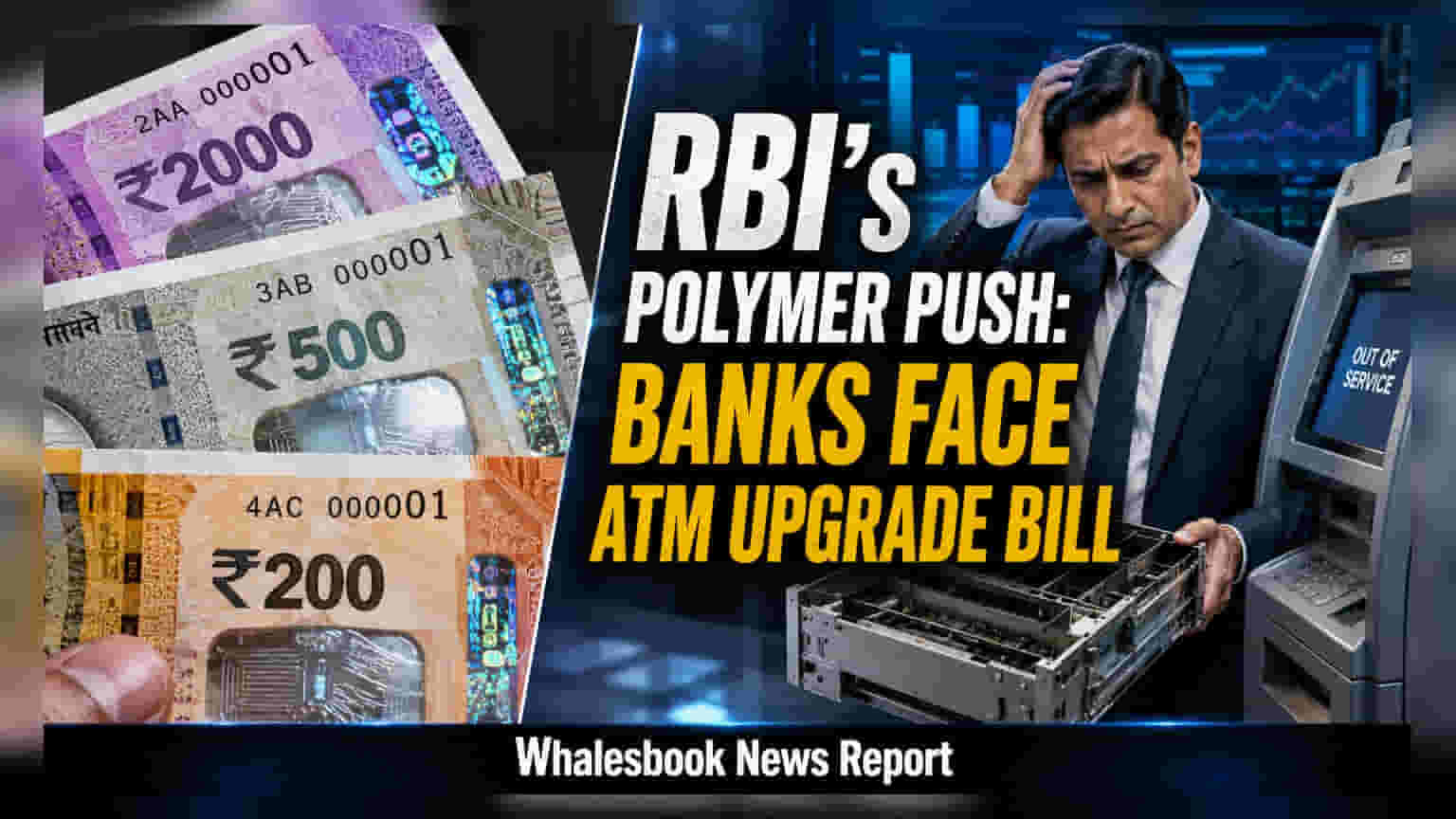
The Reserve Bank of India’s plan to launch polymer banknotes by 2027-28 requires banks to upgrade ATM cassettes to handle the new material. This shift will likely lead to additional capital expenditure for lenders, even as ATMs remain a key channel for cash withdrawals. Investors should monitor how these costs might impact banking sector margins during the rollout phase.
The Reserve Bank of India (RBI) is working on a pilot program for polymer banknotes, but the shift brings a new technical hurdle for banks: ATM hardware upgrades. While the move is aimed at increasing currency durability and security using plastic-based material, it will require lenders to replace the internal cash-holding cassettes in their ATM networks to ensure the new notes can be dispensed correctly.
A senior official from a large state-owned bank confirmed that current ATM machines are not equipped to handle these notes without replacing their internal hardware. While the total financial impact is not yet finalized, this adds a new layer of expense for financial institutions. The cost of replacing a full ATM unit is roughly ₹2 lakh, though changing only the cash-holding cassettes is expected to be less expensive.
Despite the rise of digital payments through the Unified Payments Interface (UPI), ATMs remain a vital part of India's cash ecosystem. Data from CMS Info Systems shows that average monthly withdrawals per customer increased slightly to ₹5,835 in 2025, suggesting that physical cash infrastructure remains essential for many users.
Implementation and Supply Chain Risks
The transition poses operational challenges that investors should consider. Bankers recall that previous changes in currency size required nearly a year to complete ATM adjustments across the country. Furthermore, there is a potential risk regarding supply chains. Industry sources have noted a lack of domestic manufacturing capacity for these specific ATM components, which could lead to reliance on imports and complicate the rollout timeline.
The RBI’s currency management arm issued a global expression of interest on July 17, 2026, seeking suppliers for polymer substrate sheets, with the bidding window set to close on August 18, 2026. The initial pilot program will focus on ₹10 and ₹20 denominations, aiming for a rollout at the beginning of the 2027-28 fiscal year, provided the test phase succeeds in Indian climate and infrastructure conditions.
The final benefit of this move, such as longer note life and better security features, will need to be weighed against the implementation costs. The key monitorable for investors will be the scale of the cost burden on banks and the timeline for the pilot's success. As the program progresses, the extent to which these hardware costs impact bank operating margins and the ease of sourcing new components will be important factors to track.