

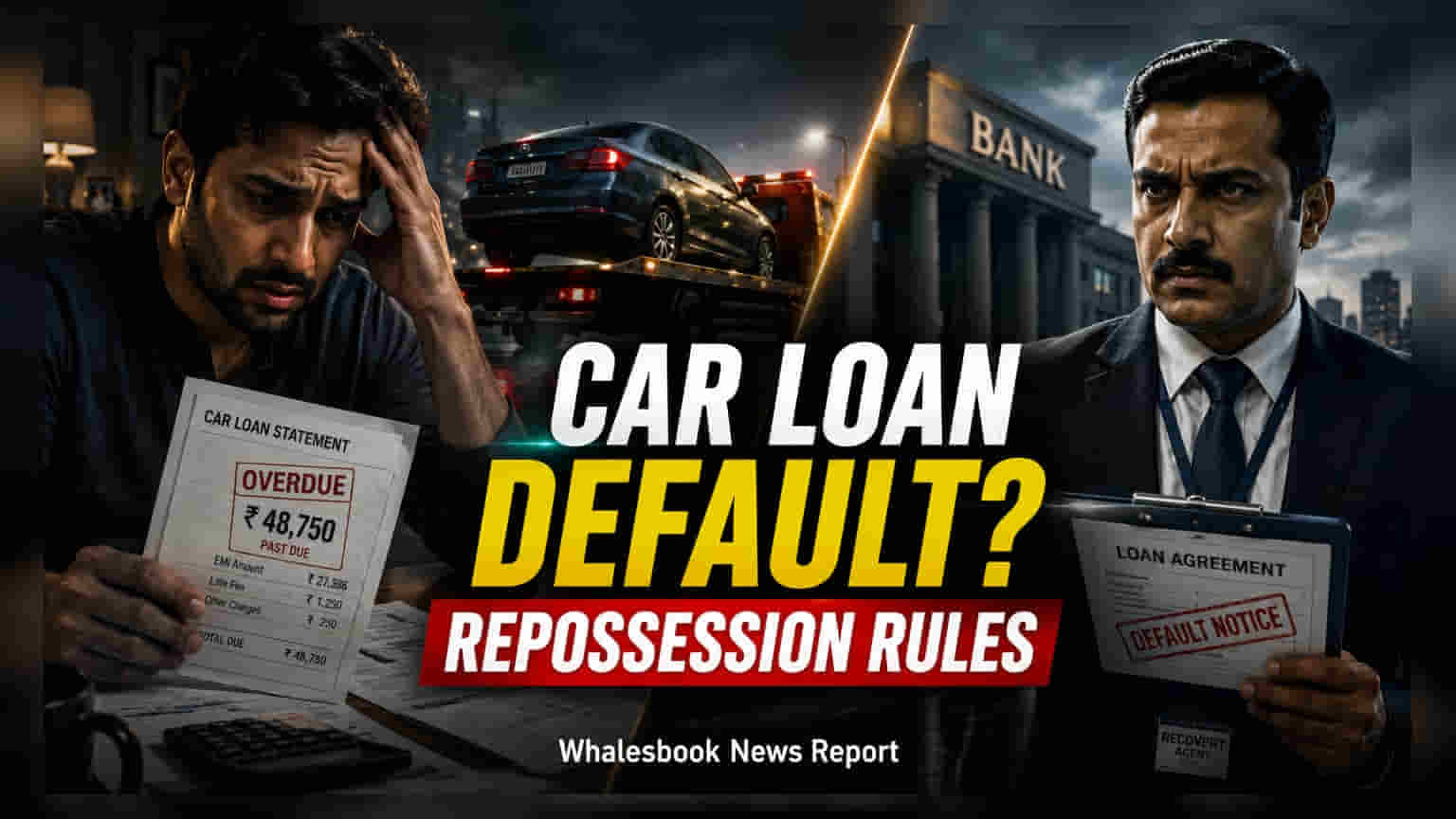
Missing a car loan EMI does not lead to immediate vehicle repossession in India. Banks must follow a formal legal process before taking such action, while borrowers have rights against harassment. Understanding these procedures helps in managing financial stress and protecting your credit score.
Detailed Coverage
In India, a car loan is a secured debt, meaning the vehicle acts as collateral for the bank or financial institution. While this gives the lender the right to repossess the car if payments are not made, it is a formal procedure guided by Reserve Bank of India (RBI) regulations rather than an automatic action after a single missed payment.
The Typical Recovery Process
When a borrower misses an EMI, the lender usually begins with reminders through phone calls, emails, or messages. The primary goal for most banks is to recover the overdue amount rather than seizing the asset, which is often considered a last resort. If a borrower continues to miss payments despite these reminders, the lender will typically send formal notices in accordance with the signed loan agreement. These notices are required to give the borrower a specific window of time to settle the dues or regularize the account before the institution proceeds to initiate recovery steps.
Understanding Borrower Rights
Borrowers are protected by fair practice codes mandated by the RBI. Lenders and their authorized recovery agents are not permitted to use harassment, intimidation, or coercion during the recovery process. Agents are required to follow a specific code of conduct, which includes maintaining professionalism. If a borrower feels that these norms have been violated, they can raise a formal complaint through the bank’s internal grievance redressal cell. If the issue remains unresolved, the borrower can approach the RBI Integrated Ombudsman for further assistance.
Financial and Credit Impact
Beyond the risk of losing the vehicle, persistent defaults carry long-term financial consequences. Every missed payment is reported to credit bureaus, which significantly lowers the borrower's credit score. A damaged score can make it difficult or more expensive to access credit in the future. Additionally, borrowers should be aware that even if a vehicle is repossessed and auctioned by the lender, they may still be held responsible for the remaining loan balance if the sale proceeds are less than the total outstanding debt.
Proactive Communication
When facing a temporary income disruption or financial hardship, the most effective step for a borrower is to contact the lender immediately. Many banks are willing to discuss options such as restructuring the loan or offering a temporary payment holiday if the situation is communicated clearly and early. Avoiding communication with the lender often accelerates the recovery process, whereas transparency can help keep the loan account in good standing and protect the borrower's credit reputation.