

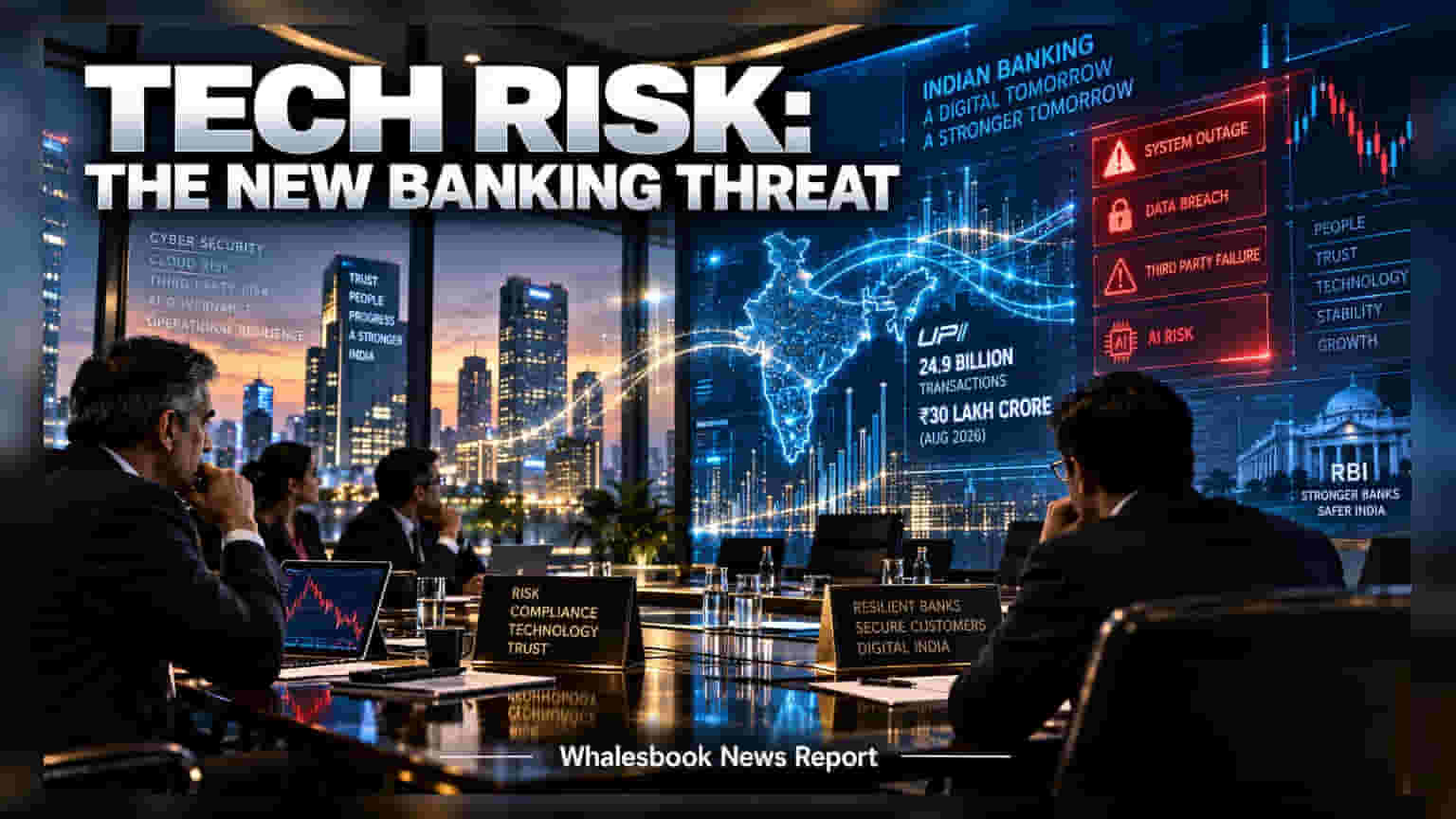
RBI Deputy Governor Rohit Jain has warned that technology failures are now a primary systemic risk for Indian banks. The regulator is pushing for boards to treat cybersecurity and digital resilience as a top priority. Investors should watch for how this regulatory pressure affects bank operating costs and technology-related spending in the coming quarters.
Reserve Bank of India (RBI) Deputy Governor Rohit Jain has issued a clear message to Indian lenders: technology failures are now a critical systemic risk. Speaking at the State Bank of India Banking Conclave, the official stated that a bank’s operational stability is directly linked to its digital infrastructure. For investors, this shift indicates that technology is no longer just a support function, but a central component of a bank’s financial health and reputation.
The regulator now expects bank boards to move beyond treating IT issues as back-office tasks. Instead, technology must be managed as a first-order risk to the entire enterprise. This change is particularly relevant given the rapid expansion of digital financial services in India. For instance, the Unified Payments Interface (UPI) processed 24.9 billion transactions worth nearly Rs 30 lakh crore in August 2026, highlighting the massive scale at which these digital platforms operate.
A key focus of the regulator is the reliance on third-party vendors for cloud services, software, and payment interfaces. While these partnerships help banks scale quickly, the RBI warned that banks cannot outsource their accountability. Even if a failure happens at a vendor level, the bank remains responsible for maintaining service access and protecting customer data. The regulator cited global disruptions as an example of how interconnected systems can create challenges that cross institutional boundaries.
Furthermore, the central bank cautioned against the aggressive or unverified adoption of artificial intelligence in banking operations, such as credit assessments and fraud detection. While AI can drive productivity, the RBI emphasized that governance and control must come before scale. Boards are now expected to demonstrate technical literacy to effectively challenge assumptions about digital dependencies and stress-test disaster recovery plans.
For investors, this directive has specific implications. Banks may face increased spending on cybersecurity, compliance, and building redundant systems to prevent outages. While these investments are necessary for long-term stability, they could put pressure on operating margins in the near term. The regulator's stance suggests that future regulatory audits will heavily scrutinize how banks govern their digital footprints.
The next steps for investors will be to monitor management commentary regarding technology spending and cybersecurity upgrades. Tracking how banks plan to handle third-party risks and integrate new technology safely will be essential to understanding their long-term operational resilience and ability to avoid regulatory penalties.