 Whalesbook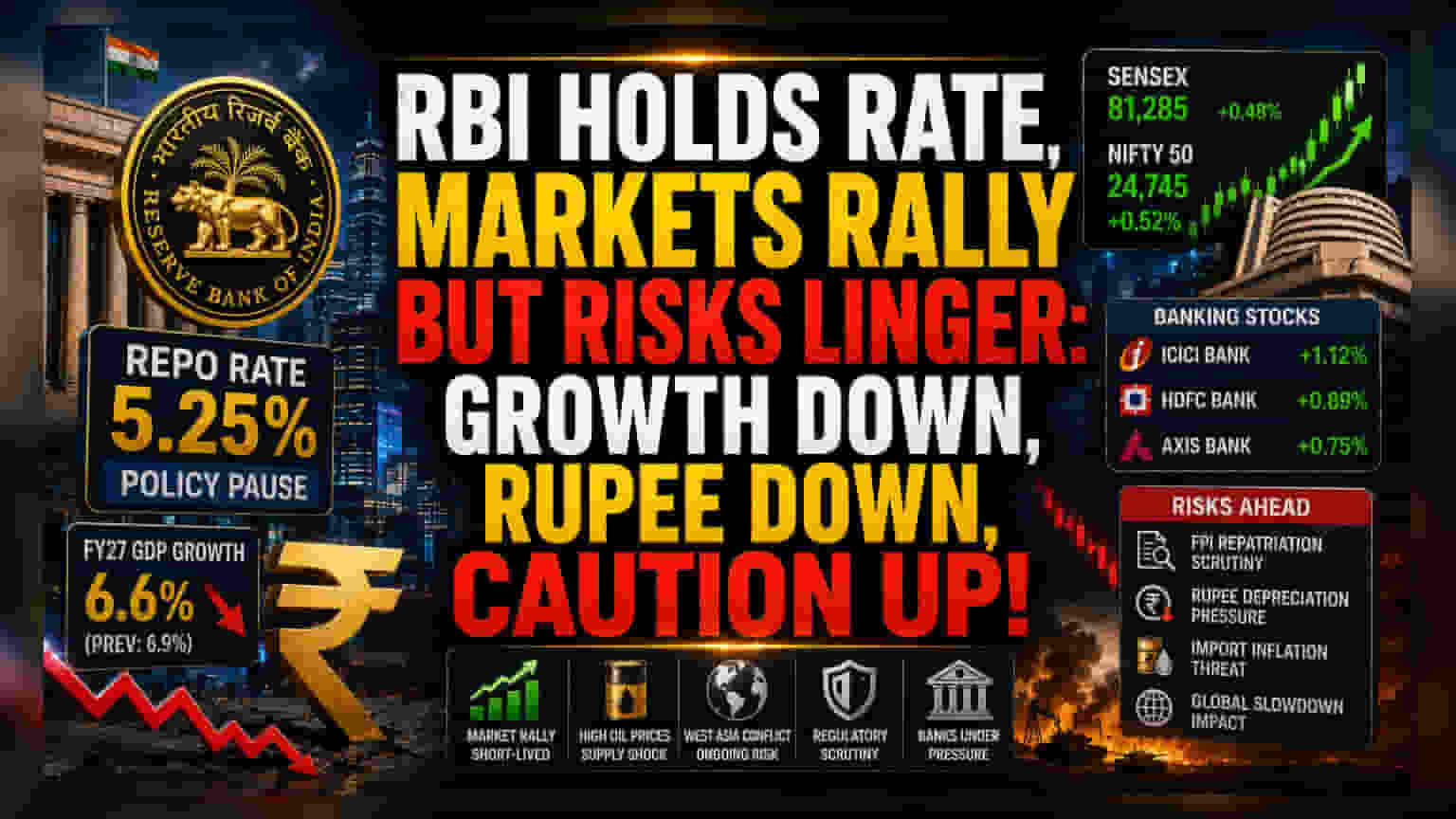


The Policy Pause and Market Reflex
The decision to maintain the repo rate at 5.25% during the June Monetary Policy Committee session provided a fleeting sense of security to Indian equity markets. Market participants had largely priced in this pause, viewing it as a necessary reaction to volatile global energy costs and supply-chain fragilities linked to the ongoing West Asia conflict. While the Sensex and Nifty 50 attempted to build on the momentum following the announcement, the afternoon trade demonstrated that the initial excitement was tempered by deeper macro-economic anxieties.
The Valuation and Growth Conflict
The central bank’s decision to revise the FY27 GDP growth projection downward to 6.6%, from the previous 6.9%, highlights a sobering reality for investors. This adjustment reflects the central bank’s growing caution regarding the potential impact of high energy prices on domestic consumption and industrial margins. While the government’s new measures to liberalize foreign portfolio investment in government securities and raise equity investment limits for non-residents provide a technical boost to liquidity, they do not mask the underlying pressure on corporate profitability. Financial stocks, including ICICI Bank and HDFC Bank, initially captured the optimism, yet the banking sector continues to grapple with the broader de-rating seen across large-cap financial institutions as foreign institutional investors remain selective.
The Forensic Bear Case: Structural Vulnerabilities
Beyond the headline-grabbing liquidity measures, a more cynical view of the market reveals significant risk factors that could undermine the current rally. First, the regulatory environment is tightening; ICICI Bank specifically faces recent scrutiny regarding foreign portfolio investment repatriation, which serves as a reminder of the heightened compliance risks in the financial sector. Second, the reliance on foreign capital to support the rupee—which has seen substantial depreciation against the dollar over the past year—creates a fragile floor for valuations. Furthermore, unlike in previous cycles where falling interest rates fueled credit growth, the current environment sees high oil prices acting as a persistent supply-side shock, likely forcing the central bank to maintain higher-for-longer rates despite the neutral stance. Companies in sectors like technology and metals, already facing headwinds from export volatility and global slowdowns, remain particularly vulnerable if domestic demand weakens in line with the lowered GDP outlook.
Future Outlook and Consensus
Moving forward, market sentiment remains tethered to the duration and intensity of the West Asia conflict and its direct impact on import-led inflation. While brokerage consensus suggests a potential for selective buying in defensives and infrastructure-linked plays, the broader market is expected to remain range-bound. Analysts anticipate that unless there is a material easing in crude oil prices, the RBI will be forced to prioritize currency stability and inflation control, potentially pushing the timeline for any meaningful rate cuts well into the next calendar year.