

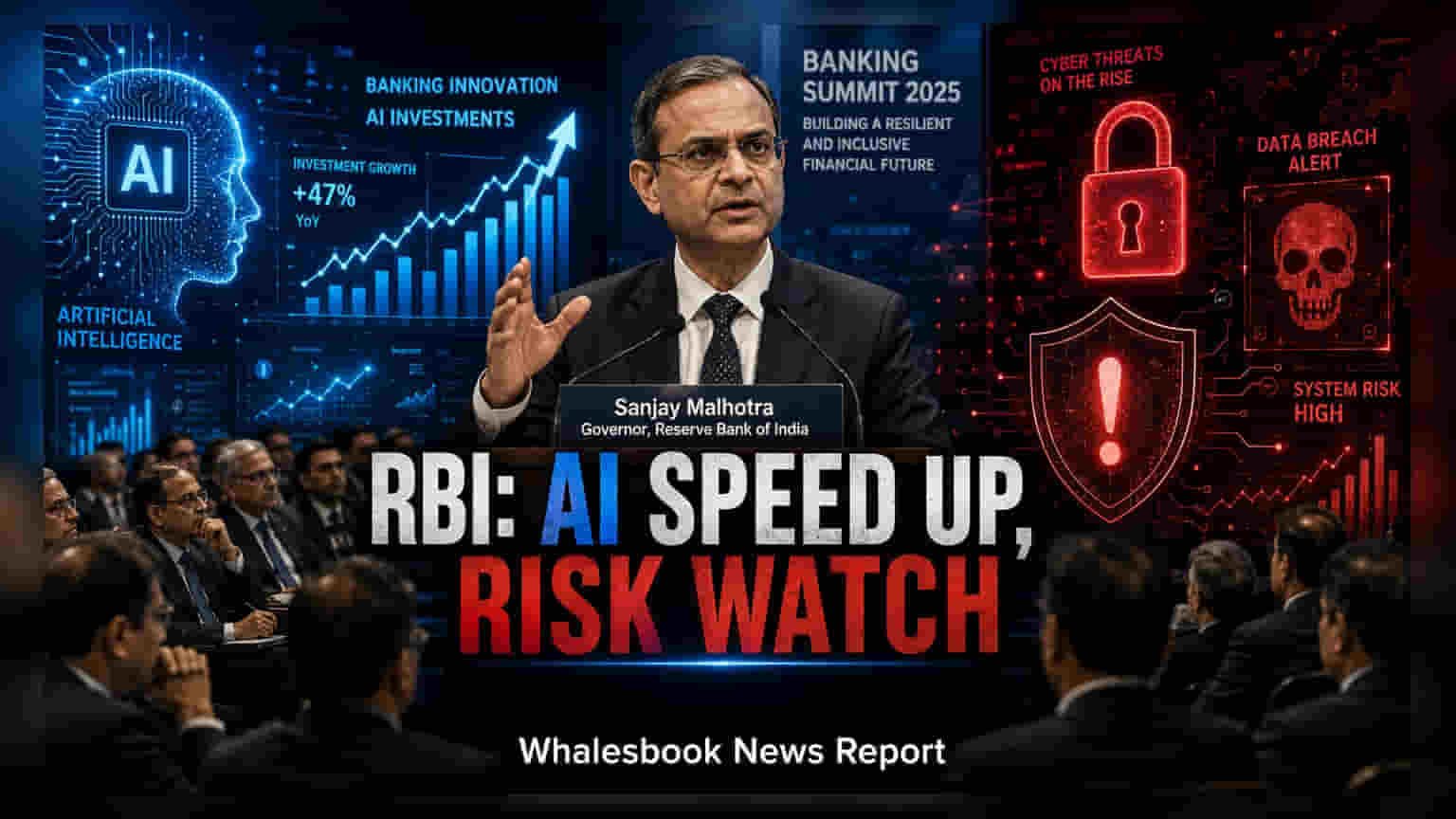
RBI Governor Sanjay Malhotra has advised banks to accelerate AI adoption, citing India's strong digital infrastructure as an advantage. However, he warned that relying on too few technology vendors poses systemic risks like cybersecurity threats and data privacy issues. Investors should watch how banks balance higher technology spending with the need for robust risk management and regulatory compliance.
At the FIBAC 2026 conference in Mumbai, Reserve Bank of India (RBI) Governor Sanjay Malhotra called on Indian banks to move beyond limited AI experiments and accelerate their investments in artificial intelligence technology and infrastructure. The Governor emphasized that while the country's public digital stack—including platforms like UPI and ONDC—provides a solid foundation for financial innovation, banks must approach this expansion with a deep understanding of the risks involved.
The central message from the regulator is that AI adoption is a strategic necessity, but it comes with significant operational challenges. Governor Malhotra warned that banks should avoid over-relying on a limited number of AI models or external technology providers. This concentration of power in a few vendors can create systemic vulnerabilities, where a failure or an error in a single AI system could potentially disrupt operations across multiple institutions or the broader banking network.
For investors, this directive highlights a critical cost and governance factor. As banks continue to digitize, their technology spending is expected to remain high. While these investments aim to improve customer service, risk assessment, and internal efficiency, they also require significant capital allocation toward cybersecurity and data protection. Banks that fail to manage these risks effectively may face not only operational failures but also regulatory scrutiny and financial penalties.
This is not the first time regulators have raised concerns about the risks associated with rapid technology adoption. In April 2026, Finance Minister Nirmala Sitharaman also highlighted the potential for unprecedented AI-related risks to the financial sector, urging institutions to focus on fortifying their IT systems and improving threat intelligence sharing. The alignment between the government and the central bank suggests that regulatory pressure on banks to maintain high standards of cyber safety and AI governance will likely intensify.
Moving forward, investors may want to track how different banks manage these technology costs. The key monitorable will be the management commentary in upcoming quarterly results regarding their AI strategy, vendor dependencies, and budgets for cybersecurity. Balancing the benefits of faster, AI-driven operations with the rising costs of infrastructure, talent upskilling, and compliance will be a defining factor for the long-term profitability of financial institutions.