

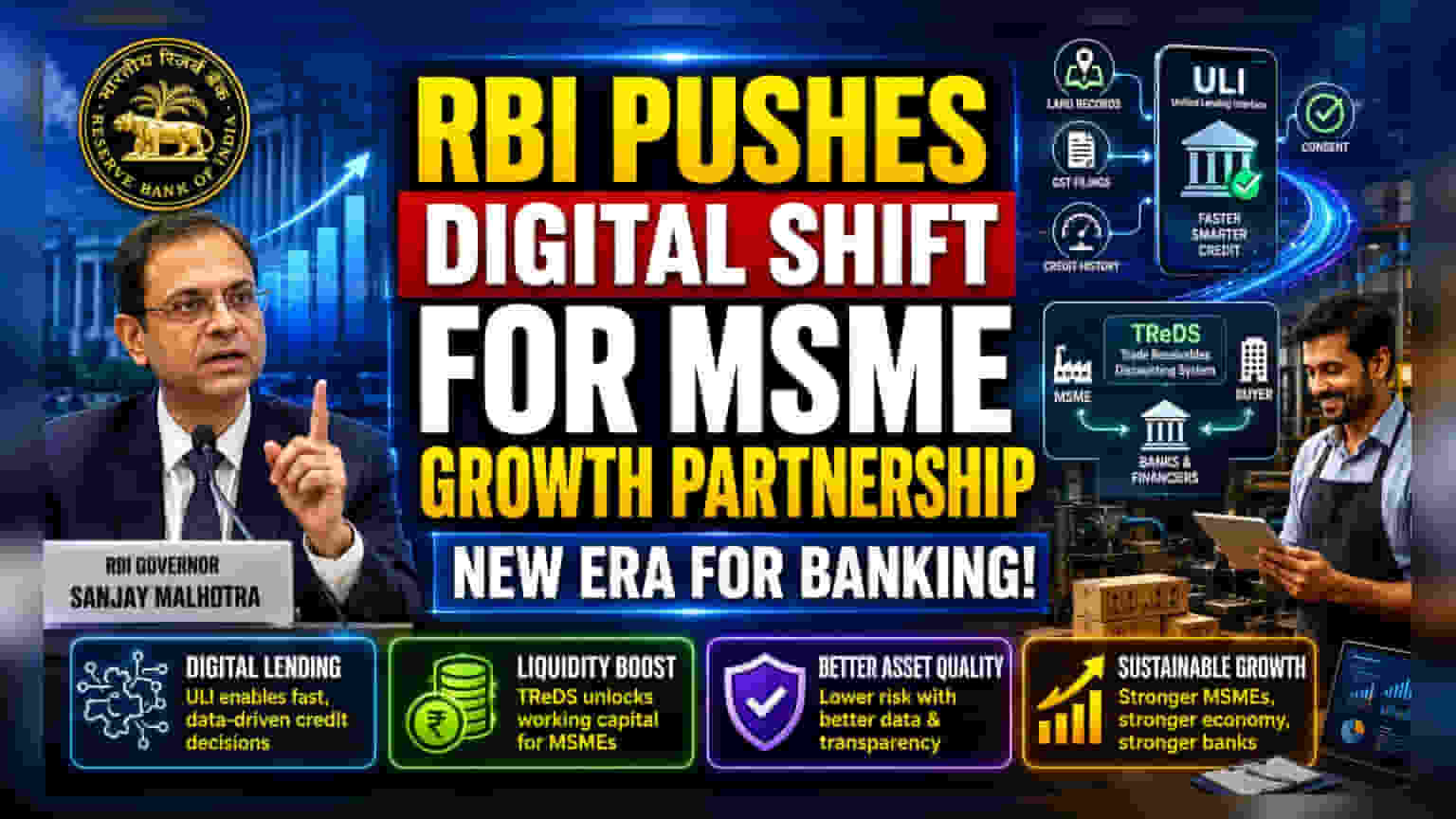
RBI Governor Sanjay Malhotra has called for a shift in how banks treat micro, small, and medium enterprises (MSMEs), urging them to act as growth partners. The central bank is pushing for the adoption of digital tools like the Unified Lending Interface (ULI) and TReDS to speed up credit access and improve data-driven lending to the sector.
What Happened
Reserve Bank of India (RBI) Governor Sanjay Malhotra has urged the banking sector to fundamentally change its approach toward micro, small, and medium enterprises (MSMEs). Speaking at the International MSME Day 2026 celebrations in Kochi, the Governor stressed that banks should move beyond viewing MSMEs as just a regulatory requirement. Instead, they should treat these businesses as long-term partners in economic growth.
The Governor emphasized that for this to happen, both banks and MSME entrepreneurs must embrace digital transformation. He pointed to digital infrastructure as the key to faster, more accurate lending decisions, moving away from slow, manual processes that have historically hampered credit access for small businesses.
Why It Matters for Investors
For investors in banking and financial stocks, this message is significant. Lending to MSMEs has traditionally been viewed as high-risk and high-cost due to the difficulty in assessing the creditworthiness of small, often unorganized businesses. By encouraging banks to use digital data, the RBI is essentially pushing for a more efficient way to manage this risk.
If banks adopt these digital strategies effectively, it could lead to better asset quality in their MSME loan books. It could also lower the 'transaction cost' of lending, potentially making this segment more profitable rather than just a mandatory obligation to meet priority sector lending targets.
The Digital Tools: ULI and TReDS
The RBI is highlighting specific tools to make this shift possible. One is the Unified Lending Interface (ULI), a technology platform designed to provide 'frictionless credit.' ULI allows lenders to access verified digital information—such as land records, GST filings, and credit history—directly through APIs after getting consent from the borrower. This cuts down the time required for credit appraisal from weeks to potentially days or hours.
Another pillar is the Trade Receivables Discounting System (TReDS). This digital marketplace allows MSMEs to sell their unpaid invoices to banks and other financiers. It solves a major liquidity problem for small businesses by providing them with immediate cash, while allowing banks to finance these receivables with a clearer view of the buyer’s credit risk.
Challenges and Risks
Investors should keep in mind that technology is not a total solution for credit risk. While tools like ULI help with data access, the core challenge of assessing a small business's future cash flow remains. Recent reports have indicated that Indian banks have become more cautious about MSME lending due to emerging signs of stress in the sector.
Even with digital tools, if the economic environment for small businesses remains tough, loan defaults could still rise. Additionally, banks will need to invest in upgrading their technology stacks to fully integrate these platforms, which could impact their operational costs in the near term.
What Investors Should Track
Investors monitoring this space should look beyond just the growth of MSME loan books. It is important to watch how banks manage the quality of these assets. Key monitorables include:
- Technological Expenditure: Which banks are successfully integrating ULI and TReDS to lower their cost-to-income ratio in this segment.
- Asset Quality Trends: Tracking the Non-Performing Asset (NPA) levels in the MSME portfolio of banks.
- Credit Growth: Whether the push for 'growth partnership' actually translates into faster loan book growth or if banks continue to remain cautious due to sector stress.
Ultimately, while the RBI’s push is aimed at improving access, the success of this model will depend on whether banks can use this data to lend more confidently without sacrificing the quality of their portfolios.