

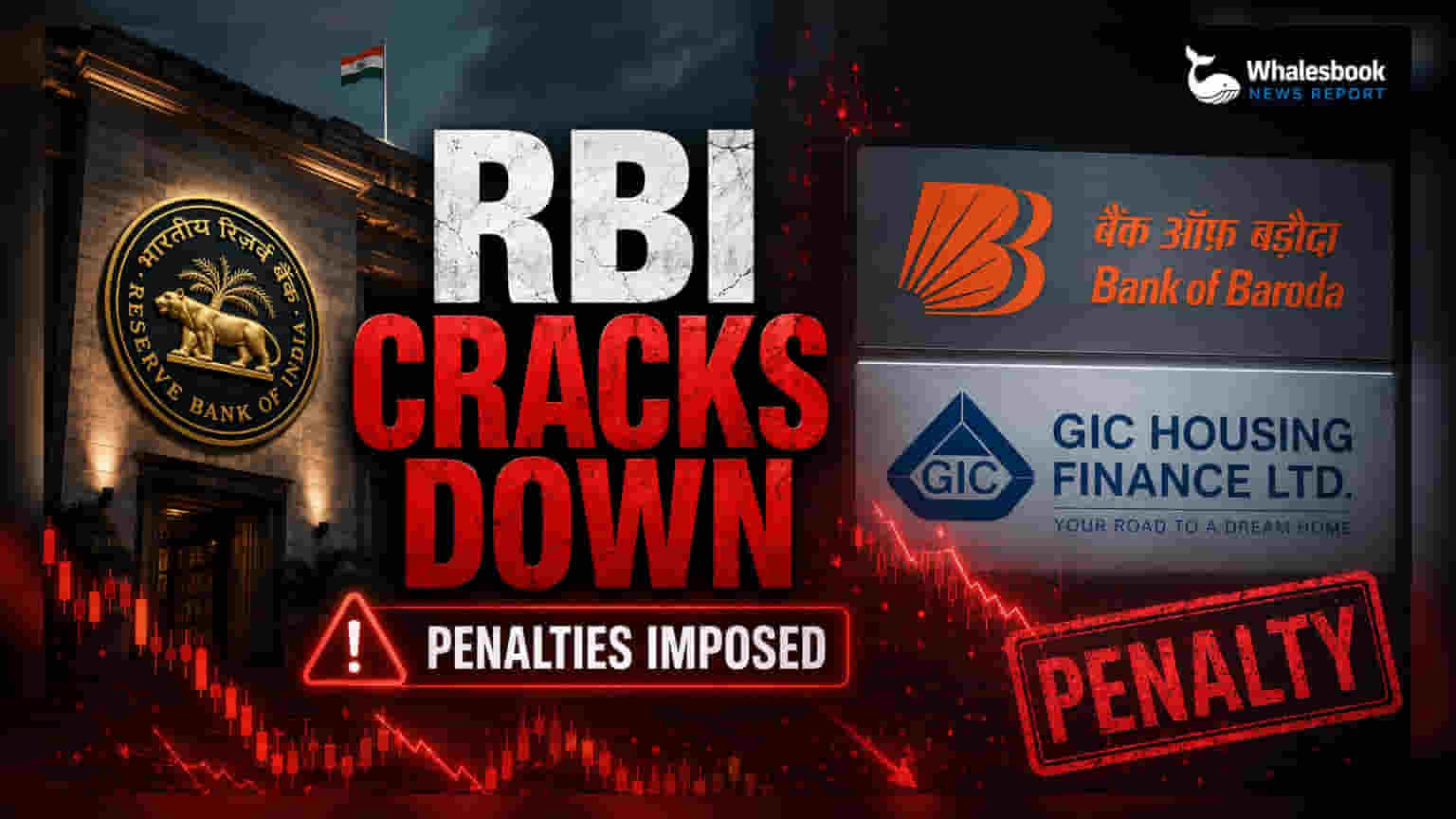
The Reserve Bank of India has penalized Bank of Baroda and GIC Housing Finance for regulatory non-compliance. Bank of Baroda faces a fine for charging excess interest, while GIC Housing Finance is penalized for failing to review customer risk categories.
What Happened
The Reserve Bank of India (RBI) has imposed monetary penalties on Bank of Baroda and GIC Housing Finance for failures to comply with regulatory requirements. Bank of Baroda will pay a penalty of Rs 63.6 lakh, while GIC Housing Finance faces a fine of Rs 3.1 lakh. These actions follow inspections conducted by the regulator and the National Housing Bank, covering the financial position of both institutions as of March 31, 2025.
Why The RBI Penalized Bank of Baroda
The RBI's action against the public sector lender, Bank of Baroda, stems from two specific issues. First, the bank was found to have charged interest on certain loan accounts at rates higher than what was contractually agreed upon with the borrowers. Second, the bank failed to upload Know Your Customer (KYC) records of certain customers to the Central KYC Records Registry (CKYCR) within the required timeline. These lapses were identified during an inspection of the bank's compliance with the Fair Practices Code for Lenders.
The Compliance Gap At GIC Housing Finance
GIC Housing Finance was penalized by the National Housing Bank for deficiencies related to its KYC processes. The inspection revealed that the company did not have a robust system in place to perform periodic reviews of the risk categorization of customer accounts. Regulatory norms require financial institutions to review and update the risk profiles of accounts at least once every six months to ensure proper monitoring and fraud prevention. The failure to maintain this frequency triggered the fine.
Business And Regulatory Context
These penalties represent the central bank's ongoing efforts to maintain strict discipline in the Indian financial sector. While the financial impact of these specific penalties is minor for both entities, they highlight the importance of operational compliance. Regulatory oversight is particularly high for banks and housing finance companies, as they manage public deposits and large-scale lending portfolios. The RBI has clarified that these fines are restricted to regulatory deficiencies and do not question the legality of the underlying transactions between the companies and their clients.
What Investors Should Track
For investors, the primary monitorable is whether these lapses indicate broader internal control issues or are isolated administrative errors. While these specific fines are not large enough to impact the balance sheets of either company significantly, investors may look for updates in future annual reports or management commentary regarding improvements in compliance systems and IT infrastructure. The key indicator will be if the institutions can avoid similar penalties in subsequent regulatory inspections.