

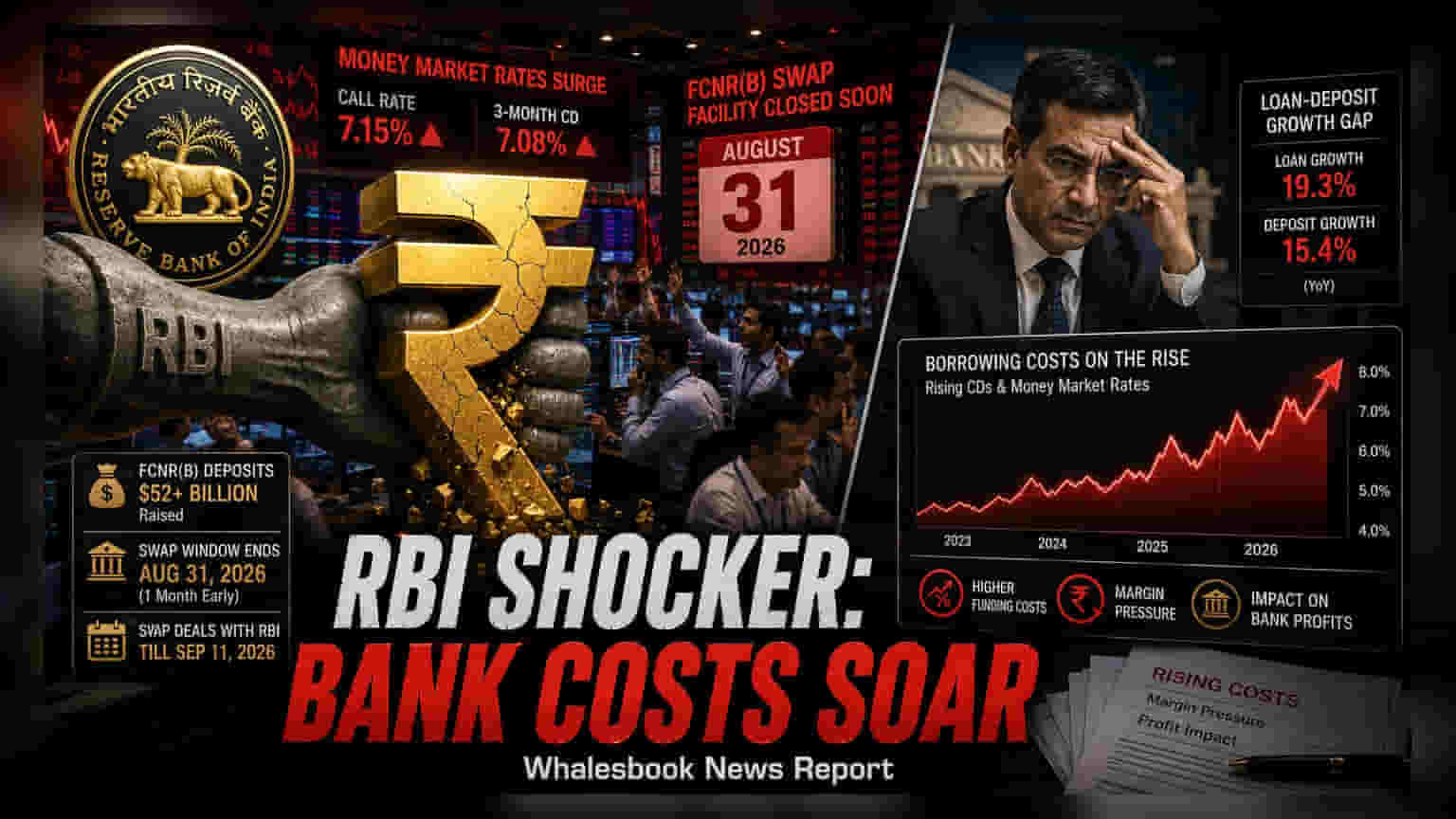
Indian banks are bracing for higher borrowing costs after the Reserve Bank of India announced the premature closure of its special foreign currency swap facility on August 31, 2026. The move, which follows a successful $52 billion mobilization, removes a cost-effective funding source just as loan demand continues to outpace deposit growth. Investors are watching for potential pressure on bank profit margins as lenders shift toward expensive domestic borrowing.
The Reserve Bank of India (RBI) has decided to end its special foreign currency swap facility for FCNR(B) deposits one month ahead of schedule, with the window now set to close on August 31, 2026. This facility allowed banks to swap foreign currency deposits into rupees at favorable costs, providing a steady and affordable source of funding. The program saw an encouraging response, successfully attracting over $52 billion in FCNR(B) deposits, which helped banks manage their liquidity needs.
Impact on Bank Borrowing Costs
The premature closure of this channel is already influencing money markets, where short-term borrowing costs are on the rise. Banks, which had utilized these foreign inflows to fund their loan growth, are now forced to look for alternative funding. This shift has led to an increase in rates for certificates of deposit (CDs)—short-term debt instruments used by banks to raise money. When banks must pay more to secure funds through these market instruments rather than through the cheaper swap facility, it creates pressure on their profit margins. Investors will be tracking whether banks can pass on these costs or if this will result in lower earnings in the coming quarters.
The Loan-Deposit Mismatch
The timing of this move coincides with a period where Indian banks are dealing with a notable gap between loan demand and deposit growth. Recent data indicates that bank loans have expanded by 19.3% annually, significantly outpacing the 15.4% growth in deposits. As household savings increasingly move toward other investment options, traditional bank deposits are struggling to keep up with the high demand for credit. With the loss of the concessional dollar swap window, banks face the challenge of bridging this gap without significantly increasing their cost of operations.
While the primary swap facility for FCNR(B) deposits ends on August 31, the RBI has provided some breathing room, allowing banks to execute swap deals with the central bank until September 11, 2026. Additionally, other schemes related to External Commercial Borrowings (ECBs) and Overseas Foreign Currency Borrowings remain available until December 31, 2026.
Market observers will now focus on how individual lenders manage this liquidity transition. The main monitorable for investors will be the banking sector's ability to balance strong loan growth with the need to maintain healthy profit margins. If banks cannot attract enough domestic deposits, they may face the difficult choice of either slowing down their loan growth or raising interest rates on savings products to attract more customers, both of which could impact their financial performance.