

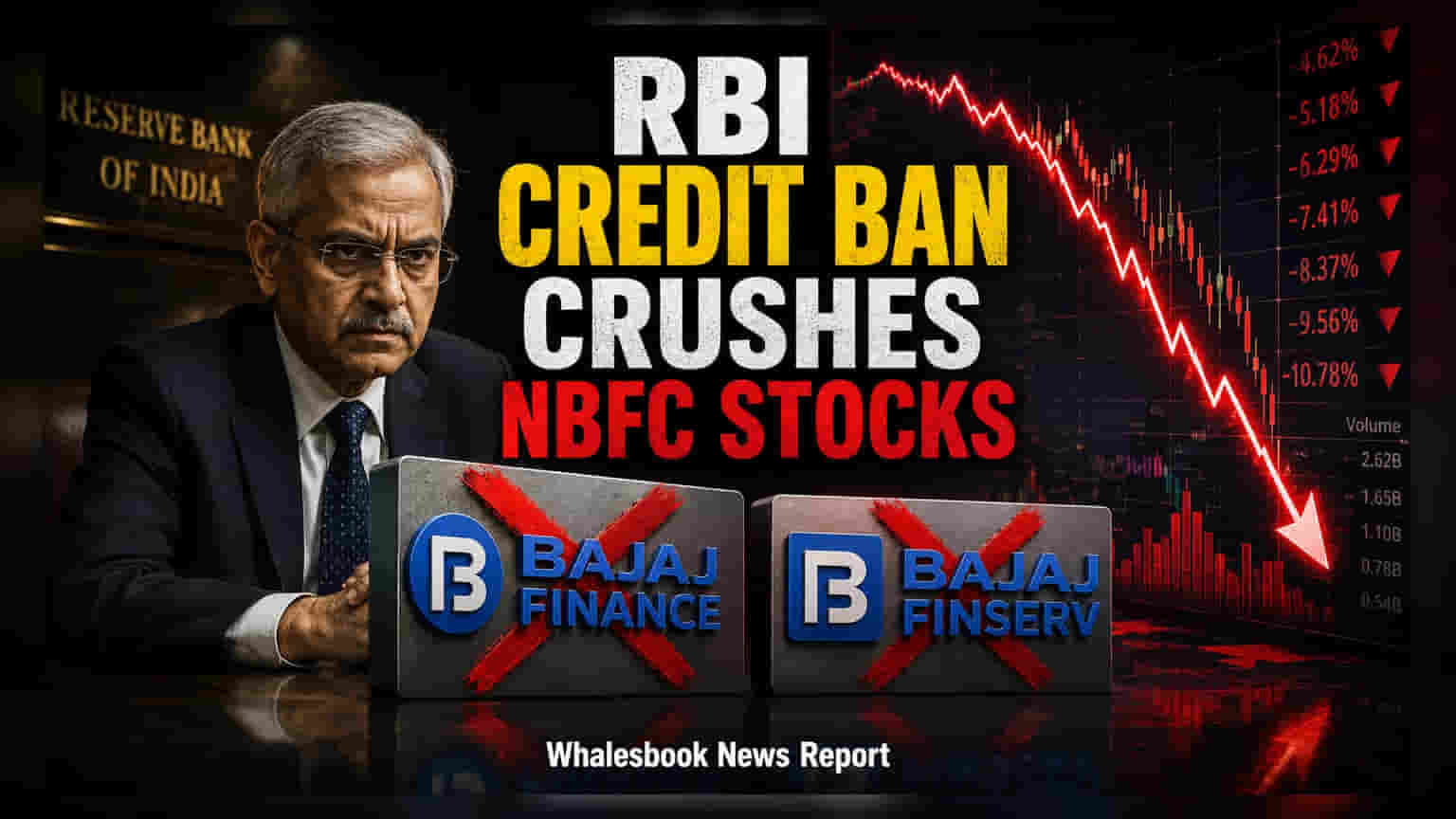
The Reserve Bank of India has proposed a draft rule prohibiting NBFCs from offering revolving credit, requiring a shift to fixed term loans. This announcement triggered a sharp sell-off in NBFC stocks, with Bajaj Finance and Bajaj Finserv losing ₹55,000 crore in market value. Investors are assessing how this potential change could impact the profitability and growth models of major lenders.
The Reserve Bank of India (RBI) has sparked a significant market reaction with a draft amendment aimed at the lending practices of non-banking financial companies (NBFCs). On August 6, 2026, the regulator released a proposal that would restrict NBFCs from providing revolving credit facilities. Under the proposed rules, lenders would be required to shift toward term loans—credit facilities with a fixed principal amount and a set repayment schedule that cannot be replenished once paid.
This development hit the NBFC sector hard on August 7, 2026, as investors reacted to the potential disruption to established business models. Bajaj Finance and its parent company, Bajaj Finserv, faced the brunt of this sentiment, seeing their combined market capitalization drop by approximately ₹55,000 crore. Shares of Bajaj Finance recorded a decline of nearly 6%, reflecting concerns over how this change might impact the company's well-known 'flexi-loan' offerings, which operate as revolving credit lines.
Why the Market is Concerned
The core of the investor concern lies in the structure of many NBFC products. Currently, many lenders allow customers to use credit lines that can be withdrawn, paid back, and withdrawn again—the definition of revolving credit. This model is often a major driver for assets under management (AUM) growth and customer retention. The RBI’s proposal mandates that credit facilities must have a fixed principal and a predetermined schedule, effectively removing the 'revolving' nature of these loans. If implemented, this could lead to slower loan growth and potential pressure on interest margins, as lenders would need to restructure their product offerings.
Furthermore, the shift to term loans could create friction in the customer experience, as borrowers would no longer have the flexibility to reuse their credit limit without a new application. While the draft amendment does include an exemption for NBFCs specifically authorized by the RBI to issue credit cards, the vast majority of consumer lending portfolios that rely on flexible credit lines would likely need to adjust their operations.
Status and Next Steps
It is important for investors to note that this is currently a draft proposal, not a finalized regulation. The RBI has opened the window for public and stakeholder consultation until August 28, 2026. Market participants are now waiting to see if the regulator will provide any relaxations or if the industry can offer alternative solutions that satisfy the central bank’s concerns regarding credit standards.
The key monitorable for investors in the coming weeks will be the final notification from the RBI. Shareholders will likely track management commentary from major NBFCs regarding how much of their portfolio is exposed to revolving credit products and whether they have alternative lending structures ready to maintain profitability if the proposal is implemented in its current form.