

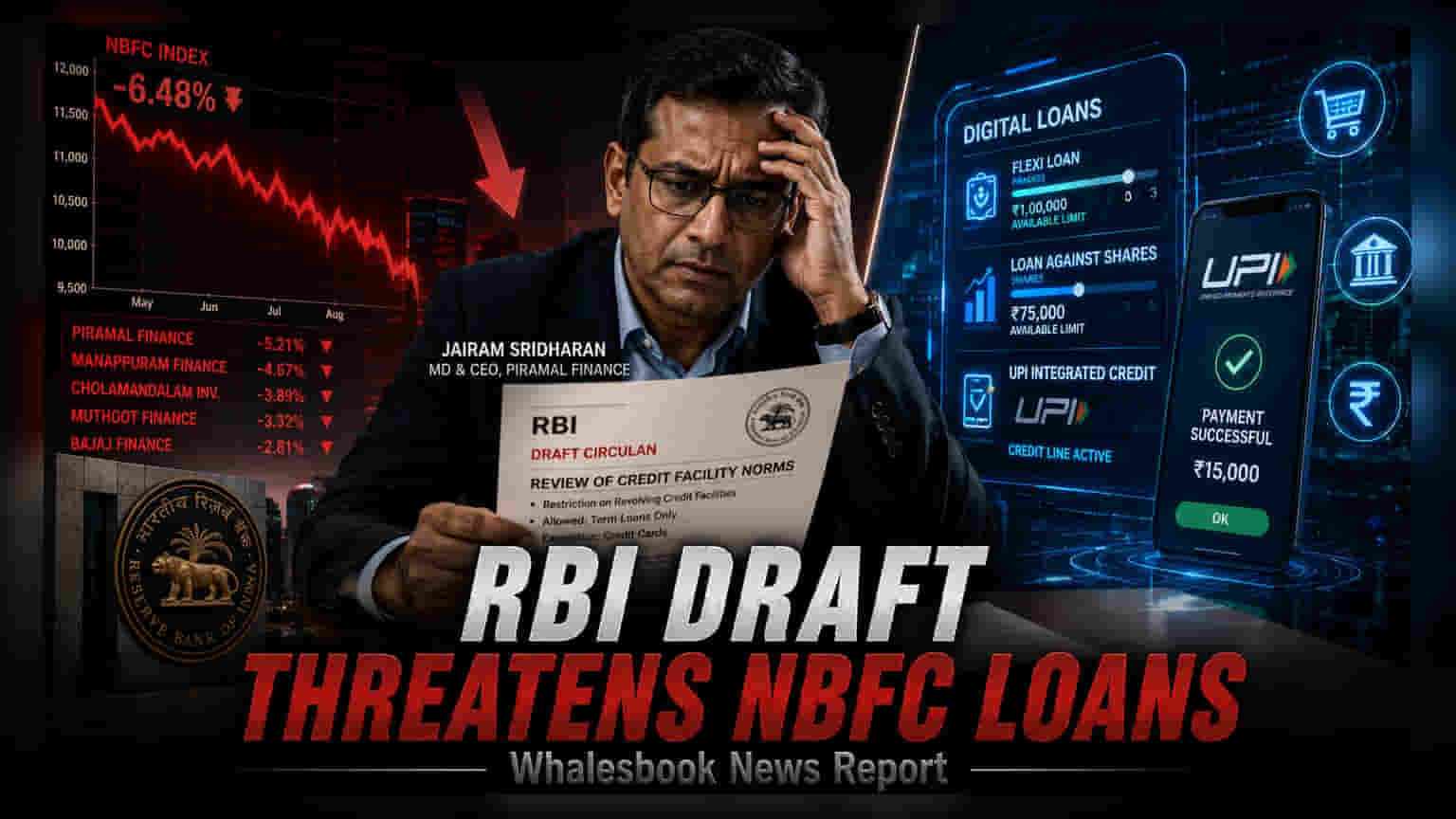
The Reserve Bank of India's draft proposal to restrict NBFCs to term loans, phasing out revolving credit, has triggered industry concerns. Piramal Finance MD Jairam Sridharan warned that strict enforcement could disrupt popular products like flexi-loans and UPI-based credit. Investors are monitoring the feedback process to understand the potential impact on product structures and lending models.
The Reserve Bank of India (RBI) has initiated a review of credit facility norms that could significantly alter the operational landscape for Non-Banking Financial Companies (NBFCs). In a draft circular released on August 6, 2026, the regulator proposed restricting NBFCs to offering 'term loans' and phasing out revolving credit facilities, except for those specifically authorized to issue credit cards. This move aims to bring greater standardization to lending practices but has raised concerns about the future of several flexible credit products.
Jairam Sridharan, Managing Director and CEO of Piramal Finance, recently highlighted the potential challenges during an industry summit. He noted that a strict interpretation of the draft rules could disrupt various lending products—such as loans against shares, flexi-loans, and UPI-integrated credit—that many NBFCs currently offer. While these products are often technically structured as term loans, they function as on-tap credit lines in practice, allowing customers to draw and repay funds as needed. Disrupting this model could particularly impact the MSME sector, which relies on such flexible credit for managing working capital.
In addition to the August 6 draft, the RBI issued another set of proposals on August 12, 2026, targeting loan pricing policies. This second draft mandates that lenders adopt board-approved policies for risk-based pricing and proposes capping the Annual Percentage Rate (APR) for small personal and microfinance loans. For investors, this dual regulatory pressure suggests two primary areas of impact. First, there is an operational hurdle; NBFCs may need to restructure their existing product portfolios and IT systems to move away from revolving facilities toward rigid term-loan structures. Second, potential APR caps on small-ticket retail loans could lead to margin pressure if companies are unable to pass on credit risks efficiently.
Industry participants and stakeholders have until August 28, 2026, to provide feedback on the credit facility norms, and until September 11, 2026, for the interest rate pricing draft. While initial reactions to the proposals were cautious, some industry experts hope the final guidelines will clarify definitions without causing a permanent disruption to the ongoing business activities of NBFCs. The central bank's deputy governor, Shirish Chandra Murmu, has previously indicated that the intent is to enhance regulatory clarity and compliance rather than to stifle growth.
For investors, the key monitorable is how the final regulations are framed. If the RBI maintains a strict stance against revolving features, NBFCs with a high concentration in digital-first or on-tap lending products may face the most significant adjustment challenges. The focus for management teams in the coming weeks will be on product redesign and potential impacts on customer acquisition strategies in the evolving regulatory environment.