

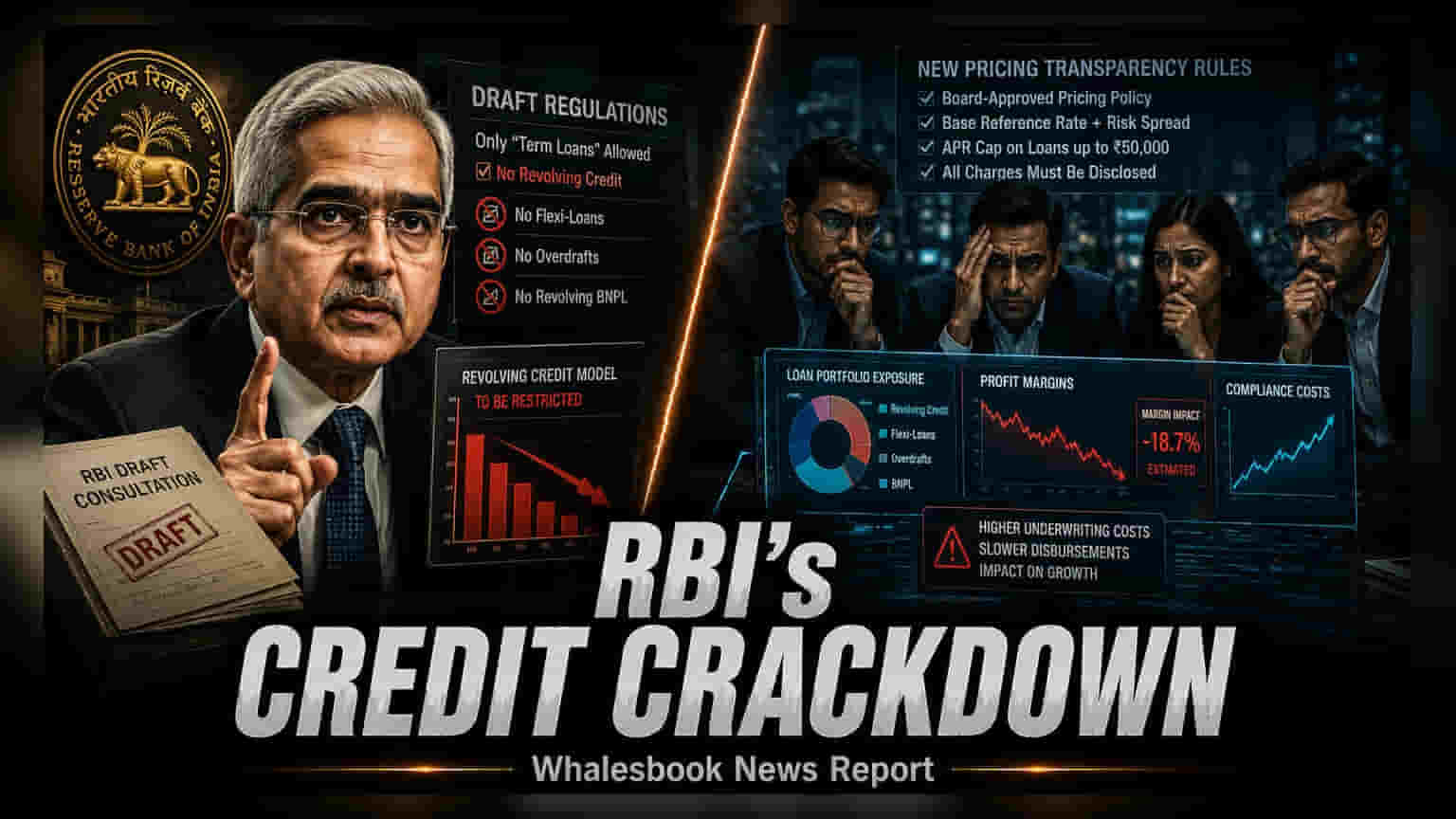
The Reserve Bank of India has proposed draft rules that could limit Non-Banking Financial Companies (NBFCs) to offering only term loans, effectively ending common revolving credit facilities. These changes, alongside new pricing caps for small loans, aim to improve transparency but could force NBFCs to overhaul their existing business models and lending processes.
The Reserve Bank of India (RBI) has introduced two major draft proposals in August 2026 that could reshape the lending operations of Non-Banking Financial Companies (NBFCs) and fintech partners. The most significant of these changes is a proposal to restrict NBFCs to offering only "term loans." This move, if finalized, would limit the ability of these lenders to offer revolving credit products—such as flexi-loans, overdraft facilities, or certain 'Buy Now, Pay Later' (BNPL) schemes where borrowers can repeatedly redraw funds from an approved limit.
Under the proposed rules released on August 6, once a borrower repays a portion of a term loan, that specific amount cannot be re-borrowed under the same facility. This is a departure from current models where credit limits are replenished upon repayment, allowing for frequent, smaller, and flexible borrowing. The RBI’s draft aims to standardize loan structures, potentially impacting the revenue models of many NBFCs that rely on high-frequency, revolving credit products to drive growth.
New Pricing Rules for Small Loans
In a second move, the RBI released a draft on August 12 focusing on loan pricing transparency. It mandates that all RBI-regulated lenders implement a board-approved policy for setting loan rates. This policy must clearly define a base reference rate and a risk-based spread. For microfinance and personal loans up to ₹50,000, the central bank plans to introduce a cap on the Annual Percentage Rate (APR), which will include all upfront fees and interest charges.
This initiative follows rising concerns over opaque interest calculations and the high cost of credit for retail borrowers. By forcing lenders to justify their pricing frameworks, the regulator aims to curb what it considers high-cost or "usurious" interest structures that have become common in some app-based lending platforms.
Impact on NBFC Operations
These proposals have created market uncertainty, particularly for large NBFCs that have significant exposure to revolving credit and flexible loan portfolios. Investors are assessing how a forced shift to a standard term-loan model might affect profitability. If companies are required to perform fresh underwriting for every loan request rather than allowing automatic re-borrowing, it could lead to higher operational costs and a potential slowdown in credit disbursement.
Major NBFCs, including Bajaj Finance, have faced share price pressure as the market weighs the potential impact on future growth and margins. Industry bodies, including the Finance Industry Development Council (FIDC), are actively engaging with the RBI to highlight potential concerns, such as the risk of credit contraction for retail and MSME segments. The industry is advocating for discussions to ensure that these new rules do not inadvertently disrupt the flow of credit to credit-worthy borrowers.
As these rules are currently in the draft and consultation stage, with feedback deadlines set for late August and September 2026, the final outcome remains subject to change. Investors should track upcoming management commentary from major lenders regarding their preparedness for these regulatory shifts and any clarifications issued by the RBI.