

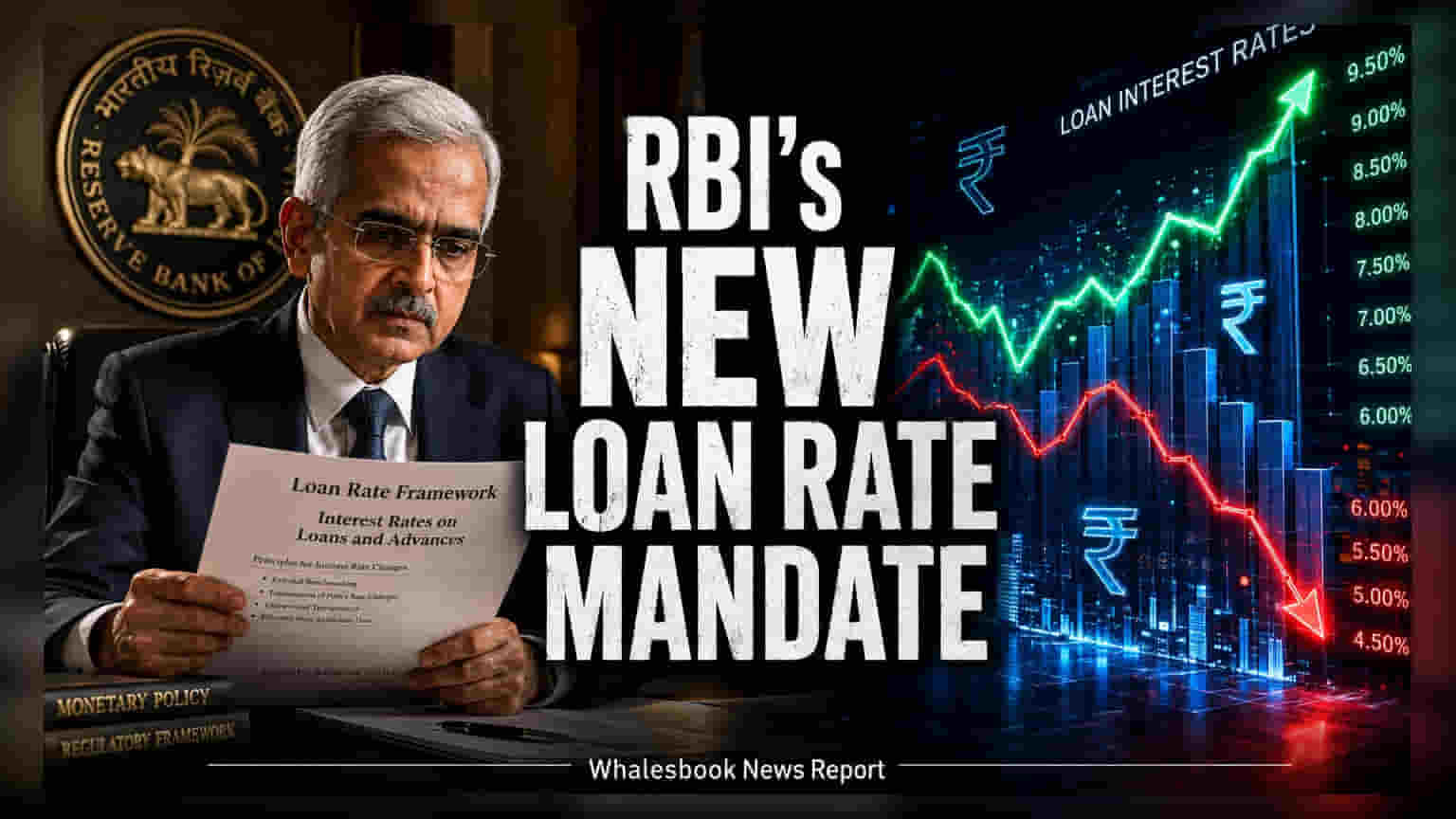
The Reserve Bank of India has issued draft directions to standardize how banks and NBFCs set loan interest rates. Starting April 2027, all lenders must follow a board-approved, transparent framework. This move aims to protect borrowers and harmonize pricing, but it may bring compliance costs and potential margin pressure for high-yield lenders.
The Reserve Bank of India (RBI) has introduced draft directions titled 'Interest Rates on Loans and Advances,' aimed at creating a uniform framework for how lenders determine interest rates. These rules, if finalized, will apply to all regulated entities, including commercial banks, non-banking financial companies (NBFCs), and co-operative banks. The RBI has set a proposed implementation date of April 1, 2027.
New Framework for Loan Pricing
The draft rules require all lenders to establish a comprehensive policy for loan interest rates, which must be approved by their Board of Directors. This policy will need to clearly define the methodology for setting rates, internal benchmarks, and the components that make up the interest spread. By requiring board approval, the regulator aims to ensure that pricing decisions are not arbitrary and are reviewed annually to remain relevant.
Lenders will be permitted to offer both fixed and floating rate loans. However, the interest must be charged on a daily reducing balance, and the rules generally prohibit any charges for the transition of existing loans to the new framework. For loans with floating rates, lenders will need to maintain transparency, with commercial banks and certain larger co-operative banks required to publish their internal benchmarks on the first day of every month.
Impact on Small Loans and Microfinance
A significant part of these draft directions is the focus on borrower protection, particularly for smaller loans. For microfinance and small loans up to ₹50,000, lenders must set a ceiling on the Annual Percentage Rate (APR). This ceiling is designed to include all charges associated with the loan, effectively capping the total cost to the borrower to prevent excessively high interest rates. This could impact lenders that currently operate with higher yields in the microfinance segment.
Operational and Financial Implications
For investors, the transition to this standardized framework involves several monitorables. While the regulation aims to improve transparency and fairness, it may introduce challenges for some lenders. NBFCs, which often have more diverse and flexible internal rate-setting models, may face higher compliance costs as they align their systems with the RBI’s strict guidelines. Furthermore, the standardization of pricing and the APR caps on smaller loans could lead to profit margin pressure for lenders that rely on high-yield, small-ticket lending products.
Existing loans currently tied to older benchmarks will need to be migrated to the new framework by April 1, 2029. This one-time migration will require explicit borrower consent. The RBI has opened the draft for public feedback until September 11, 2026, and the final impact on lenders will depend on how the regulator adjusts these rules based on the industry responses.