

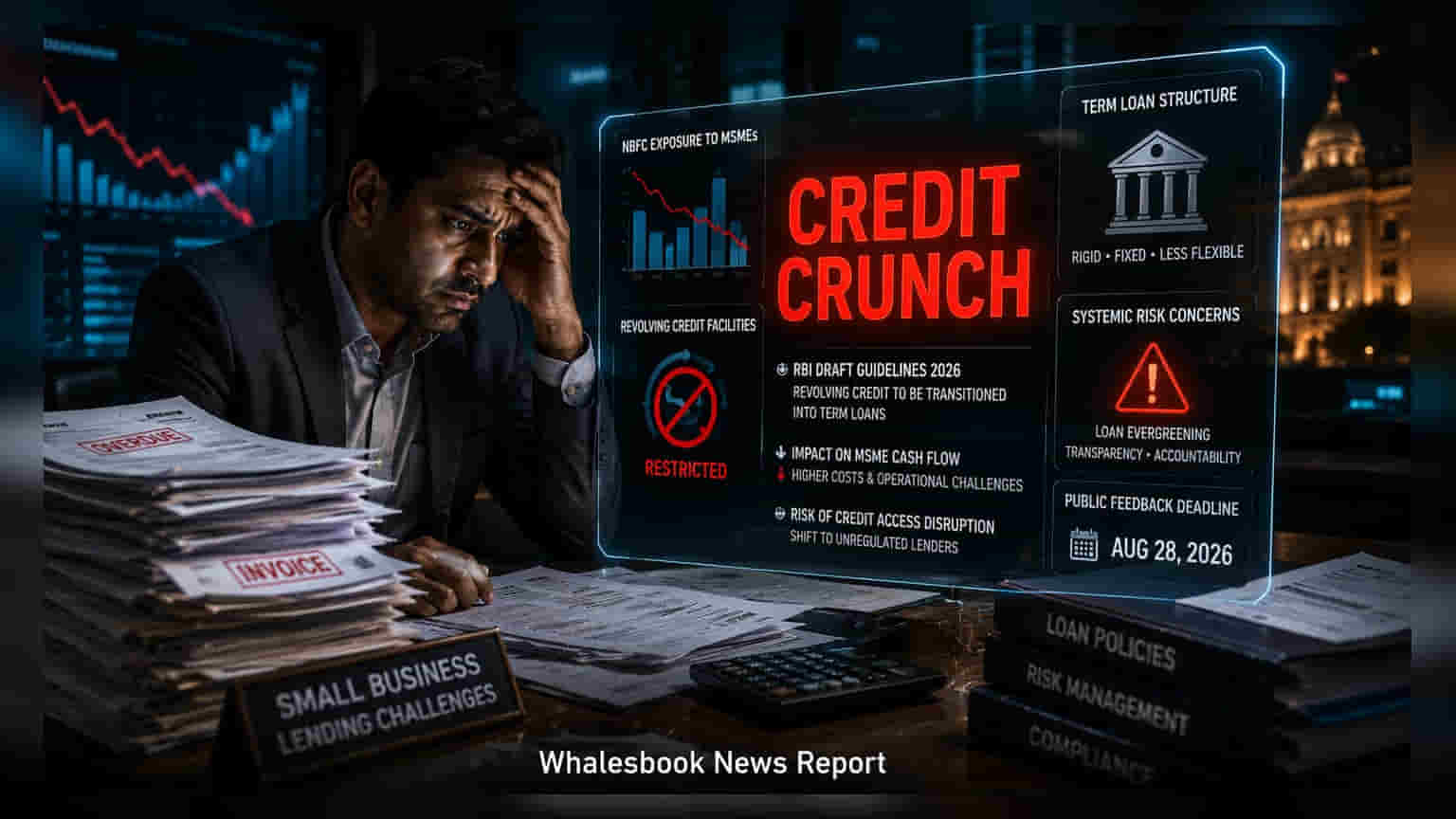
The Federation of Indian MSMEs has urged the Reserve Bank of India to reconsider a proposal that would ban revolving credit facilities offered by non-banking financial companies. Small businesses warn this move could restrict working capital and increase borrowing costs, while NBFCs face potential shifts in their lending models ahead of the August 28 feedback deadline.
The Reserve Bank of India (RBI) has proposed new draft guidelines that could significantly reshape how non-banking financial companies (NBFCs) lend money to small businesses. The draft, titled 'Non-Banking Financial Companies (Credit Facilities) Amendment Directions, 2026', aims to restrict the use of revolving credit facilities. If implemented in its current form, it would require NBFCs to transition these credit products into standard term loans, excluding entities authorized to issue credit cards.
The Federation of Indian MSMEs (FISME) has formally challenged this proposal. Small and medium enterprises often rely on revolving credit—a flexible, on-demand borrowing facility similar to a credit card limit—to manage their day-to-day cash flow. This includes paying suppliers, managing inventory, and handling seasonal demand gaps. FISME argues that forcing these businesses into rigid term-loan structures would introduce unnecessary paperwork, delays, and higher processing costs, ultimately hurting the liquidity of firms that are crucial to the Indian economy.
From the regulator's perspective, the intent behind such curbs is likely to address systemic risks within the shadow banking sector. The central bank has long been concerned about the practice of 'loan evergreening,' where lenders continuously roll over credit to hide bad debts, effectively keeping stressed assets off their non-performing loan books. By mandating term loans, the regulator aims to bring greater transparency and accountability to NBFC balance sheets, ensuring that credit lines do not become permanent, opaque debt traps.
For investors and market participants, the implications for NBFC business models are significant. Many NBFCs have built specialized lending franchises focused on MSMEs by providing these flexible credit products. If the regulator enforces a shift toward term loans, these lenders may face operational challenges, such as the need to overhaul their loan management systems and potentially adjust their interest rate models. The change could alter the cost of borrowing for MSMEs, which might, in turn, affect the credit quality of loan portfolios if small businesses struggle to service fixed-term debt.
There is also a broader industry concern regarding credit access. If formal NBFC lending becomes too rigid or expensive, businesses may be forced to turn to unregulated, informal lenders, where interest rates are typically much higher and legal protections are minimal. To mitigate this, industry stakeholders are calling for a more nuanced regulatory approach that focuses on stricter underwriting and real-time monitoring rather than a complete prohibition of flexible credit tools.
The sector is now awaiting the final outcome, with the deadline for public feedback set for August 28, 2026. The next steps for investors will be to monitor the final circular issued by the RBI to see if the regulator provides exemptions for trade-receivables discounting or other essential supply-chain finance tools. The exact impact on NBFC profit margins and loan growth will depend on whether the final guidelines allow for any flexibility or demand a full transition to term-based lending.