

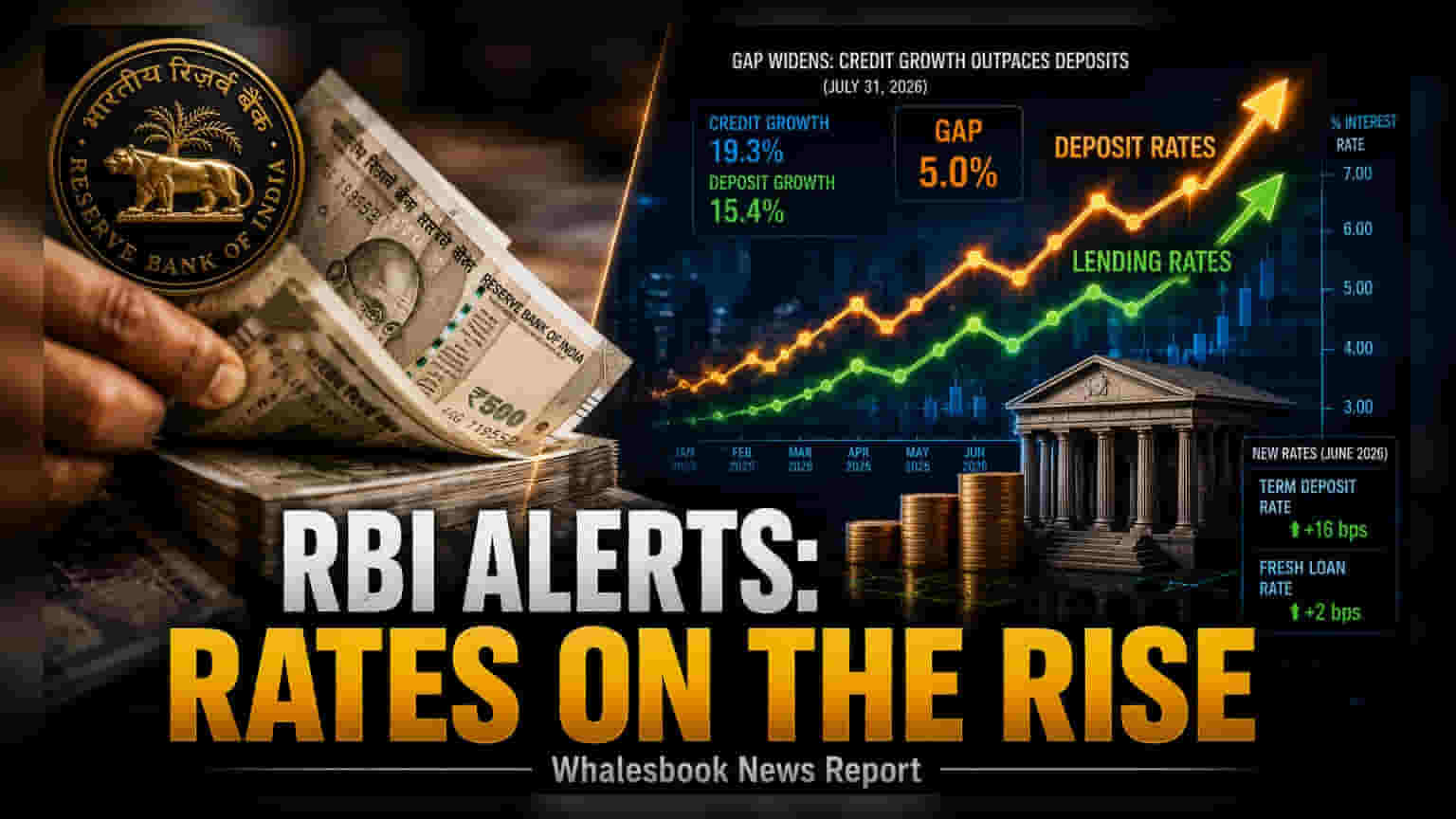
The Reserve Bank of India’s latest bulletin highlights a rise in new deposit and lending rates as of June 2026. Strong credit growth of 19.3% is outpacing deposit growth, forcing banks to turn to alternative funding sources. This funding gap is putting pressure on banking margins as lenders compete for capital to sustain loan growth.
The latest bulletin from the Reserve Bank of India (RBI) reveals a trend of rising interest rates in the banking sector. Data for June 2026 shows that banks are increasing both the rates they pay on new deposits and the rates they charge on new loans. This movement is primarily driven by a surge in demand for credit across the country, which is currently moving faster than the rate at which banks are collecting new deposits.
Impact of Growing Credit Demand
As of July 31, 2026, banks reported that total credit growth reached 19.3% compared to the previous year. In contrast, deposit growth stood at 15.4%. This widening gap, which reached 5% in July, creates a situation where banks have more people and companies wanting to borrow money than they have cash coming in from savers. To keep up with this demand, banks are increasingly relying on alternative ways to raise money, such as issuing certificates of deposit, bonds, and money market instruments.
The RBI data reflects this pressure. In June 2026, the weighted average interest rate on new domestic term deposits rose by 16 basis points. At the same time, the average interest rate on fresh rupee loans increased by 2 basis points. While these increases may seem small, they signal a shift in how banks manage their money. Private sector banks, in particular, have been faster at passing on these higher rates to borrowers, while public sector banks have focused more on raising deposit rates to attract savers.
Economic Outlook and Risks
While credit growth remains strong, particularly in the retail, services, and MSME sectors, the current environment brings specific challenges. The persistent gap between credit growth and deposit growth means banks are facing higher costs to secure funds. This can impact their profit margins if they are unable to fully pass these costs on to borrowers.
Looking ahead, the macroeconomic environment remains a point of focus. The RBI has maintained the repo rate at 5.25% to balance growth and inflation. However, officials have indicated that they are watching inflation data closely. The bank has set a CPI inflation forecast of 5.0% and a GDP growth projection of 6.7% for the current fiscal year. Despite these targets, global uncertainties—such as volatile crude oil prices and geopolitical tensions—pose risks that could affect the cost of money and general economic stability.
For investors, the most important trends to track will be the credit-to-deposit ratio at individual banks and the sustainability of interest margins. If the gap between deposit growth and loan demand continues to widen, banks may face further pressure to increase deposit rates, which could influence their overall profitability and future stock performance.