

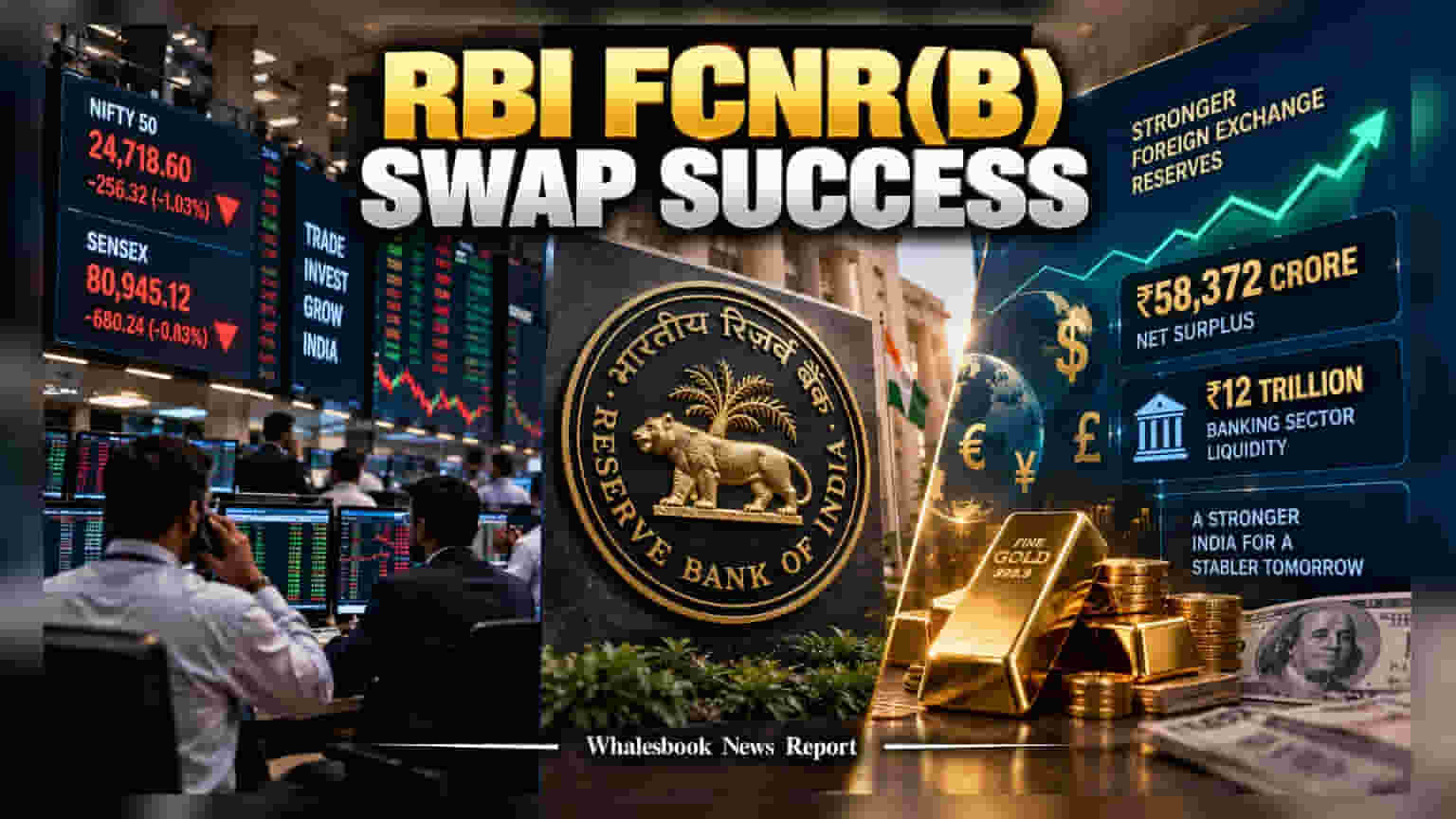
The Reserve Bank of India shut its FCNR(B) swap facility on August 31, 2026, a month ahead of schedule. The program successfully attracted over $52 billion, generating a surplus of approximately ₹58,372 crore. While the move strengthened foreign exchange reserves and eased banking liquidity, investors are now tracking how the RBI will manage liquidity normalization and potential fiscal risks.
The Reserve Bank of India (RBI) concluded its special swap facility for Foreign Currency Non-Resident (FCNR) deposits on August 31, 2026, ending the program one month earlier than its original September deadline. Data shows the initiative was a financial success, strengthening India’s foreign exchange reserves and providing essential liquidity to the banking sector during a period of tight credit conditions.
The mechanism allowed banks to bring in foreign currency deposits from overseas, with the RBI covering the cost of hedging against currency fluctuations. By investing the dollars brought in through these deposits, the central bank earned more than it paid in hedging costs, resulting in a net surplus of roughly ₹58,372 crore. This figure highlights that the intervention was not a fiscal drain, but rather a calculated strategy to boost the nation’s balance sheet.
For the banking sector, the swap window served as a vital support mechanism, injecting nearly ₹12 trillion into the system. This influx helped lenders manage their credit-to-deposit ratios, which had come under pressure earlier in the year. However, the early closure has brought the focus back to how liquidity will be managed in the coming months. With the swap facility now behind us, the central bank may need to use other tools—such as Cash Reserve Ratio (CRR) adjustments, Variable Rate Reverse Repo auctions, or Open Market Operations—to manage domestic money supply and keep inflation in check.
Investors should monitor the broader impact on banking stocks and interest rate trends. While the swap program was highly effective in the short term, challenges remain. These include the long-term costs of hedging as multi-year contracts mature and the potential for increased market volatility as banks adjust to a liquidity environment without the swap window support. The central bank’s ability to transition away from this liquidity support without causing stress in the banking system will be the next key monitorable for the market.